
Are shrimp bottom feeders? Yes, many aquarium shrimp are indeed bottom feeders, meaning they primarily forage for food on the substrate of your aquarium. However, this doesn’t mean they only eat from the bottom! Understanding their feeding habits is key to a healthy, happy shrimp tank.
Welcome, fellow shrimp enthusiasts! Are you wondering where your tiny aquatic friends spend their meal times? It’s a common question for new keepers, and it’s easy to get confused. You see them sifting through gravel, nibbling on algae, and sometimes even swimming up to a sinking pellet. So, what’s the deal? Are shrimp bottom feeders, or is there more to their diet? This guide is here to clear up all the confusion, offering simple, step-by-step advice to ensure your shrimp get the best nutrition possible. Get ready to become a shrimp feeding pro!
Understanding Shrimp Feeding Habits
Shrimp are fascinating creatures, and their feeding habits are a big part of what makes them so engaging to watch. When we talk about “bottom feeders” in the aquarium world, we usually mean fish that actively search for food on the tank floor. Shrimp fit this description in many ways, but they are also opportunistic omnivores with a much broader range of feeding behaviors.
Think of them as tiny, diligent janitors of your aquarium. They are constantly exploring, scavenging, and nibbling on whatever edible bits they can find. This includes algae, biofilm, decaying plant matter, and leftover food particles. Their small size and delicate mouthparts are perfectly adapted for this kind of foraging.
It’s important to remember that “bottom feeder” is a simplification. While the substrate is a primary foraging ground, shrimp will also graze on surfaces like driftwood, plants, and aquarium glass. They are also known to scavenge food that sinks to the bottom. So, while they do feed from the bottom, their diet and feeding locations are much more diverse.
Why the “Bottom Feeder” Question Matters
Knowing if your shrimp are bottom feeders directly impacts how you should feed them. If you only offer food that floats or stays in the water column, you might be missing a huge part of their dietary needs. Conversely, if you only drop food to the bottom, you might overlook their natural inclination to graze on surfaces.
This understanding helps prevent common problems like:
- Malnutrition: Shrimp not getting a balanced diet can lead to poor health, molting issues, and reduced breeding.
- Overfeeding: If food isn’t consumed efficiently, it can rot and pollute the water, harming your shrimp.
- Competition: In mixed tanks, knowing where your shrimp find food helps ensure they get their share, especially against faster-eating fish.
By understanding their feeding behaviors, you can provide a more appropriate and varied diet, leading to healthier, more active, and more colorful shrimp.
Are Shrimp Bottom Feeders? The Simple Answer
Yes, many aquarium shrimp are considered bottom feeders because they spend a significant amount of time foraging on the substrate of the aquarium. They sift through the substrate, looking for detritus, algae, biofilm, and leftover food. However, they are not exclusively bottom feeders and will also graze on plants, driftwood, and other surfaces.
Exploring the Diverse Diet of Aquarium Shrimp
Shrimp are opportunistic omnivores. This means they eat both plants and animals, and they are always on the lookout for their next meal. Their natural diet in the wild consists of a variety of things:
- Algae: A primary food source, algae provides essential nutrients.
- Biofilm: This is a thin layer of microorganisms that grows on surfaces in the aquarium. It’s packed with protein and other goodies for shrimp.
- Detritus: This includes decaying organic matter, such as dead plant leaves and uneaten food. Shrimp help clean this up!
- Microorganisms: Tiny living things found in the water and on surfaces.
- Small invertebrates: In some cases, shrimp might consume very small organisms if they come across them.
In a home aquarium, we aim to replicate this diverse diet. This means providing them with a range of foods and ensuring they have plenty of natural grazing opportunities.
How Shrimp Actually Eat: A Closer Look
Watching shrimp eat is incredibly endearing! They use their specialized mouthparts to pick up tiny particles. Here’s a breakdown of how they do it:
- Scavenging: Shrimp will constantly move around their environment, using their antennae and mouthparts to explore surfaces.
- Sifting: When on the substrate, they will “sift” through the gravel or sand. They take small amounts of substrate into their mouthparts, process it to extract edible particles, and then expel the cleaned substrate. This is a key characteristic of their “bottom feeder” behavior.
- Grazing: They will also graze on algae and biofilm directly from surfaces like plant leaves, driftwood, and aquarium glass.
- Picking Up Food: When offered commercial foods, they will pick up sinking pellets, wafers, or even small pieces of blanched vegetables with their mouthparts.
This meticulous process means they can spend hours each day foraging. It’s not just about filling their bellies; it’s a fundamental part of their natural behavior and essential for their well-being.
What Do Shrimp Eat in an Aquarium?
As aquarium keepers, our goal is to provide a diet that mimics their natural food sources. This ensures they receive all the necessary vitamins, minerals, and proteins for growth, molting, and reproduction.
Natural Food Sources in Your Tank
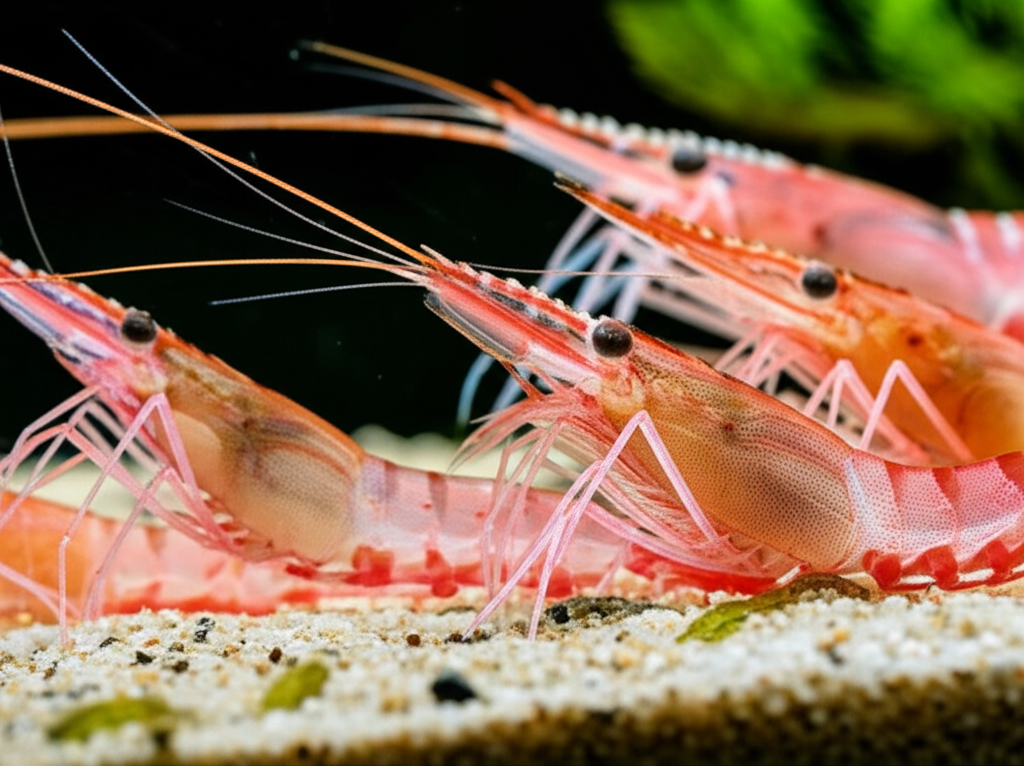
A well-established aquarium will naturally provide many food sources for your shrimp:
- Algae: Different types of algae will grow on surfaces. Brown algae (diatoms) are often a good early food source, especially for baby shrimp. Green algae are also beneficial.
- Biofilm: This is arguably the most important natural food source. Biofilm is a complex ecosystem of bacteria, fungi, and other microorganisms that colonize surfaces. It’s packed with protein and essential nutrients. You’ll see it as a slightly fuzzy or slimy layer on plants, wood, and glass.
- Decaying Plant Matter: While you want healthy plants, a fallen leaf or a tiny bit of decaying plant material is a feast for shrimp.
To encourage these natural food sources, ensure you have adequate lighting for plant growth (which in turn supports algae and biofilm) and avoid over-cleaning your tank. A mature aquarium ecosystem is a shrimp’s best friend!
Commercial Shrimp Foods
While natural foods are great, supplemental feeding is often necessary, especially in newer tanks or when keeping a higher density of shrimp.
Types of Commercial Foods:
- Sinking Pellets/Wafers: These are specifically formulated for bottom-feeding fish and invertebrates. They sink quickly and break down slowly, giving shrimp plenty of time to eat. Look for brands that list ingredients like spirulina, vegetable matter, and protein sources.
- Powdered Foods: These are excellent for baby shrimp (shrimplets) and for scattering throughout the tank. They are often rich in nutrients and protein.
- Vegetable Matter: Blanched vegetables like spinach, zucchini, and kale are highly nutritious treats. Ensure they are thoroughly washed and blanched (briefly boiled or steamed) to soften them and make them more digestible.
- Specialty Shrimp Foods: Many brands offer foods specifically designed for shrimp, often containing added minerals for molting and color enhancement.
Feeding Frequency and Amount:
It’s crucial not to overfeed. Overfeeding is one of the most common mistakes beginner shrimp keepers make. A good rule of thumb is to feed only what your shrimp can consume within 1-2 hours. Remove any uneaten food after this period to prevent water pollution.
Start with a tiny amount, like a small pinch or a single pellet per 10-20 shrimp. Observe how quickly they devour it. You can adjust the amount based on your observations. It’s better to slightly underfeed than to overfeed.
The Role of Substrate in Shrimp Feeding
The substrate, or the material at the bottom of your tank, plays a significant role in how shrimp feed. Different substrates can affect the availability of natural food sources and how easily shrimp can forage.
Types of Substrates and Their Impact
Here’s a look at common substrates and how they relate to shrimp feeding:
| Substrate Type | Pros for Shrimp Feeding | Cons for Shrimp Feeding |
|---|---|---|
| Sand | Easy for shrimp to sift through. Provides a good surface for biofilm and micro-organisms to colonize. Shrimp love to bury their heads in sand while foraging. | Can sometimes compact over time, potentially reducing water flow and oxygenation in deeper layers. |
| Gravel (Fine) | Offers nooks and crannies for biofilm and detritus to collect, which shrimp can forage on. Easier to clean than sand if needed. | Larger pieces of gravel might be too big for some shrimp to sift through effectively. Can harbor waste if not maintained. |
| Gravel (Coarse) | Provides excellent surface area for biofilm. | Can be too large for many shrimp species to effectively sift through. Food particles can get lost in larger gaps, leading to waste. |
| Bare Bottom | Easy to monitor and clean. No hiding places for waste. | Significantly reduces natural food sources like biofilm and detritus. Requires more diligent supplemental feeding. Can stress shrimp as they have fewer surfaces to forage on. |
For most beginner shrimp keepers, a fine sand or fine gravel substrate is ideal. It balances ease of maintenance with providing ample foraging opportunities for your shrimp. Avoid very coarse gravel or large stones, as these can make it harder for shrimp to access food and can lead to waste accumulation.
Maintaining Your Substrate
Even with the best substrate, maintenance is key:
- Avoid Deep Vacuuming: When doing water changes, avoid vacuuming the substrate too deeply, especially if you have sand. You want to leave some detritus and biofilm for your shrimp. Just skim the surface or lightly stir the very top layer.
- Gravel Cleaning Tools: If you use gravel, a gentle gravel vacuum can help remove excess waste without disturbing the beneficial bacteria and biofilm too much.
- Consider Live Plants: Live plants help keep the substrate healthy and can also provide additional grazing surfaces for shrimp.
Feeding Different Types of Aquarium Shrimp
While the general principles apply to most popular aquarium shrimp, there can be slight variations depending on the species. The most common pet shrimp are Neocaridina (like Cherry Shrimp, Blue Dream Shrimp) and Caridina (like Crystal Red Shrimp, Bee Shrimp).
Neocaridina Shrimp (e.g., Cherry Shrimp)
Neocaridina are generally hardier and more forgiving, making them excellent beginner shrimp. They are excellent scavengers and thrive on a varied diet.
- Natural Foods: They will readily graze on algae and biofilm in any established tank.
- Commercial Foods: Sinking pellets, flakes (that sink quickly), and vegetable matter are all well-received.
- Feeding Strategy: Offer a small amount of high-quality shrimp food 2-3 times a week. Ensure they have plenty of surfaces to graze on naturally.
Caridina Shrimp (e.g., Crystal Red Shrimp)
Caridina shrimp are often more sensitive to water parameters and may require a more specialized diet, especially regarding minerals.
- Natural Foods: Biofilm is critical for Caridina. A mature tank with plenty of live plants is ideal.
- Commercial Foods: Look for specialized Caridina foods that often include added minerals for molting and shell development. Foods rich in calcium are beneficial.
- Feeding Strategy: Feed sparingly, perhaps 1-2 times a week. Observe their consumption carefully. High-quality biofilm should form a significant part of their diet.
Other Popular Shrimp
Amano Shrimp: These larger shrimp are fantastic algae eaters. They will happily graze on any algae in the tank and readily accept sinking foods and blanched vegetables. They are very robust feeders.
Ghost Shrimp/Glass Shrimp: These common and inexpensive shrimp are also great scavengers. They will eat almost anything offered, from leftover fish food to algae wafers. They are excellent “clean-up crew” members.
Regardless of species, the key is to offer variety and observe your shrimp. Their activity levels and how quickly they eat can tell you a lot about their diet and health.
Step-by-Step Guide: How to Feed Your Shrimp
Ready to put this knowledge into practice? Here’s a simple, step-by-step guide to feeding your aquarium shrimp:
Step 1: Assess Your Tank’s Natural Food Sources
Before you even think about adding food, take a good look at your aquarium. Is there visible algae growth on the glass or decor? Do your plants look healthy and have a slight sheen (indicating biofilm)? A mature, planted tank will offer a lot of natural grazing opportunities.
Step 2: Choose Appropriate Foods
Based on your shrimp species and tank maturity, select a few food types:
- A good quality sinking pellet or wafer specifically for invertebrates.
- A powdered food or specialized shrimp food for variety and shrimplet nutrition.
- Optional: A vegetable treat like blanched spinach or zucchini.
Step 3: Determine the Feeding Amount
This is critical! Start small. For a typical 10-gallon tank with 20-30 shrimp, begin with a single small pellet or a tiny pinch of powder.
- New Tanks: Feed less frequently (1-2 times a week) as natural food sources are still developing.
- Mature Tanks: You can feed slightly more often (2-3 times a week) if natural food sources seem depleted or if you have a larger population.
Step 4: Offer the Food
Gently drop the food into the aquarium. Sinking foods will go straight to the bottom, fulfilling their “bottom feeder” role. Powdered foods can be stirred into the water to disperse.
Step 5: Observe Your Shrimp
Watch them! See how they react. Are they immediately swarming the food? How long does it take them to consume it? This observation is your best tool for gauging how much to feed.
Step 6: Remove Uneaten Food
Set a timer for 1-2 hours. If there is any food left after this time, carefully remove it with a pipette or a net. This prevents water pollution. You can then adjust the amount you offer next time.
Step 7: Provide Variety
Don’t feed the same thing every day. Rotate between your chosen foods to ensure a balanced diet. Offer vegetable treats once a week or every couple of weeks as a special treat.
Step 8: Monitor Shrimp Health
Pay attention to their activity levels, colors, and breeding success. Healthy, well-fed shrimp are active, vibrant, and will breed readily. Molting issues or lethargy can sometimes indicate dietary deficiencies.
Common Feeding Mistakes to Avoid
Even with the best intentions, feeding can be tricky. Here are some common pitfalls:
- Overfeeding: This is number one! It leads to poor water quality, algae blooms, and can even cause shrimp to become sick or die.
- Feeding Only One Type of Food: Shrimp need a varied diet for optimal health.
- Not Removing Uneaten Food: Leftover food decomposes, releasing ammonia and nitrite, which are toxic to shrimp.
- Using Fish Food Unsuitable for Shrimp: Some fish foods contain ingredients that can be harmful to shrimp, or they may not sink properly. Always opt for shrimp-specific foods or safe alternatives.
- Ignoring Natural Food Sources: Relying solely on commercial foods in a mature tank can deprive shrimp of the beneficial biofilm and micro-organisms they naturally seek.
The Importance of Water Quality
It’s impossible to talk about feeding without mentioning water quality. Shrimp are incredibly sensitive to poor water conditions. Even with the best diet, if your water parameters are off, your shrimp won’t thrive.
Key water parameters for most common aquarium shrimp (like Neocaridina) include:
- Temperature: 68-77°F (20-25°C)
- pH: 6.5-7.5
- GH (General Hardness): 7-10 dGH
- KH (Carbonate Hardness): 2-6 dKH
- Ammonia, Nitrite: 0 ppm
- Nitrate: < 20 ppm
For detailed information on water parameters, consult resources like the Aquarium Co-Op Water Parameters Guide. Maintaining stable water parameters is crucial, especially for molting, which is when shrimp are most vulnerable.
Ensure you have a cycled aquarium before introducing shrimp. Regular water changes (10-20% weekly) are essential for maintaining water quality. Avoid using tap water directly unless you know its composition and treat it with a good dechlorinator like Seachem Prime.
FAQ: Your Shrimp Feeding Questions Answered
Are shrimp bottom feeders?
Yes, many aquarium shrimp are considered bottom feeders as they spend a lot of time foraging on the substrate. They sift through the substrate for food particles like detritus, algae, and biofilm. However, they also graze on plants, wood, and glass.
What is the best food for aquarium shrimp?
The best food for aquarium shrimp is a varied diet. This includes natural sources like algae and biofilm, supplemented with high-quality sinking pellets, powders, and occasional blanched vegetables. Choosing foods specifically formulated for shrimp is recommended.
How often should I feed my shrimp?
For most shrimp, feeding 2-3 times a week is sufficient, especially in mature tanks with natural food sources. In newer tanks or with very high populations, you might feed slightly more, but always observe consumption and remove uneaten food promptly.
Can I feed my shrimp fish food?
It’s generally best to avoid feeding standard fish food unless it’s specifically stated as safe for shrimp. Some fish foods contain ingredients that can be harmful to shrimp, or they might not break down well in the water, leading to pollution. Stick to shrimp-specific foods or safe alternatives like blanched vegetables.
How much food should I give my shrimp?
Feed only what your shrimp can consume within 1-2 hours. A good starting point is a tiny pinch or a single pellet for a small group of shrimp. It’s always better to underfeed slightly than to overfeed.
What should I do if my shrimp aren’t eating?
If your shrimp aren’t eating, check your water parameters first, as poor water quality is a common cause of lethargy. Ensure the food is fresh and appropriate for shrimp. Also, ensure there are natural food sources available, as they might be satisfied grazing.
Are shrimp safe to eat algae from my tank?
Absolutely! Algae is a natural and beneficial food source for most aquarium shrimp. It provides essential nutrients and helps keep their digestive systems working well. A tank with healthy algae growth is a happy shrimp environment.
Conclusion: Nurturing Your Shrimp with Smart Feeding
So, are shrimp bottom feeders? Yes, they are, but they are also much more! By understanding their diverse feeding habits, providing a varied and appropriate diet, and maintaining excellent water quality, you can ensure your tiny aquatic companions thrive. Remember, observing your shrimp is your most valuable tool. Watch their behavior, note how quickly they eat, and adjust your feeding routine accordingly. Don’t be afraid to experiment with different foods and see what your shrimp enjoy most. With a little patience and consistent care, you’ll be well on your way to a flourishing shrimp tank filled with active, healthy, and colorful inhabitants. Happy shrimp keeping!