



Knowing when to take chicken off grill is the secret to perfectly cooked, safe, and delicious meals. This guide covers internal temperatures, visual cues, timing tips, and resting techniques to help you grill with confidence and avoid dry or undercooked chicken every time.
Grilling chicken is one of the most rewarding ways to enjoy this versatile protein. The smoky aroma, the sizzle on the grates, and the golden-brown crust—there’s something deeply satisfying about a well-grilled piece of chicken. But here’s the catch: one wrong move, and you end up with dry, rubbery meat or, worse, undercooked poultry that’s unsafe to eat. So, how do you know exactly when to take chicken off grill?
The answer isn’t just about timing—it’s about precision, patience, and understanding how heat affects different cuts of chicken. Whether you’re grilling boneless breasts, juicy thighs, or a whole bird, the key to perfect results lies in knowing when the chicken has reached the right internal temperature and texture. This guide will walk you through everything you need to know—from using a meat thermometer to recognizing visual cues, managing grill heat, and letting your chicken rest for maximum juiciness.
By the end of this article, you’ll have the confidence to grill chicken like a pro, every single time. No more guessing, no more overcooked or undercooked meals—just tender, flavorful, and safe chicken that’s ready to impress your family and guests.
Key Takeaways
- Use a meat thermometer: The most reliable way to know when to take chicken off grill is by checking the internal temperature—165°F (74°C) for all cuts.
- Rest your chicken: Let it sit for 5–10 minutes after grilling to lock in juices and ensure even doneness.
- Adjust for cut and thickness: Breasts, thighs, wings, and drumsticks cook at different rates—adjust timing and heat accordingly.
- Watch for visual and textural cues: Golden-brown color, clear juices, and firm texture are helpful signs, but not as accurate as a thermometer.
- Prevent flare-ups and charring: Use indirect heat for thicker cuts and keep the grill clean to avoid burnt exteriors and undercooked insides.
- Marinate and brine for moisture: These techniques help keep chicken juicy, especially lean cuts like breasts, during high-heat grilling.
- Don’t overcook: Chicken continues to cook slightly after removal due to carryover heat—remove it at 160–162°F (71–72°C) for ideal results.
Quick Answers to Common Questions
What temperature should chicken reach before taking it off the grill?
Chicken should reach an internal temperature of 160–162°F (71–72°C) before removing it from the grill. It will continue to cook to 165°F (74°C) during resting due to carryover heat.
How long should I let grilled chicken rest?
Let grilled chicken rest for 5–10 minutes, depending on the size. Smaller cuts like wings need 5 minutes, while larger pieces like whole chickens need up to 10 minutes.
Can I tell if chicken is done by looking at it?
Visual cues like color and juice clarity can help, but they’re not reliable. Always use a meat thermometer for accuracy.
Should I use direct or indirect heat for chicken?
Use direct heat for searing, then move to indirect heat for thicker cuts to cook through without burning. A two-zone setup works best.
Why is my grilled chicken dry?
Dry chicken is usually overcooked. Remove it at 160°F (71°C), use a brine or marinade, and let it rest to retain moisture.
📑 Table of Contents
Why Timing Matters When Grilling Chicken
Grilling is all about balance. Too little time on the grill, and your chicken is raw in the middle. Too much time, and it turns dry and tough. That’s why knowing when to take chicken off grill is so important—it’s the difference between a meal that wows and one that disappoints.
Chicken, unlike beef or pork, doesn’t benefit from being served rare or medium-rare. Poultry must reach a safe internal temperature to kill harmful bacteria like Salmonella and Campylobacter. The USDA recommends cooking all chicken to at least 165°F (74°C). But reaching that temperature isn’t just about safety—it’s also about texture and flavor.
When chicken is undercooked, it’s not just unsafe; it’s also unpleasant to eat. The meat will be rubbery, slimy, and may have a raw taste. On the other hand, overcooked chicken loses moisture rapidly. The proteins tighten, squeezing out juices, and the result is dry, stringy meat that’s hard to enjoy—even with sauce.
Timing also affects the grill marks and crust. A well-timed sear gives you those beautiful char lines and a flavorful Maillard reaction—the chemical process that creates complex, savory flavors when proteins are exposed to high heat. But if you leave the chicken on too long, those grill marks turn into burnt, bitter patches.
So, timing isn’t just a suggestion—it’s essential. It ensures safety, maximizes flavor, and preserves the juiciness that makes grilled chicken so delicious.
The Role of Internal Temperature
Visual guide about When to Take Chicken Off Grill for Perfect Results
Image source: grillgusto.com
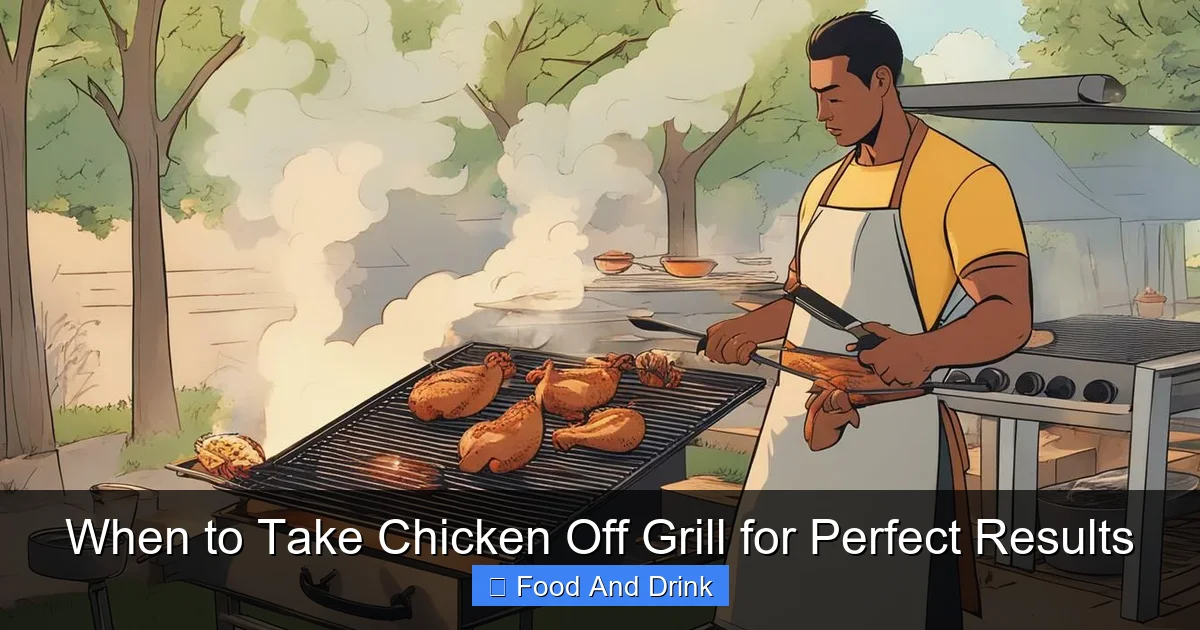
When it comes to knowing when to take chicken off grill, nothing beats a reliable meat thermometer. Visual cues like color and texture can be misleading, especially with marinades or sauces that darken the surface. The only way to be 100% sure your chicken is done is by checking its internal temperature.
The USDA and food safety experts agree: all chicken—whether it’s breasts, thighs, wings, or a whole bird—should reach an internal temperature of 165°F (74°C). This temperature ensures that harmful bacteria are destroyed, making the chicken safe to eat.
But here’s a pro tip: you don’t actually need to wait until the chicken hits 165°F on the grill. Because of something called “carryover cooking,” the internal temperature of meat continues to rise after it’s removed from the heat source. For chicken, this can increase the temperature by 5–10°F (3–6°C) during the resting period.
That means you can safely take chicken off grill when it reaches 160–162°F (71–72°C). By the time it rests for 5–10 minutes, it will climb to the recommended 165°F (74°C) without overcooking.
To use a thermometer correctly, insert the probe into the thickest part of the meat, avoiding bones and fat. For boneless breasts, aim for the center. For thighs or drumsticks, check near the joint but not touching the bone. Instant-read thermometers are ideal because they give a reading in seconds and are highly accurate.
Digital thermometers with probes are even better for grilling. You can leave the probe in the chicken while it cooks and monitor the temperature in real time from a distance. This helps you avoid overcooking and gives you complete control over the process.
Different Cuts, Different Temperatures?
You might wonder: do different cuts of chicken need different temperatures? The short answer is no—all chicken should reach 165°F (74°C) for safety. However, the ideal texture and doneness can vary by cut.
For example, dark meat like thighs and drumsticks are more forgiving and can handle a slightly higher temperature—up to 170–175°F (77–80°C)—without drying out. In fact, some chefs prefer thighs at this range because the connective tissue breaks down, making the meat extra tender and juicy.
Breast meat, on the other hand, is lean and dries out quickly. It’s best cooked to 160–165°F (71–74°C) and removed from the grill at 160°F (71°C) to account for carryover cooking. Overcooking breasts is one of the most common grilling mistakes.
Wings are another story. They’re small and cook fast, so they can go from perfect to burnt in minutes. Aim for 165°F (74°C), but watch them closely—especially if they’re glazed or sauced, which can cause burning.
So while the target temperature is the same across the board, understanding the characteristics of each cut helps you time your grilling perfectly.
Visual and Textural Cues to Watch For

Visual guide about When to Take Chicken Off Grill for Perfect Results
Image source: shungrill.com
While a thermometer is the gold standard, visual and textural cues can help you estimate when to take chicken off grill—especially if you don’t have a thermometer handy. These signs aren’t as precise, but they’re useful backup indicators.
One of the first things to look for is color. Raw chicken is pink or grayish, while fully cooked chicken turns white or light beige throughout. If you cut into a piece and see any pink or translucent areas, it’s not done yet. However, be cautious—some chicken, especially thighs, can retain a slight pink hue near the bone even when fully cooked. This is normal and not a sign of undercooking.
Another cue is juice clarity. When chicken is undercooked, the juices that run out are pink or bloody. As it cooks, those juices turn clear. If you pierce the meat and clear juices flow out, it’s a good sign the chicken is done. But again, this isn’t foolproof—some marinades can tint the juices, making them appear cloudy even when the chicken is safe.
Texture is another helpful clue. Raw chicken feels soft and squishy. As it cooks, it firms up. When fully cooked, it should feel springy but not rubbery. You can test this by gently pressing the meat with tongs or a fork. If it springs back, it’s likely done. If it feels mushy or leaves an indentation, it needs more time.
Grill marks and browning also matter. A well-seared chicken breast or thigh should have deep, golden-brown grill marks and a slightly crispy exterior. This indicates good heat transfer and the development of flavorful crust. But don’t rely solely on color—charred or blackened spots can mean the outside is burnt while the inside is still undercooked.
Finally, listen to the sizzle. When chicken first hits the grill, it sizzles loudly as moisture escapes. As it cooks, the sizzle softens. When the sound becomes faint or stops, it’s a sign the surface is mostly dry and the chicken is nearing doneness.
While these cues are helpful, they should never replace a thermometer. Use them as supplementary tools, especially when you’re learning to grill.
Grill Setup and Heat Management
Visual guide about When to Take Chicken Off Grill for Perfect Results
Image source: wikihow.com
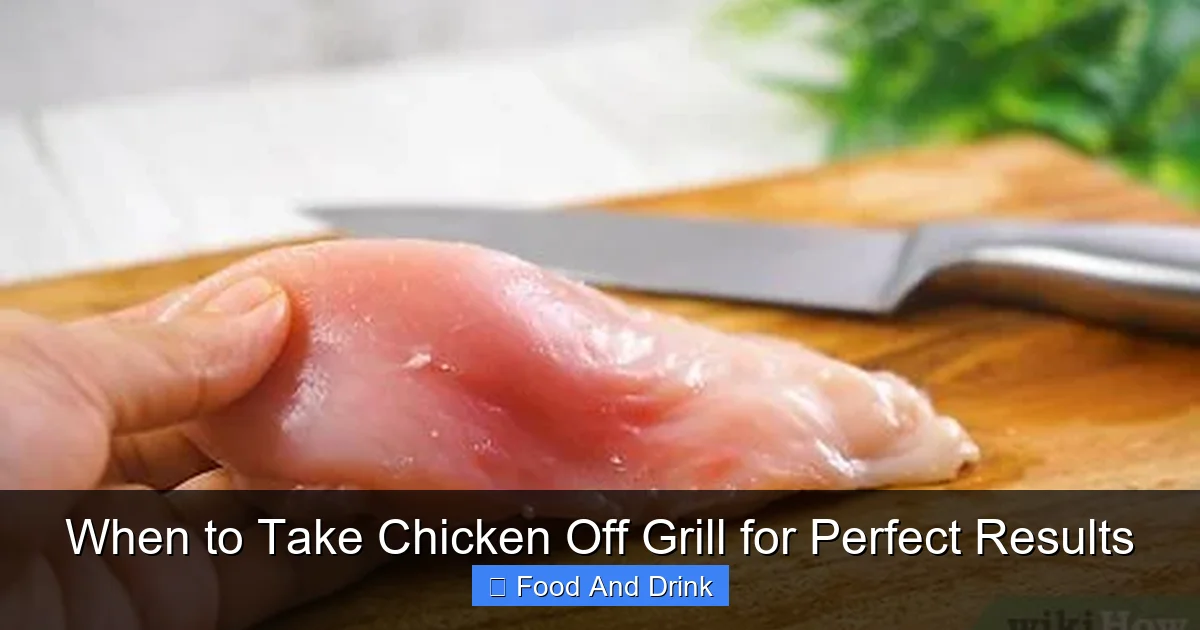
Knowing when to take chicken off grill isn’t just about the chicken—it’s also about how you set up your grill. Heat management is crucial for even cooking and preventing flare-ups, which can char the outside while leaving the inside raw.
There are two main types of grilling: direct and indirect heat. Direct heat means placing the chicken directly over the flame or coals. This is great for quick-cooking items like wings, thin cutlets, or skewers. It gives you those beautiful grill marks and a nice sear.
Indirect heat means cooking the chicken next to, but not directly over, the heat source. This is ideal for thicker cuts like whole chickens, bone-in breasts, or large thighs. It allows the heat to circulate around the meat, cooking it evenly from all sides without burning the exterior.
For most chicken grilling, a two-zone setup works best. Light one side of the grill (or pile coals on one side) and leave the other side off. This gives you both high-heat searing and lower-heat cooking zones. Start by searing the chicken over direct heat for 2–3 minutes per side to develop flavor, then move it to indirect heat to finish cooking through.
Temperature control is also key. For gas grills, preheat on high, then reduce to medium (around 350–400°F or 175–200°C) for cooking. For charcoal, aim for a medium heat with coals spread evenly. Use a grill thermometer to monitor the temperature if your grill doesn’t have a built-in gauge.
Flare-ups happen when fat drips onto the flames, causing sudden bursts of fire. While a little char is fine, excessive flare-ups can burn your chicken. To prevent them, trim excess fat, keep the grill clean, and use a drip pan under the chicken when using indirect heat.
Also, avoid lifting the lid too often. Every time you open the grill, heat escapes, which can延长 cooking time and dry out the meat. Use a timer and check only when necessary.
Adjusting for Different Cuts
Different cuts of chicken require different grilling approaches. Here’s how to adjust your technique:
– Boneless, skinless breasts: These are lean and cook quickly—usually 6–8 minutes per side over medium heat. Use a thermometer and remove at 160°F (71°C). Brining or marinating helps keep them moist.
– Bone-in, skin-on breasts: Thicker and more forgiving. Sear over direct heat, then finish over indirect heat for 20–25 minutes total. The skin should be crispy and golden.
– Thighs and drumsticks: Dark meat with more fat and connective tissue. Cook over indirect heat for 25–30 minutes, turning occasionally. They can handle higher temps and benefit from longer cooking.
– Wings: Small and fast-cooking. Grill over direct heat for 10–12 minutes, turning often. For extra crispiness, finish over high heat for the last 2 minutes.
– Whole chicken: Best cooked on a rotisserie or using the beer can method over indirect heat. Takes 1–1.5 hours at 350°F (175°C). Use a thermometer to check the thickest part of the thigh.
Matching your grill setup to the cut ensures even cooking and helps you know exactly when to take chicken off grill.
Resting: The Final Step for Juicy Chicken
Once you’ve determined it’s time to take chicken off grill, the process isn’t over—it’s just beginning. Resting is one of the most overlooked but important steps in grilling.
When chicken cooks, the juices inside are pushed toward the center by the heat. If you cut into it immediately, those juices spill out, leaving the meat dry. Resting allows the juices to redistribute throughout the meat, resulting in a moist, flavorful bite.
For most cuts, let the chicken rest for 5–10 minutes. Smaller pieces like wings or cutlets can rest for 5 minutes, while larger cuts like whole chickens or bone-in breasts need closer to 10 minutes. Cover loosely with foil to keep warm, but don’t wrap tightly—this can steam the skin and make it soggy.
During this time, the internal temperature will continue to rise slightly due to carryover cooking, as mentioned earlier. This is why removing chicken at 160–162°F (71–72°C) is ideal—it reaches 165°F (74°C) while resting, without overcooking.
Resting also makes the chicken easier to handle and carve. The meat firms up slightly, so slicing or pulling it apart is cleaner and more precise.
Think of resting as the final act of cooking. It’s the difference between good grilled chicken and great grilled chicken.
Common Mistakes and How to Avoid Them
Even experienced grillers make mistakes when it comes to knowing when to take chicken off grill. Here are some common pitfalls and how to avoid them:
– Guessing instead of using a thermometer: Relying on time or color alone leads to inconsistent results. Always use a meat thermometer for accuracy.
– Overcooking lean cuts: Boneless breasts dry out fast. Remove them at 160°F (71°C) and let them rest.
– Undercooking thick cuts: Bone-in or large pieces need indirect heat and longer cooking. Don’t rush the process.
– Flipping too often: Let the chicken sear properly. Flip only once or twice to develop grill marks and prevent sticking.
– Ignoring carryover cooking: Removing chicken at 165°F (74°C) can lead to overcooking. Take it off at 160–162°F (71–72°C).
– Not preheating the grill: A cold grill won’t sear properly and can延长 cooking time. Always preheat for 10–15 minutes.
– Using high heat for everything: High heat is great for searing, but most chicken needs medium heat to cook through without burning.
By avoiding these mistakes, you’ll grill chicken that’s safe, juicy, and full of flavor every time.
Tips for Flavor and Moisture
Grilling is as much about flavor as it is about timing. Here are some tips to make your chicken even better:
– Marinate for at least 30 minutes: Acidic marinades (with lemon, vinegar, or yogurt) tenderize and add flavor. Oil-based marinades help prevent sticking.
– Brine before grilling: A saltwater brine (or dry brine with salt) keeps chicken moist, especially breasts. Brine for 1–2 hours or overnight.
– Use a dry rub: Spices, herbs, and sugar create a flavorful crust. Apply 30 minutes before grilling.
– Add smoke flavor: Use wood chips (like hickory, apple, or cherry) on charcoal or gas grills for a smoky taste.
– Baste with sauce near the end: Sugary sauces burn easily. Apply in the last 5 minutes of cooking or after removing from the grill.
These techniques enhance taste and texture, making your grilled chicken unforgettable.
Conclusion
Knowing when to take chicken off grill is a skill that combines science, experience, and a little intuition. It’s not just about hitting a timer or waiting for the color to change—it’s about using a thermometer, managing heat, and understanding how different cuts behave on the grill.
By aiming for an internal temperature of 160–162°F (71–72°C), using a two-zone grill setup, and letting your chicken rest, you’ll achieve juicy, safe, and delicious results every time. Add in marinades, brining, and proper seasoning, and you’ve got a meal that’s as flavorful as it is perfectly cooked.
Grilling chicken doesn’t have to be intimidating. With the right knowledge and tools, you can master the art of timing and turn every cookout into a success. So fire up the grill, trust your thermometer, and enjoy the perfect bite.
🎥 Related Video: How to Grill a JUICY Chicken Breast
📺 Tastefully Grace
Full details and instructions on how to grill juicy chicken breasts: https://tastefullygrace.com/how-to-grill-chicken-breast/
Frequently Asked Questions
Is it safe to eat chicken that’s slightly pink?
Chicken should not have any pink meat in the center. A slight pink hue near the bone in dark meat is normal and safe if the internal temperature has reached 165°F (74°C).
Can I grill frozen chicken?
It’s not recommended. Frozen chicken cooks unevenly and may remain undercooked in the center. Always thaw chicken completely before grilling.
How do I prevent flare-ups when grilling chicken?
Trim excess fat, keep the grill clean, use a drip pan, and avoid cooking over direct flames for long periods. Flare-ups can burn the chicken.
Should I wash chicken before grilling?
No. Washing chicken can spread bacteria around your kitchen. Cooking to the proper temperature kills harmful bacteria safely.
Can I reuse marinade that touched raw chicken?
No. Marinade that has contacted raw chicken can contain bacteria. If you want to use it as a sauce, set some aside before marinating.
How often should I flip chicken on the grill?
Flip chicken only once or twice. Let it sear properly to develop grill marks and prevent sticking. Over-flipping can延长 cooking time.


