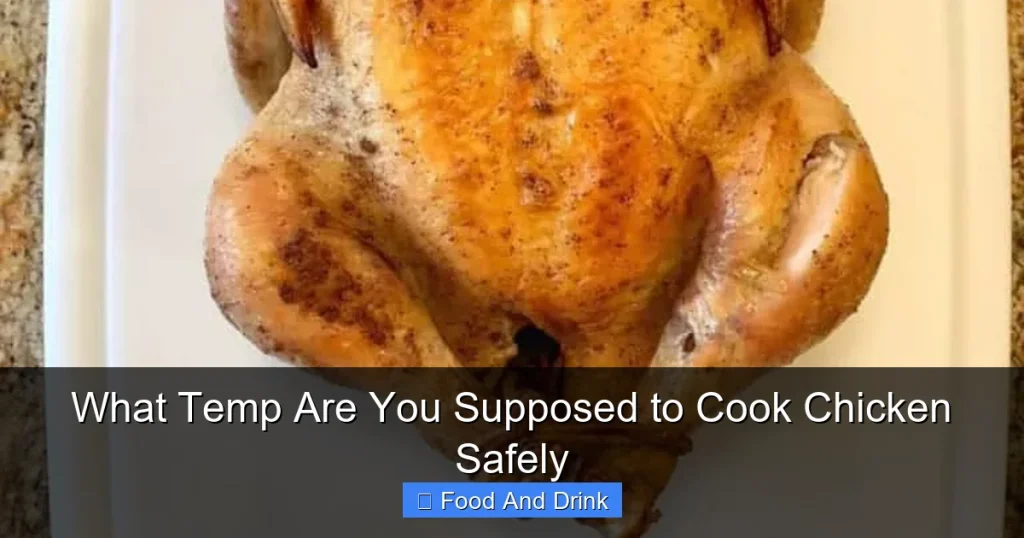

Chicken must reach a minimum internal temperature of 165°F (74°C) to be safe to eat, as recommended by the USDA. This temperature ensures harmful bacteria like Salmonella and Campylobacter are destroyed. Using a food thermometer is the only reliable way to confirm doneness—never rely on color or texture alone.
Key Takeaways
- Safe internal temperature: Cook all chicken to at least 165°F (74°C) measured with a food thermometer.
- Use a thermometer: Visual cues like color or juices running clear are not reliable indicators of safety.
- Different cuts, same rule: Whether it’s breast, thigh, wings, or ground chicken, 165°F is the magic number.
- Resting time matters: Let chicken rest 3–5 minutes after cooking—it can continue to rise in temperature and stay juicy.
- Ground chicken needs extra care: It reaches 165°F faster but is more prone to bacterial contamination due to increased surface area.
- Reheating safely: Reheat cooked chicken to 165°F to kill any bacteria that may have grown during storage.
- Prevent cross-contamination: Always wash hands, utensils, and surfaces after handling raw chicken.
Why Cooking Chicken to the Right Temperature Matters
Chicken is one of the most popular proteins in kitchens around the world. It’s versatile, affordable, and delicious when prepared well. But behind its mild flavor and tender texture lies a serious food safety concern: undercooked chicken can harbor dangerous bacteria like Salmonella, Campylobacter, and Listeria. These pathogens can cause food poisoning, leading to symptoms like nausea, vomiting, diarrhea, fever, and in severe cases, hospitalization.
The good news? Cooking chicken to the correct internal temperature kills these harmful microbes, making it safe to eat. The U.S. Department of Agriculture (USDA) and other global food safety organizations agree: 165°F (74°C) is the minimum safe internal temperature for all poultry, including chicken. This temperature is scientifically proven to destroy bacteria quickly and effectively.
But here’s the catch—many people still rely on outdated or unreliable methods to determine if their chicken is done. They might poke it with a fork, check if the juices run clear, or judge by the color of the meat. While these methods might seem logical, they’re not accurate. Chicken can turn white and release clear juices long before it reaches 165°F, especially in thinner cuts like breasts. Conversely, dark meat like thighs may retain a pinkish hue even when fully cooked due to higher myoglobin content.
That’s why using a food thermometer is non-negotiable. It’s the only way to know for sure that your chicken has reached a safe temperature. Think of it like a seatbelt—you might not need it every time, but when you do, it can be a lifesaver.
In this guide, we’ll walk you through everything you need to know about cooking chicken safely, from understanding why temperature matters to mastering the art of using a thermometer. Whether you’re grilling, baking, frying, or slow-cooking, these tips will help you serve delicious, safe chicken every single time.
What Is the Safe Internal Temperature for Chicken?
The golden rule for cooking chicken safely is simple: all parts of the chicken must reach an internal temperature of at least 165°F (74°C). This applies to every cut—breast, thigh, wing, drumstick, and even ground chicken. The USDA established this standard based on extensive research showing that at 165°F, harmful bacteria are destroyed in less than a second.
Let’s break it down by cut:
Chicken Breast
Chicken breast is lean and cooks quickly, but it’s also easy to overcook, leading to dry, rubbery meat. To avoid this, use a meat thermometer and pull the breast from the heat when it reaches 160°F (71°C). The temperature will continue to rise 5°F during resting, hitting the safe 165°F mark. This technique, known as “carryover cooking,” helps keep the meat juicy.
Chicken Thighs and Drumsticks
Dark meat cuts like thighs and drumsticks are more forgiving because they contain more fat and connective tissue. They can be cooked to 165°F, but many chefs prefer to go slightly higher—up to 175°F (79°C)—to break down collagen and achieve a more tender, fall-off-the-bone texture. However, for food safety, 165°F is still the minimum.
Chicken Wings
Wings are often fried or grilled and can be tricky because of their small size and irregular shape. Insert the thermometer into the thickest part, avoiding the bone. Once they hit 165°F, they’re safe to eat. For extra crispy skin, you can finish them under a broiler, but always check the temperature first.
Ground Chicken
Ground chicken is particularly risky because the grinding process spreads bacteria throughout the meat. It must reach 165°F throughout—no exceptions. Unlike whole cuts, there’s no resting time benefit here, so cook it thoroughly and check multiple spots.
Whole Roasted Chicken
When roasting a whole bird, check the temperature in three places: the thickest part of the breast (without touching the bone), the innermost part of the thigh, and the wing joint. All should read 165°F. If one area is done before the others, you can tent it with foil to prevent overcooking while the rest finishes.
Chicken Pieces with Bones
Bone-in cuts take longer to cook because the bone acts as an insulator. Always insert the thermometer into the meat near the bone but not touching it. The temperature should read 165°F in the center of the thickest part.
Remember, 165°F is the minimum—not the target. For best texture and flavor, consider cooking dark meat to 170–175°F and removing white meat at 160°F to account for carryover cooking.
How to Use a Food Thermometer Correctly
Using a food thermometer might seem straightforward, but there’s a right way and a wrong way to do it. A misplaced reading can lead to undercooked chicken or dry, overcooked meat. Here’s how to get it right every time.
Choose the Right Thermometer
Not all thermometers are created equal. For cooking chicken, you’ll want an instant-read digital thermometer. These are affordable (usually under $20), accurate, and give readings in seconds. Avoid pop-up timers that come with some whole chickens—they’re often unreliable and only measure one spot.
Other options include:
– Probe thermometers: Great for oven roasting; the probe stays in the meat while the display stays outside.
– Thermal guns: Measure surface temperature only—not useful for internal readings.
– Oven-safe thermometers: Stay in the meat during cooking but may not be as fast or precise.
Insert the Thermometer Properly
Where you insert the probe matters. For chicken breasts, go into the thickest part, angling the probe so it doesn’t touch the bone. For thighs, insert it into the center of the meat, again avoiding the bone. With whole chickens, check multiple spots as mentioned earlier.
Avoid these common mistakes:
– Touching the bone (it reads hotter than the meat)
– Measuring near fat or gristle (can give false readings)
– Only checking one spot (especially important for uneven cuts)
Clean Your Thermometer
After each use, wash the probe with hot, soapy water. Bacteria from raw chicken can linger on the thermometer and contaminate other foods. Never wipe it off with a towel and reuse it—always clean it thoroughly.
Calibrate Regularly
Over time, thermometers can lose accuracy. Test yours by placing it in a glass of ice water—it should read 32°F (0°C). If it doesn’t, adjust or replace it. Some models have a calibration feature; others may need to be replaced.
Practice Makes Perfect
The more you use your thermometer, the more confident you’ll become. Try it on different cuts, cooking methods, and recipes. You’ll start to recognize how temperature affects texture and learn when to pull your chicken off the heat for the best results.
Common Myths About Chicken Doneness
Despite clear guidelines from food safety experts, several myths about cooking chicken persist. Let’s bust the most common ones so you can cook with confidence.
Myth 1: “If the juices run clear, it’s done.”
This is one of the oldest myths in the book. While clear juices are a good sign, they don’t guarantee safety. Chicken can release clear juices well before reaching 165°F, especially if it’s been brined or marinated. The only way to know for sure is with a thermometer.
Myth 2: “Pink chicken is always undercooked.”
Not necessarily. Dark meat like thighs can remain slightly pink even when fully cooked due to higher levels of myoglobin, a protein that stores oxygen in muscle. Additionally, certain marinades (like those with soy sauce or smoked paprika) can cause discoloration. Temperature, not color, is the true indicator.
Myth 3: “If it’s white all the way through, it’s safe.”
Chicken breast can turn white at temperatures as low as 140°F (60°C)—far below the safe threshold. Relying on color alone can lead to undercooked, unsafe chicken.
Myth 4: “You can tell by poking it—if it’s firm, it’s done.”
Texture varies based on cooking method, marinade, and cut. A firm texture doesn’t equal safety. A thermometer is the only reliable tool.
Myth 5: “Ground chicken is safer because it’s processed.”
Actually, the opposite is true. Grinding increases the surface area, allowing bacteria to spread throughout the meat. Ground chicken must be cooked to 165°F and handled with extra care to avoid cross-contamination.
Myth 6: “Freezing kills bacteria, so frozen chicken is safer.”
Freezing doesn’t kill bacteria—it only slows their growth. Once thawed, bacteria can multiply rapidly if the chicken isn’t handled properly. Always thaw chicken in the refrigerator, not on the counter.
By dismissing these myths and relying on science-based methods, you’ll not only cook safer chicken but also improve your culinary skills.
Cooking Methods and Temperature Control
Different cooking methods require different approaches to temperature control. Here’s how to ensure your chicken reaches 165°F safely, no matter how you’re cooking it.
Baking and Roasting
Preheat your oven to 375°F (190°C) for even cooking. Place chicken on a rack in a roasting pan to allow air circulation. Use a probe thermometer to monitor internal temperature. For whole chickens, allow 20 minutes per pound, but always check with a thermometer.
Grilling
Preheat the grill to medium-high (around 375–400°F). Use indirect heat for larger cuts to prevent charring. Flip chicken halfway through and use a thermometer to check doneness. Avoid flare-ups, which can cause uneven cooking.
Pan-Frying and Sautéing
Use a heavy skillet over medium heat. Cook chicken in batches to avoid overcrowding, which lowers the pan temperature. Cover with a lid to trap heat and ensure even cooking. Check temperature in the thickest part.
Deep-Frying
Heat oil to 350°F (175°C). Fry chicken until golden brown, then check internal temperature. Smaller pieces like wings may take 8–10 minutes; larger breasts may need 12–15 minutes. Use a thermometer to confirm 165°F.
Slow Cooking
Cook chicken on low for 6–8 hours or high for 3–4 hours. The internal temperature should reach 165°F by the end. Avoid opening the lid frequently, as it lowers the temperature and extends cooking time.
Air Frying
Preheat the air fryer to 375°F (190°C). Cook chicken in a single layer, flipping halfway through. Check temperature after 15–20 minutes, depending on thickness.
No matter the method, always let chicken rest for 3–5 minutes after cooking. This allows juices to redistribute and the temperature to stabilize.
Tips for Juicy, Safe Chicken Every Time
Cooking chicken to 165°F doesn’t have to mean dry, bland meat. With a few smart techniques, you can serve juicy, flavorful chicken that’s also safe to eat.
Brining for Moisture
Soak chicken in a saltwater solution (brine) for 30 minutes to 2 hours before cooking. This helps the meat retain moisture, even when cooked to a higher temperature. Use 1/4 cup salt per quart of water, and add herbs or sugar for flavor.
Marinating for Flavor
Marinate chicken for at least 30 minutes (up to 24 hours) in the refrigerator. Acidic ingredients like lemon juice or vinegar can tenderize, but don’t marinate too long or the texture may become mushy.
Pat Dry Before Cooking
Moisture on the surface prevents browning. Pat chicken dry with paper towels before seasoning and cooking for a better sear and crispier skin.
Season Generously
Salt and pepper are essential, but don’t stop there. Use garlic powder, paprika, oregano, or your favorite spice blend. Season both sides and let it sit for 10–15 minutes to absorb flavors.
Don’t Overcook
Use the carryover cooking method: remove chicken from heat at 160°F for breasts, 165°F for thighs. The temperature will rise 5°F during resting, hitting the safe zone without drying out.
Let It Rest
Resting allows juices to settle. Cover loosely with foil and let sit for 3–5 minutes before slicing or serving.
Store and Reheat Properly
Refrigerate cooked chicken within 2 hours. Reheat to 165°F using a thermometer to ensure safety. Use a microwave, oven, or stovetop—avoid slow reheating.
Conclusion
Cooking chicken safely doesn’t have to be complicated. The key is simple: always cook chicken to an internal temperature of 165°F (74°C). This one rule protects you and your loved ones from foodborne illness while allowing you to enjoy delicious, juicy chicken in countless ways.
Forget the old myths about color, texture, or juice clarity. Invest in a good instant-read thermometer, learn how to use it correctly, and make it a habit with every meal. Whether you’re grilling burgers, roasting a whole bird, or frying up wings, temperature control is your best friend.
By following these guidelines, you’re not just cooking—you’re cooking smart. You’re ensuring every bite is safe, flavorful, and satisfying. So the next time you’re in the kitchen, ask yourself: “What temp am I supposed to cook chicken?” The answer is clear—165°F. And now, you know exactly how to get there.
Quick Q&A
What temp are you supposed to cook chicken to?
Chicken must reach a minimum internal temperature of 165°F (74°C) to be safe to eat, as recommended by the USDA.
Can you eat chicken at 160°F?
You can remove chicken from heat at 160°F if it will rest for 3–5 minutes, as the temperature will rise to 165°F during carryover cooking.
Is pink chicken always unsafe?
No, dark meat can remain slightly pink even when fully cooked due to myoglobin. Always use a thermometer to confirm safety.
Do you need a thermometer to cook chicken?
Yes, a food thermometer is the only reliable way to ensure chicken has reached a safe internal temperature.
Can you reheat chicken to 165°F?
Yes, reheating cooked chicken to 165°F ensures any bacteria that may have grown during storage are destroyed.
FAQs
What happens if you eat undercooked chicken?
Eating undercooked chicken can lead to food poisoning from bacteria like Salmonella or Campylobacter, causing symptoms such as nausea, vomiting, diarrhea, and fever.
How long does it take to cook chicken to 165°F?
Cooking time varies by method and cut, but generally, chicken breasts take 20–30 minutes in a 375°F oven, while thighs may take 35–45 minutes.
Can you cook chicken to a lower temperature if you hold it longer?
Yes, chicken can be held at lower temperatures for longer times (e.g., 150°F for 6 minutes), but 165°F is the safest and simplest standard for home cooks.
Is it safe to cook chicken from frozen?
Yes, but it takes about 50% longer. Use a thermometer to ensure it reaches 165°F throughout, and avoid thawing on the counter.
Why does my chicken dry out at 165°F?
Overcooking is the main cause. Use carryover cooking—remove at 160°F for breasts—and brine or marinate to retain moisture.
Can I use a meat thermometer for other foods?
Absolutely! Use it for beef, pork, fish, and even baked goods like bread to ensure perfect results every time.
This is a comprehensive guide about what temp are you supposed to cook chicken.
Key Takeaways
- Understanding what temp are you supposed to cook chicken: Provides essential knowledge
Quick Answers to Common Questions
What is what temp are you supposed to cook chicken?
what temp are you supposed to cook chicken refers to essential knowledge and techniques.
Frequently Asked Questions
What is what temp are you supposed to cook chicken?
what temp are you supposed to cook chicken is an important topic with many practical applications.