
Roasting chicken to perfection isn’t just about timing—it’s about temperature. Knowing the right internal temperature of roast chicken ensures juicy meat, crispy skin, and food safety. This guide breaks down everything you need to know for consistently delicious results.
Key Takeaways
- Safe internal temperature: Cook whole roast chicken to at least 165°F (74°C) in the thickest part of the thigh, avoiding the bone.
- Juiciness comes from precision: Removing the chicken at 160–165°F and letting it rest allows carryover cooking and retains moisture.
- Use a reliable meat thermometer: Guesswork leads to dry or undercooked chicken—always check with an instant-read thermometer.
- Resting is non-negotiable: Let the chicken rest for 15–20 minutes after roasting to redistribute juices.
- Different cuts, different temps: Breast meat dries out faster than dark meat—adjust cooking times and temps accordingly.
- Oven temperature matters: Roast at 375°F to 425°F (190°C to 220°C) for even browning and thorough cooking.
- Brining and seasoning enhance results: These steps improve moisture retention and flavor, especially when combined with proper temperature control.
Quick Answers to Common Questions
What is the minimum safe temperature for roast chicken?
The USDA recommends cooking roast chicken to a minimum internal temperature of 165°F (74°C) to ensure food safety.
Can I eat roast chicken at 160°F?
Yes, if it rests properly. Removing the chicken at 160°F allows carryover cooking to bring it to 165°F during resting, keeping it juicy and safe.
Where should I insert the thermometer in a roast chicken?
Insert it into the thickest part of the thigh, near the breast, avoiding the bone. This is the last area to cook and gives the most accurate reading.
How long should I let roast chicken rest?
Rest for 15–20 minutes, covered loosely with foil. This allows juices to redistribute and ensures moist, tender meat.
Does brining affect the cooking temperature?
Brining adds moisture but doesn’t change the target temperature. Still cook to 165°F, but brined chicken may stay juicier at slightly higher temps.
📑 Table of Contents
- Why Temperature Is the Secret to Perfect Roast Chicken
- What Is the Safe Internal Temperature of Roast Chicken?
- How to Use a Meat Thermometer Like a Pro
- The Role of Resting in Juicy Roast Chicken
- Oven Temperature and Roasting Techniques
- Factors That Affect Roast Chicken Temperature
- Tips for Juicy, Flavorful Roast Chicken Every Time
- Troubleshooting Common Roast Chicken Problems
- Conclusion: Master the Temperature, Master the Chicken
Why Temperature Is the Secret to Perfect Roast Chicken
There’s something deeply satisfying about pulling a golden, aromatic roast chicken out of the oven. The skin crackles under your fork, the meat falls off the bone, and every bite is tender and flavorful. But achieving that level of perfection isn’t magic—it’s science. And at the heart of that science is one critical factor: temperature.
Too many home cooks rely on time alone, setting a timer and hoping for the best. But chicken doesn’t cook the same way every time. Factors like oven calibration, chicken size, starting temperature (room temp vs. fridge-cold), and even altitude can affect cooking time. That’s why the only reliable way to know your chicken is done is by checking its internal temperature.
The ideal temperature of roast chicken isn’t just about safety—it’s about texture, juiciness, and flavor. Overcooking, even by a few degrees, can turn moist, succulent meat into dry, stringy disappointment. Undercooking, on the other hand, poses serious health risks. The good news? With a little knowledge and the right tools, you can consistently roast a chicken that’s both safe and sensational.
What Is the Safe Internal Temperature of Roast Chicken?
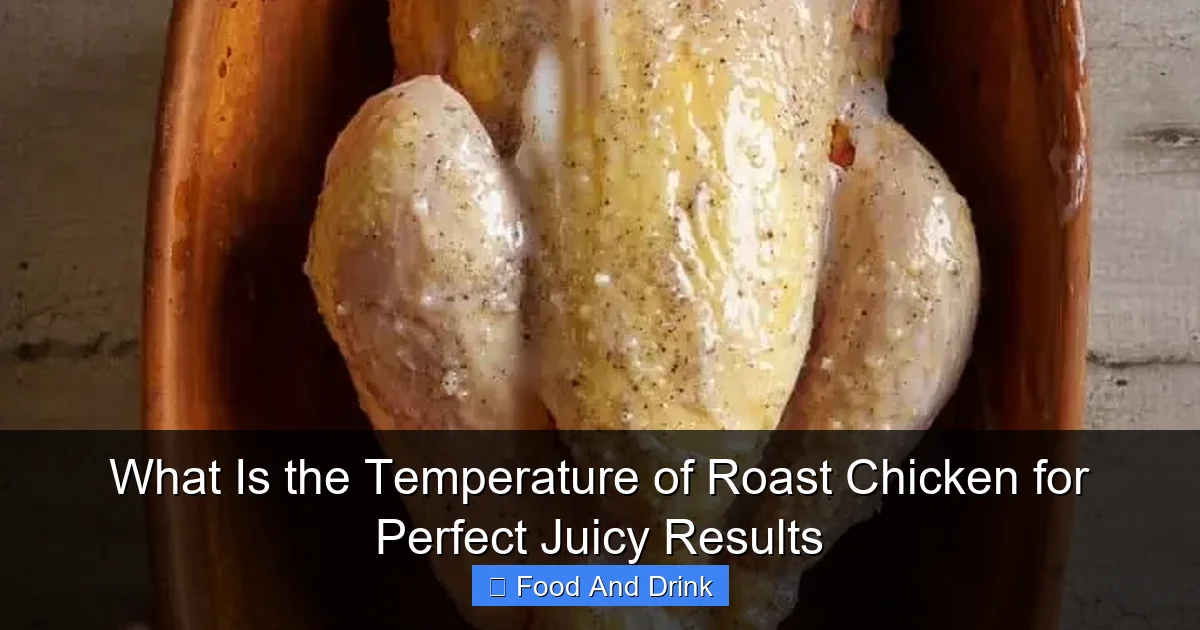
Visual guide about What Is the Temperature of Roast Chicken for Perfect Juicy Results
Image source: idratherbeachef.com
The U.S. Department of Agriculture (USDA) recommends cooking all poultry, including whole chickens, to a minimum internal temperature of 165°F (74°C). This temperature ensures that harmful bacteria like Salmonella and Campylobacter are destroyed, making the chicken safe to eat.
But here’s the catch: 165°F is the *minimum* safe temperature, not necessarily the *ideal* one for juiciness. In fact, many professional chefs and food scientists suggest pulling your chicken from the oven when it reaches 160°F (71°C), especially in the breast. Why? Because of something called carryover cooking.
As the chicken rests after roasting, the internal temperature continues to rise by 5–10°F. So if you remove it at 160°F, it will reach 165°F during resting—right in the safe zone—while staying incredibly moist.
Where to Measure the Temperature
Knowing where to insert your thermometer is just as important as knowing the number. The thickest part of the thigh, where the leg meets the body, is the best spot. This area is the last to cook and is less prone to drying out than the breast. Avoid touching the bone, as it conducts heat and can give a false reading.
For whole chickens, insert the probe into the inner thigh, near the breast, without letting it touch the bone. If you’re checking the breast, aim for the center, about halfway down from the top. The breast should read 160–165°F at the end of cooking.
Why 165°F Isn’t Always the Best Target
While 165°F is the USDA standard, many experienced cooks aim slightly lower. At 160°F, the proteins in the meat haven’t fully tightened, which means more moisture is retained. The difference between 160°F and 165°F might seem small, but it can be the difference between juicy and dry.
Think of it like this: chicken breast meat begins to dry out rapidly once it passes 160°F. Dark meat (thigh and leg) is more forgiving and can handle a few extra degrees. That’s why many chefs recommend cooking whole chickens until the thigh hits 165°F and the breast is around 160°F—achieving a balance between safety and tenderness.
How to Use a Meat Thermometer Like a Pro
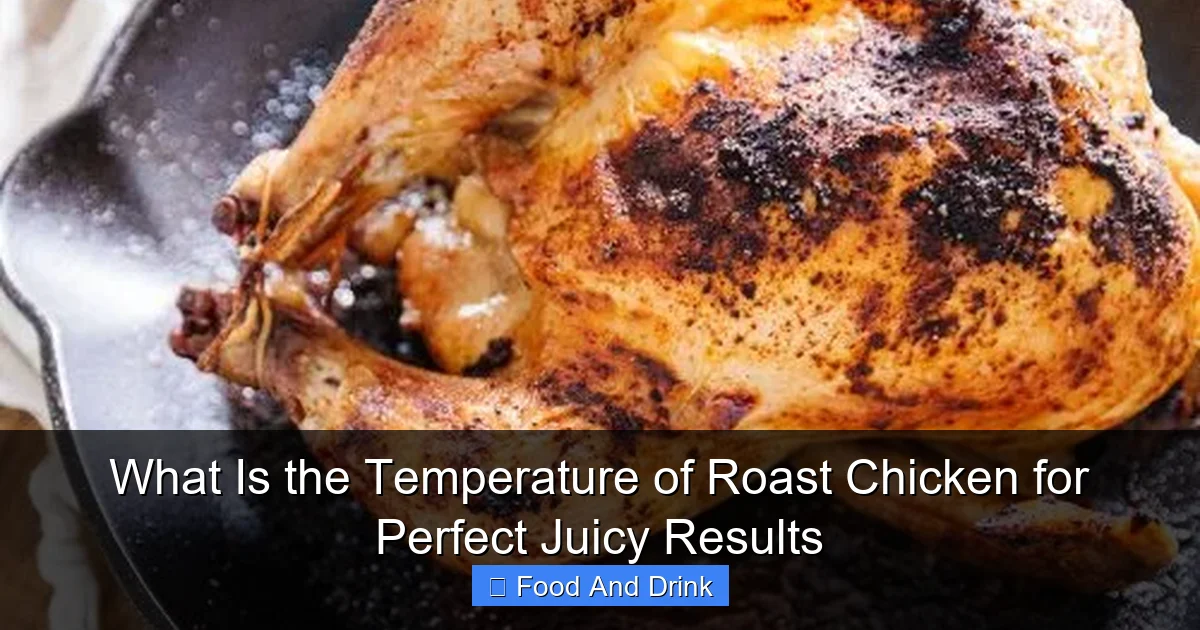
Visual guide about What Is the Temperature of Roast Chicken for Perfect Juicy Results
Image source: yummywholefoodrecipes.com
If you don’t already own a meat thermometer, now is the time to get one. It’s the single most important tool for perfect roast chicken. No more cutting into the meat to check—just a quick probe and you’re done.
Types of Thermometers
There are two main types you’ll want to consider:
– **Instant-read thermometers:** These are handheld devices that give a reading in 2–5 seconds. They’re perfect for checking temperature at the end of cooking. Look for one with a thin probe and a clear digital display. Popular brands include Thermapen, ThermoPop, and Lavatools.
– **Leave-in probe thermometers:** These stay in the chicken while it roasts and connect to a base unit or smartphone app. They alert you when the target temperature is reached. Great for hands-off cooking, especially with larger birds.
For most home cooks, an instant-read thermometer is sufficient. But if you’re roasting chickens frequently or hosting big dinners, a leave-in probe can be a game-changer.
Tips for Accurate Readings
– **Calibrate your thermometer:** Use the ice water test (should read 32°F/0°C) or boiling water test (212°F/100°C at sea level) to ensure accuracy.
– **Insert the probe correctly:** Go deep enough to reach the center of the meat, but avoid bone, fat, or gristle.
– **Check multiple spots:** Especially with unevenly shaped chickens, check both the thigh and breast.
– **Clean after each use:** Bacteria can linger on probes, so wash with hot, soapy water.
Common Mistakes to Avoid
– **Checking too early:** Don’t probe the chicken in the first 30–40 minutes of roasting. You’ll lose heat and slow down cooking.
– **Using a dirty thermometer:** Cross-contamination is a real risk. Always clean your probe between uses.
– **Relying on pop-up timers:** Most store-bought chickens come with a pop-up timer, but these are often inaccurate. Always double-check with a thermometer.
The Role of Resting in Juicy Roast Chicken
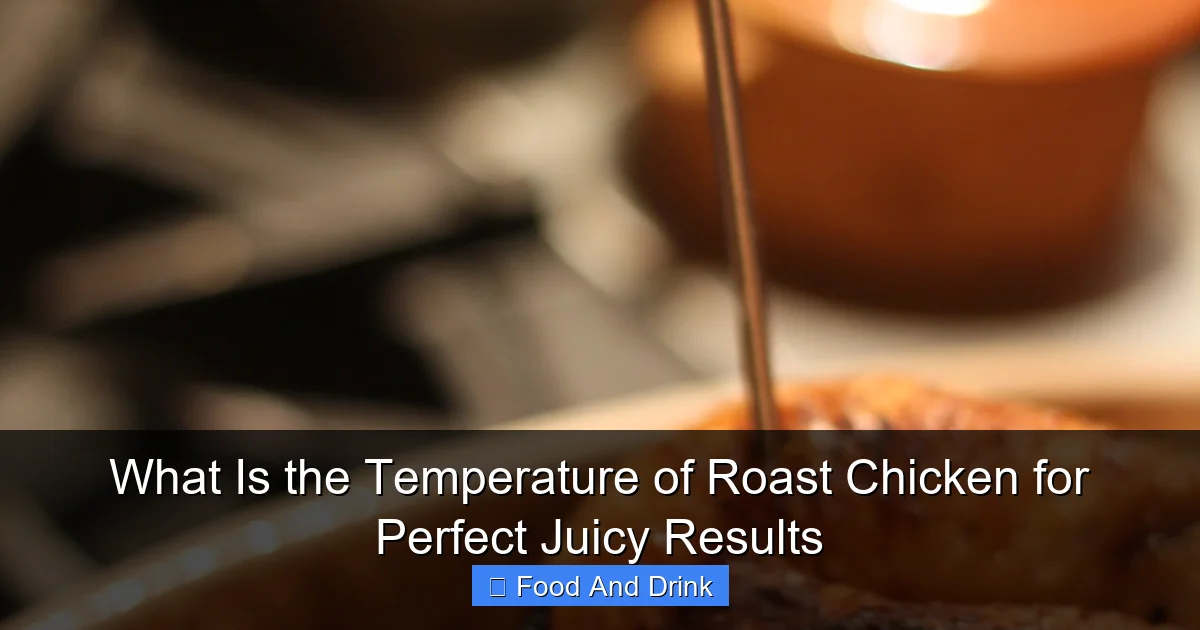
Visual guide about What Is the Temperature of Roast Chicken for Perfect Juicy Results
Image source: newengland.com
You’ve roasted your chicken to the perfect temperature. The skin is golden, the aroma is irresistible. But before you carve, there’s one crucial step: resting.
Resting allows the juices, which have been driven to the center of the meat by heat, to redistribute throughout the chicken. If you carve too soon, those juices will spill out onto the cutting board, leaving the meat dry.
How Long Should You Rest Roast Chicken?
For a whole chicken, aim to rest it for 15–20 minutes. Cover it loosely with foil to keep it warm, but don’t wrap it tightly—this can steam the skin and make it soggy.
During this time, the internal temperature will rise by 5–10°F due to carryover cooking. That’s why pulling the chicken at 160°F is so effective—it finishes cooking while resting, hitting the safe 165°F mark without overcooking.
Resting vs. Carryover Cooking
These two concepts go hand in hand. Carryover cooking is the phenomenon where heat continues to move from the outside of the meat to the center after it’s removed from the oven. Resting gives this process time to work.
Think of it like a sponge: when you squeeze it, water comes out. But if you let it sit, the water redistributes. The same principle applies to chicken. Resting ensures every bite is moist and flavorful.
Pro Tip: Rest on a Rack
Place your roasted chicken on a wire rack over a baking sheet while it rests. This allows air to circulate underneath, preventing the bottom from becoming soggy. It also makes carving easier, as the chicken isn’t sitting in its own juices.
Oven Temperature and Roasting Techniques
While internal temperature is the final judge of doneness, your oven temperature plays a big role in how your chicken cooks. The right heat ensures even browning, crispy skin, and thorough cooking without drying out the meat.
Recommended Oven Temperatures
Most roast chicken recipes call for an oven temperature between 375°F and 425°F (190°C to 220°C). Here’s how to choose:
– **375°F (190°C):** Lower and slower. Ideal for larger chickens (over 5 lbs) or if you want extra-tender meat. Takes longer but reduces the risk of overcooking the breast.
– **400°F (200°C):** The sweet spot. Balances browning and even cooking. Great for chickens 3–5 lbs.
– **425°F (220°C):** High heat for crispy skin. Best for smaller birds (under 4 lbs) or if you’re short on time. Watch closely to avoid drying out the breast.
Roasting Methods That Affect Temperature
– **Roasting breast-side up:** The traditional method. Allows even browning and keeps the breast moist.
– **Spatchcocking (butterflying):** Removing the backbone and flattening the chicken. Cooks faster and more evenly, reducing the risk of undercooked thighs or overcooked breasts.
– **Roasting on a rack:** Elevates the chicken, allowing heat to circulate underneath. Promotes even browning and prevents soggy skin.
– **Starting hot, then lowering heat:** Some chefs recommend starting at 450°F for 15 minutes to crisp the skin, then reducing to 350°F to finish cooking.
How Long to Roast Based on Weight
While time varies, here’s a general guideline for unstuffed chickens roasted at 400°F:
– 3–3.5 lbs: 60–75 minutes
– 4–4.5 lbs: 75–90 minutes
– 5–6 lbs: 90–105 minutes
Always use a thermometer to confirm doneness. These times are estimates and can vary based on oven performance and chicken starting temperature.
Factors That Affect Roast Chicken Temperature
Even with the best techniques, several variables can influence how your chicken cooks. Understanding these helps you adapt and achieve consistent results.
Starting Temperature of the Chicken
A chicken straight from the fridge will take longer to cook than one at room temperature. For more even cooking, let the chicken sit out for 30–60 minutes before roasting. This reduces the risk of overcooking the outside while the inside catches up.
Size and Shape of the Chicken
Larger chickens take longer to cook and are more prone to uneven doneness. Smaller birds cook faster but can dry out if overcooked. Irregular shapes (like organic or free-range chickens) may have thicker breasts or legs, requiring adjustments.
Bone-In vs. Boneless
Bone-in chicken retains moisture better and cooks more evenly. Boneless breasts cook faster but are more likely to dry out. If roasting boneless, reduce oven temperature by 25°F and monitor closely.
Brining and Marinades
Brining (soaking in saltwater) or marinating adds moisture and flavor. Brined chickens can handle slightly higher internal temperatures without drying out. However, they may take longer to roast due to increased moisture content.
Oven Hot Spots and Calibration
Not all ovens heat evenly. Use an oven thermometer to check if your oven runs hot or cold. Rotate the chicken halfway through roasting to ensure even browning and cooking.
Tips for Juicy, Flavorful Roast Chicken Every Time
Beyond temperature, a few simple techniques can elevate your roast chicken from good to extraordinary.
Season Generously
Salt is your best friend. Season the chicken inside and out at least 30 minutes before roasting, or even better, dry-brine it overnight. This draws out moisture, which is then reabsorbed with salt, resulting in seasoned, juicy meat.
Truss the Legs
Tying the legs together with kitchen twine helps the chicken cook evenly and keeps the shape compact. It also prevents the legs from drying out.
Add Flavor Under the Skin
Gently loosen the skin over the breast and thighs and tuck in butter, herbs (like thyme, rosemary, or sage), or garlic. This bastes the meat from above as it roasts.
Use Aromatics in the Cavity
Fill the cavity with lemon halves, onion wedges, garlic cloves, and fresh herbs. These add moisture and infuse the meat with flavor as they steam during roasting.
Baste for Extra Crispiness
Basting with pan juices or melted butter every 20–30 minutes helps crisp the skin and adds richness. Use a spoon or bulb baster—just avoid opening the oven too often, which can drop the temperature.
Let It Shine with a Glaze (Optional)
In the last 10–15 minutes, brush the chicken with a glaze made from honey, mustard, soy sauce, or balsamic vinegar. This adds a beautiful sheen and caramelized flavor.
Troubleshooting Common Roast Chicken Problems
Even with the best intentions, things can go wrong. Here’s how to fix common issues:
Dry Breast Meat
Cause: Overcooking or high oven temperature.
Solution: Remove the chicken when the breast reaches 160°F. Use a lower oven temp (375°F) for larger birds. Consider brining or butterflying.
Undercooked Thighs
Cause: Chicken too large or oven too cool.
Solution: Ensure the thigh reaches 165°F. Spatchcocking helps thighs and breasts cook at the same rate.
Soggy Skin
Cause: Not enough heat, resting in juices, or covering too tightly.
Solution: Roast at 400°F or higher. Rest on a rack. Pat skin dry before roasting.
Pale, Unappetizing Skin
Cause: Low oven temperature or lack of fat.
Solution: Start with high heat (425°F) for the first 15 minutes. Rub skin with oil or butter.
Uneven Cooking
Cause: Oven hot spots or irregular chicken shape.
Solution: Rotate the pan halfway through. Use a leave-in thermometer to monitor both breast and thigh.
Conclusion: Master the Temperature, Master the Chicken
Roasting the perfect chicken doesn’t require fancy equipment or professional skills—just attention to temperature. By understanding the ideal internal temperature of roast chicken, using a reliable thermometer, and mastering techniques like resting and seasoning, you can consistently serve juicy, flavorful, and safe poultry.
Remember: 165°F is the safety benchmark, but 160°F (with resting) is often the sweet spot for juiciness. Whether you’re roasting a weeknight dinner or a holiday feast, temperature is your guide to success.
So next time you’re in the kitchen, skip the timer and trust the thermometer. Your taste buds—and your guests—will thank you.
Frequently Asked Questions
Is it safe to eat roast chicken at 160°F?
Yes, as long as it rests. The internal temperature will rise to 165°F during resting, making it safe while preserving juiciness.
Why is my roast chicken dry even though I followed the recipe?
Overcooking is the most common cause. Use a thermometer and remove the chicken at 160°F. Also, brining and proper resting help retain moisture.
Can I roast a frozen chicken?
It’s not recommended. Frozen chicken cooks unevenly and increases the risk of undercooked areas. Always thaw in the fridge before roasting.
How do I know if my oven temperature is accurate?
Use an oven thermometer to check. Place it inside while preheating and compare the reading to your oven’s setting.
Should I cover roast chicken while it rests?
Cover loosely with foil to keep warm, but don’t wrap tightly. This prevents steaming the skin and keeps it crispy.
Can I use a meat thermometer on a whole chicken?
Absolutely. In fact, it’s essential. Use an instant-read or leave-in probe to check the thigh and breast for accurate doneness.