



Understanding how much cooked chicken breast equals 4 ounces is essential for meal prep, dieting, and healthy eating. This guide breaks down exact weights, visual cues, and cooking methods to help you measure protein accurately—whether you’re tracking macros or cooking for one.
Key Takeaways
- 4 ounces of cooked chicken breast is about the size of a deck of cards or the palm of your hand. This visual guide helps estimate portions without a scale.
- Cooking reduces chicken weight by 25–30% due to moisture loss. So, 4 ounces cooked starts as roughly 5–6 ounces raw.
- Average boneless, skinless chicken breast yields 5–6 ounces when cooked. One breast often provides more than a single 4-ounce serving.
- Use a food scale for precision, especially for fitness or medical diets. Eyeballing works for casual meals, but scales ensure accuracy.
- Shredded or diced chicken takes up less space but weighs the same. Volume changes, but protein content remains consistent.
- Different cooking methods affect shrinkage and final weight. Grilling and baking dry out chicken more than poaching or steaming.
- Always measure chicken after cooking, not before. Nutrition labels and recipes typically refer to cooked weight for accuracy.
Quick Answers to Common Questions
How much cooked chicken breast equals 4 ounces?
Four ounces of cooked chicken breast is about the size of a deck of cards or the palm of your hand. It typically starts as 5–6 ounces of raw chicken due to moisture loss during cooking.
Can I measure chicken before cooking?
It’s best to measure chicken after cooking, as raw weight doesn’t reflect the final portion. Recipes and nutrition labels usually refer to cooked weight for accuracy.
How many calories are in 4 ounces of cooked chicken breast?
A 4-ounce serving contains about 185–200 calories, 35–37 grams of protein, and 4–5 grams of fat, making it a lean, high-protein choice.
Is one chicken breast equal to 4 ounces?
Most boneless, skinless chicken breasts weigh 6–8 ounces raw and yield 5–6 ounces cooked, so one breast is usually more than a single 4-ounce serving.
How do I keep chicken from shrinking too much?
Use moist cooking methods like poaching or brining, avoid overcooking, and remove chicken from heat at 160°F so it finishes cooking while resting.
📑 Table of Contents
- Why Knowing How Much Cooked Chicken Breast Equals 4 Ounces Matters
- Raw vs. Cooked: The Weight Difference Explained
- Visual Guides: How to Estimate 4 Ounces Without a Scale
- How Much Raw Chicken to Buy for 4 Ounces Cooked
- Measuring Cooked Chicken: Tools and Techniques
- Nutritional Value of 4 Ounces of Cooked Chicken Breast
- Practical Tips for Perfect Chicken Every Time
- Conclusion
Why Knowing How Much Cooked Chicken Breast Equals 4 Ounces Matters
When it comes to eating healthy, protein is a cornerstone. Chicken breast, in particular, is a favorite for its lean protein, low fat, and versatility. But here’s the catch: getting the portion right can be tricky. You might think you’re eating 4 ounces of chicken, but without knowing how much cooked chicken breast equals 4 ounces, you could be under or over your target.
Whether you’re meal prepping for the week, following a fitness plan, or managing a medical condition like diabetes, accurate protein intake is crucial. Too little, and you might not feel full or support muscle recovery. Too much, and you could exceed your calorie or sodium goals—especially if the chicken is pre-seasoned or processed.
Understanding portion sizes also helps with budgeting and reducing food waste. Buying the right amount of chicken means you’re not tossing leftovers or running back to the store midweek. Plus, when you know exactly how much you’re eating, you can better balance your plate with vegetables, grains, and healthy fats.
So, let’s dive into the details. We’ll cover everything from raw vs. cooked weights to visual comparisons, cooking methods, and practical tips for measuring at home. By the end, you’ll never guess your chicken portions again.
Raw vs. Cooked: The Weight Difference Explained
Visual guide about How Much Cooked Chicken Breast Equals 4 Ounces
Image source: cheatdaydesign.com
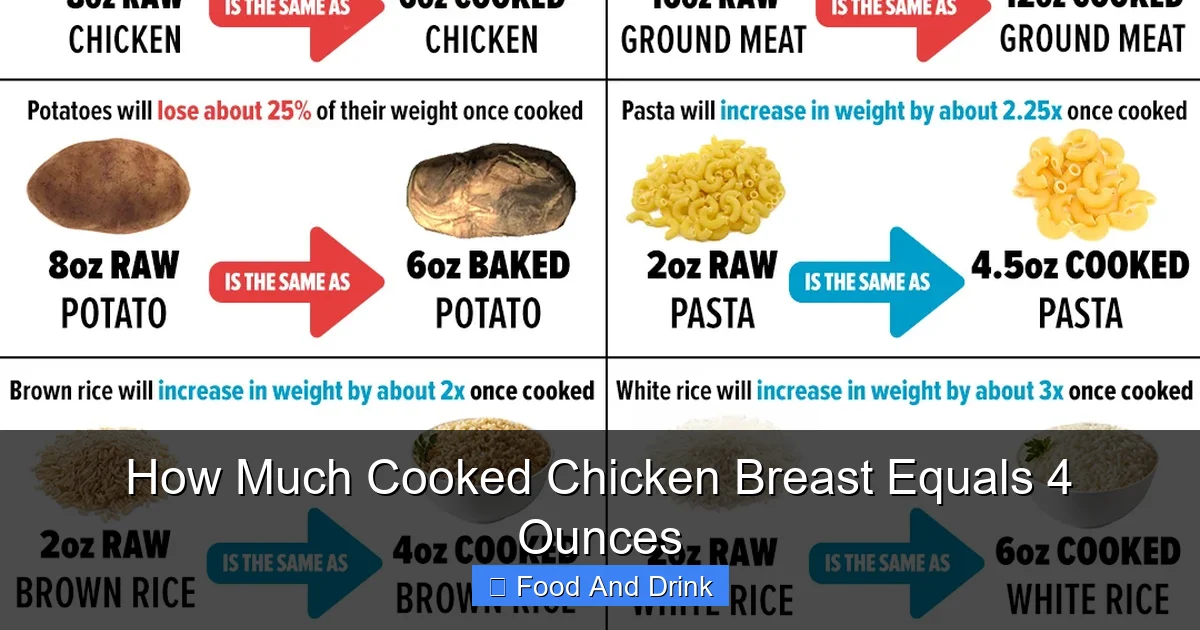
One of the most confusing aspects of chicken portions is the difference between raw and cooked weight. Many people assume that 4 ounces raw equals 4 ounces cooked—but that’s not the case. In reality, chicken loses a significant amount of weight during cooking due to moisture evaporation.
On average, chicken breast shrinks by about 25% to 30% when cooked. That means a 5-ounce raw chicken breast will yield roughly 3.5 to 4 ounces of cooked meat. So, if your recipe calls for 4 ounces of cooked chicken breast, you’ll need to start with about 5 to 5.5 ounces of raw chicken.
This shrinkage happens because raw chicken contains a lot of water—up to 70% by weight. As it cooks, that water turns to steam and escapes, leaving behind denser, more concentrated protein and fat. The exact amount of shrinkage depends on the cooking method, temperature, and how long you cook the chicken.
For example, grilling or baking at high heat causes faster moisture loss than poaching or slow cooking. Overcooking can lead to even more shrinkage and a drier texture, which is why it’s important to use a meat thermometer and pull the chicken off the heat when it reaches 165°F (74°C).
Why Cooking Method Affects Final Weight
Different cooking techniques impact how much water the chicken retains. Here’s a quick breakdown:
– Grilling: High heat and direct exposure cause rapid moisture loss. Expect up to 30% shrinkage.
– Baking: Similar to grilling, especially if uncovered. Use a baking dish with a lid or foil to retain some moisture.
– Pan-searing: Quick cooking with oil can lock in some juices, but still results in 20–25% weight loss.
– Poaching: Cooking in liquid (like broth or water) helps retain moisture. Shrinkage is closer to 20%.
– Steaming: Gentle heat and enclosed environment preserve more water. Expect about 15–20% loss.
– Slow cooking: Long, low heat can break down fibers but also evaporate water over time. Shrinkage varies.
Knowing this helps you plan. If you’re poaching chicken for a salad, you’ll start with less raw meat than if you’re grilling it for tacos. Always aim to measure your chicken after it’s cooked to match recipe or dietary guidelines.
Visual Guides: How to Estimate 4 Ounces Without a Scale

Visual guide about How Much Cooked Chicken Breast Equals 4 Ounces
Image source: nogettingoffthistrain.com
Not everyone has a food scale in their kitchen—and that’s okay. With a few simple visual comparisons, you can estimate how much cooked chicken breast equals 4 ounces with surprising accuracy.
The most common reference is the palm of your hand. An average adult’s palm (not including fingers) is roughly the size of a 3- to 4-ounce portion of meat. So, if you place a piece of cooked chicken breast in your palm and it fills that space, you’re likely close to 4 ounces.
Another handy comparison is a standard deck of playing cards. A full deck is about the same size and thickness as a 3-ounce portion of meat. For 4 ounces, imagine a deck plus a little extra—about the size of a checkbook or a small smartphone.
You can also use common household items:
– A tennis ball is close to 2 ounces of meat, so two tennis balls equal about 4 ounces.
– A computer mouse is roughly the size of a 3- to 4-ounce portion.
– A bar of soap (the kind you’d use in a guest bathroom) is another good 4-ounce visual cue.
These comparisons work best for whole, sliced, or diced chicken. If the chicken is shredded, it’s harder to judge by sight alone, since it takes up less space but weighs the same. In those cases, a measuring cup can help—1/2 cup of shredded cooked chicken is approximately 4 ounces.
Tips for Using Visual Estimates
– Practice with a scale first: Weigh a few portions to see how they compare to your hand or deck of cards. This builds confidence.
– Be consistent: Use the same reference (like your palm) every time for better accuracy.
– Adjust for shape: A thin slice might look smaller but weigh the same as a thick chunk. Focus on volume, not just appearance.
– Use portioned containers: Store cooked chicken in 4-ounce containers so you can grab and go without guessing.
Visual estimating is great for everyday meals, but if you’re tracking calories or macros closely, a scale is still the best tool.
How Much Raw Chicken to Buy for 4 Ounces Cooked
Visual guide about How Much Cooked Chicken Breast Equals 4 Ounces
Image source: cheatdaydesign.com
Now that you know chicken shrinks when cooked, let’s talk about how much raw chicken you should buy to end up with 4 ounces cooked.
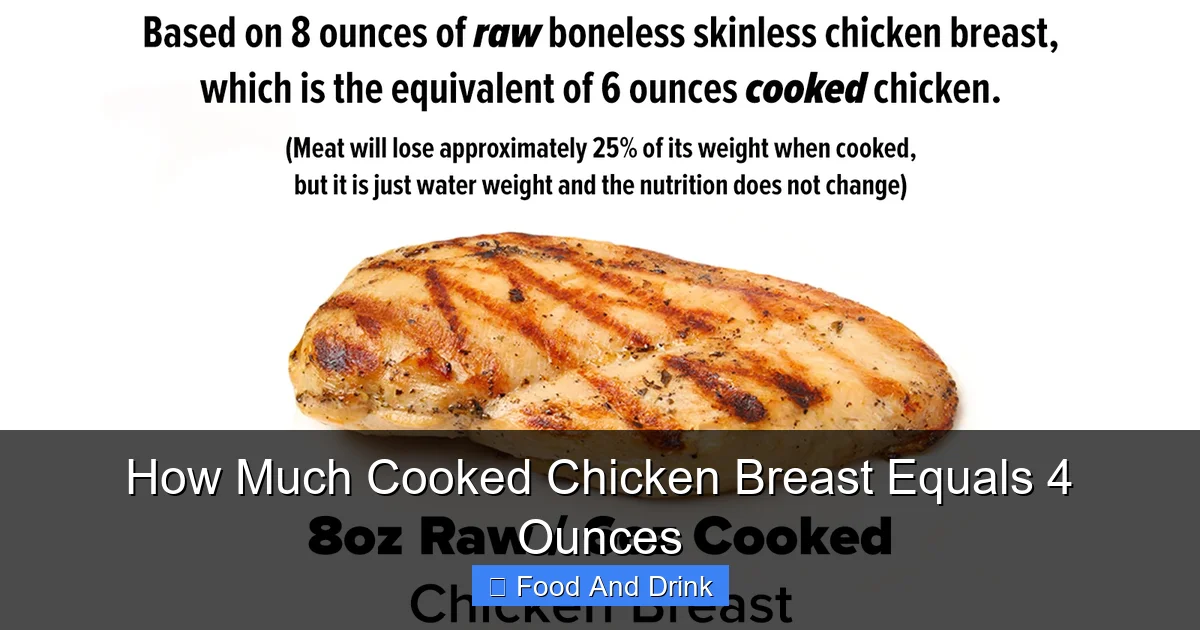
As a general rule, start with 5 to 6 ounces of raw boneless, skinless chicken breast to yield 4 ounces after cooking. This accounts for the 25–30% moisture loss.
Here’s a simple formula:
– Desired cooked weight ÷ 0.75 = Raw weight needed
– For 4 ounces cooked: 4 ÷ 0.75 = 5.33 ounces raw
So, round up to 5.5 ounces to be safe. If you’re buying pre-packaged chicken, check the label. Most store-bought breasts weigh between 6 and 8 ounces raw, which means one breast can give you 1.5 to 2 servings of 4 ounces each.
If you’re cooking for one, you might not want to buy a whole breast. In that case, look for smaller cuts or ask your butcher to portion it for you. Some stores even sell pre-portioned chicken in 4- or 6-ounce packs.
Example: Meal Prep for the Week
Let’s say you’re prepping lunches for five days, and each meal includes 4 ounces of cooked chicken. That’s 20 ounces total cooked.
Using the formula:
– 20 ÷ 0.75 = 26.67 ounces raw
– Convert to pounds: 26.67 ÷ 16 = about 1.67 pounds
So, buy roughly 1.5 to 1.75 pounds of raw chicken breast. Cook it all at once, then divide into five 4-ounce portions. Store in airtight containers in the fridge for up to 4 days, or freeze for longer storage.
This method saves time and ensures consistent portions. Plus, you’ll always know exactly how much protein you’re eating.
Measuring Cooked Chicken: Tools and Techniques
While visual estimates are helpful, the most accurate way to measure how much cooked chicken breast equals 4 ounces is with a food scale. Here’s how to do it right.
Using a Digital Food Scale
A digital kitchen scale is affordable (often under $20) and easy to use. Here’s a step-by-step guide:
1. Place a bowl or plate on the scale and press “tare” to zero it out.
2. Add your cooked chicken breast.
3. Read the weight in ounces or grams.
4. Adjust until you reach 4 ounces.
For shredded or diced chicken, fluff it lightly with a fork before weighing. Packing it down can give a false reading.
If you don’t have a scale, measuring cups can work in a pinch:
– 1/2 cup of diced or shredded cooked chicken = about 4 ounces
– 3/4 cup of finely chopped chicken = about 4 ounces
But remember, volume measurements are less precise because chicken can be packed loosely or tightly. A scale is always better for accuracy.
Portioning After Cooking
Always measure chicken after it’s fully cooked and cooled slightly. Hot food can steam and affect the scale, and handling it while hot is unsafe. Let it rest for 5–10 minutes, then weigh or portion.
If you’re cooking multiple breasts, weigh each one individually. Sizes vary, and one might yield 4.5 ounces while another gives only 3.5. This helps you balance your meals and avoid waste.
Storing and Reheating Portioned Chicken
Once portioned, store chicken in airtight containers or resealable bags. Label them with the date and weight. Cooked chicken lasts 3–4 days in the fridge or up to 3 months in the freezer.
When reheating, use a microwave, oven, or skillet. Add a splash of broth or water to keep it moist. Avoid overheating, which can dry it out.
Nutritional Value of 4 Ounces of Cooked Chicken Breast
Knowing how much cooked chicken breast equals 4 ounces is one thing—but what’s in that portion? Let’s break down the nutrition.
A 4-ounce (113-gram) serving of cooked, boneless, skinless chicken breast contains approximately:
– Calories: 185–200
– Protein: 35–37 grams
– Fat: 4–5 grams (mostly unsaturated)
– Carbohydrates: 0 grams
– Sodium: 70–100 mg (unless seasoned or processed)
This makes chicken breast an excellent choice for high-protein, low-carb, or weight-loss diets. It’s also rich in B vitamins (especially B6 and niacin), selenium, and phosphorus—nutrients important for energy, immunity, and bone health.
How Cooking Affects Nutrition
Cooking doesn’t significantly change the protein content, but it can affect other nutrients:
– Water-soluble vitamins: Some B vitamins may leach into cooking water if poaching or boiling. Use the broth in soups to retain nutrients.
– Fat content: Grilling or baking allows fat to drip away, reducing total fat slightly.
– Sodium: Pre-marinated or seasoned chicken can have much higher sodium. Check labels and opt for plain, unseasoned cuts when possible.
For the healthiest option, choose fresh, unprocessed chicken and season it yourself with herbs, spices, lemon, or vinegar.
Practical Tips for Perfect Chicken Every Time
Now that you know how to measure and cook chicken, here are some pro tips to keep it juicy, flavorful, and perfectly portioned.
Brining for Moisture
Brining—soaking chicken in salted water—helps it retain moisture during cooking. Use 1/4 cup salt per quart of water, soak for 30 minutes to 2 hours, then pat dry and cook. This is especially helpful for lean cuts like breast.
Use a Meat Thermometer
Overcooked chicken is dry and tough. Insert a thermometer into the thickest part—it should read 165°F (74°C). Remove it from heat at 160°F, as it will continue cooking while resting.
Rest Before Slicing
Let cooked chicken rest for 5–10 minutes before cutting or shredding. This allows juices to redistribute, keeping the meat moist.
Season Simply
Salt, pepper, garlic powder, and paprika go a long way. Avoid heavy sauces if you’re watching calories or sodium.
Repurpose Leftovers
Turn extra chicken into salads, wraps, soups, or casseroles. Shred it for tacos or stir-fries. This reduces waste and adds variety to your meals.
Conclusion
Knowing how much cooked chicken breast equals 4 ounces is a small but powerful skill that can improve your cooking, nutrition, and meal planning. Whether you’re using a food scale, your palm, or a deck of cards, accurate portions help you meet your health goals and make the most of your ingredients.
Remember: start with 5–6 ounces of raw chicken to get 4 ounces cooked, measure after cooking, and adjust based on your method. With these tips, you’ll serve up perfect, protein-packed meals every time.
Frequently Asked Questions
How much raw chicken do I need for 4 ounces cooked?
You’ll need about 5 to 6 ounces of raw boneless, skinless chicken breast to yield 4 ounces after cooking, due to moisture loss during the cooking process.
Can I use a measuring cup instead of a scale?
Yes, 1/2 cup of diced or shredded cooked chicken is roughly 4 ounces, but a food scale is more accurate for precise portions.
Does cooking method affect how much chicken shrinks?
Yes, grilling and baking cause more shrinkage than poaching or steaming. High-heat methods dry out chicken faster, reducing final weight.
How long does cooked chicken last in the fridge?
Cooked chicken breast stays fresh for 3–4 days in the refrigerator when stored in an airtight container. You can freeze it for up to 3 months.
Is 4 ounces of chicken enough for one meal?
For most adults, 4 ounces provides a solid protein base, especially when paired with vegetables, grains, or healthy fats. Adjust based on your calorie needs.
Can I eat chicken breast every day?
Yes, chicken breast is a healthy, lean protein source. Just vary your diet with other proteins like fish, beans, and eggs to ensure balanced nutrition.


