
Wondering how long cooked chicken in the freezer lasts safely? The answer is up to 4 months for best quality, though it remains safe indefinitely if stored properly at 0°F (-18°C) or below. Proper packaging, labeling, and thawing techniques are key to maintaining taste, texture, and food safety.
Key Takeaways
- Safe Storage Duration: Cooked chicken can be safely frozen for up to 4 months while maintaining optimal flavor and texture.
- Freezer Temperature Matters: Keep your freezer at or below 0°F (-18°C) to prevent bacterial growth and preserve quality.
- Proper Packaging Prevents Freezer Burn: Use airtight containers, heavy-duty freezer bags, or vacuum sealing to protect chicken from air exposure.
- Label Everything: Always label packages with the date to track how long the chicken has been frozen.
- Thaw Safely: Thaw frozen cooked chicken in the refrigerator, under cold running water, or in the microwave—never at room temperature.
- Reheat Thoroughly: Reheat to an internal temperature of 165°F (74°C) to ensure food safety.
- Quality Degrades Over Time: While safe indefinitely, chicken frozen beyond 4 months may suffer from dryness, freezer burn, or flavor loss.
Quick Answers to Common Questions
Can I freeze cooked chicken after 3 days in the fridge?
Yes, as long as it was stored properly and hasn’t spoiled. Cooked chicken can be frozen within 3–4 days of refrigeration. Just make sure it smells fresh and shows no signs of spoilage before freezing.
Is it safe to eat chicken frozen for over a year?
Technically yes, if kept at 0°F (-18°C) or below. However, quality will be significantly degraded. It’s best to use frozen cooked chicken within 4 months for optimal taste and texture.
Can I refreeze cooked chicken after thawing?
Only if it was thawed in the refrigerator and hasn’t been left out. If thawed using cold water or microwave, cook it first before refreezing. Never refreeze chicken thawed at room temperature.
Does freezing kill bacteria in cooked chicken?
No, freezing doesn’t kill bacteria—it stops them from growing. That’s why it’s important to handle and cook chicken safely before freezing.
Can I freeze chicken with bones?
Yes, bone-in cooked chicken freezes well. The bones help retain moisture and flavor. Just make sure to wrap it securely to prevent freezer burn.
📑 Table of Contents
- How Long Does Cooked Chicken in the Freezer Last Safely?
- Understanding Food Safety and Freezing
- How Long Can You Freeze Cooked Chicken?
- Best Practices for Freezing Cooked Chicken
- How to Thaw Frozen Cooked Chicken Safely
- Reheating Frozen Cooked Chicken
- Creative Ways to Use Frozen Cooked Chicken
- Conclusion
How Long Does Cooked Chicken in the Freezer Last Safely?
Have you ever cooked a big batch of chicken—maybe grilled breasts, shredded rotisserie, or a hearty chicken curry—only to realize you won’t eat it all in a few days? Freezing is a smart, practical solution. It helps reduce food waste, saves time on future meals, and keeps your kitchen running smoothly. But here’s the real question: how long does cooked chicken in the freezer last safely?
The short answer? Up to four months for the best quality. But let’s dig deeper. Food safety isn’t just about avoiding illness—it’s also about preserving taste, texture, and nutrition. While your freezer won’t make food unsafe after a certain point (thanks to the cold killing bacteria growth), it can affect how your chicken tastes and feels when you finally reheat it. So, understanding the balance between safety and quality is key.
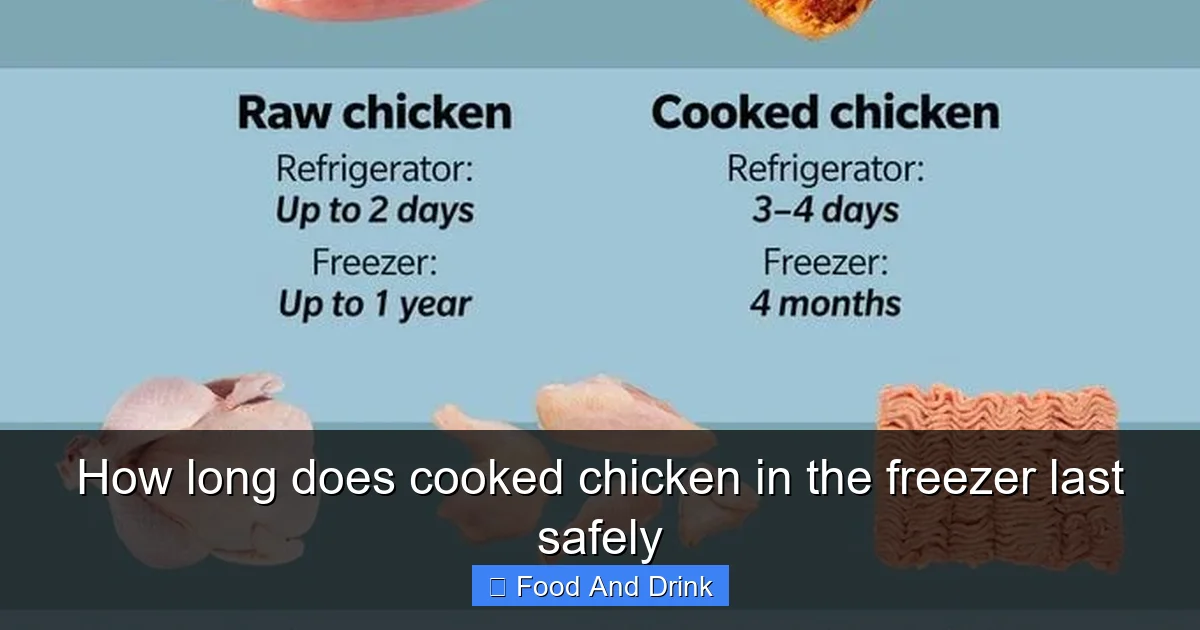
Freezing cooked chicken is one of the most effective ways to extend its shelf life. Unlike refrigeration, which typically keeps cooked chicken safe for 3–4 days, freezing halts bacterial activity and slows down spoilage. But even in the freezer, time takes its toll. Ice crystals form, moisture escapes, and over time, the chicken can dry out or develop that unpleasant “freezer burn” taste. That’s why knowing how to store, label, and thaw your chicken properly makes all the difference.
In this guide, we’ll walk you through everything you need to know about freezing cooked chicken—from how long it lasts to the best storage methods, thawing techniques, and even how to spot signs that it’s past its prime. Whether you’re meal prepping for the week or saving leftovers from a family dinner, this information will help you keep your chicken safe, tasty, and ready to enjoy.
Understanding Food Safety and Freezing
Visual guide about How long does cooked chicken in the freezer last safely
Image source: exactlyhowlong.com
Before we dive into timelines and storage tips, it’s important to understand how freezing affects food safety. Freezing doesn’t kill bacteria—it simply puts them on pause. When food is frozen at 0°F (-18°C) or below, microorganisms like Salmonella or E. coli can’t grow or multiply. That means your cooked chicken remains safe to eat indefinitely from a safety standpoint, as long as the freezer temperature stays consistent.
However, safety and quality are two different things. While your chicken won’t become unsafe after four months, it may start to lose moisture, develop off-flavors, or suffer from freezer burn. These changes don’t make the food dangerous, but they can ruin the eating experience. Think of it like this: your freezer is a pause button, not a time machine. It stops spoilage, but it doesn’t reverse it.
Another key factor is how the chicken was handled before freezing. If it was left out at room temperature for more than two hours (or one hour in hot weather), bacteria may have already started to grow. Freezing won’t undo that. That’s why it’s crucial to cool cooked chicken quickly and freeze it as soon as possible. The faster you get it into the freezer, the better the quality will be when you thaw it later.
Also, consider the type of chicken you’re freezing. Whole cooked chicken, chicken pieces, shredded chicken, and chicken-based dishes (like soups or casseroles) may have slightly different storage needs. For example, shredded chicken tends to dry out faster because it has more surface area exposed to air. On the other hand, chicken in a sauce or broth may retain moisture better and last a bit longer in terms of texture.
Why Freezing Works
Freezing works by slowing down enzymatic reactions and microbial growth. Enzymes in food naturally break down proteins and fats over time, leading to spoilage. Cold temperatures slow these processes dramatically. Similarly, bacteria need warmth, moisture, and time to multiply—conditions that are eliminated in a properly functioning freezer.
But freezing isn’t foolproof. If your freezer has frequent temperature fluctuations—like when the door is opened often or the appliance is old—ice crystals can form and recrystallize, damaging the cell structure of the chicken. This leads to texture changes, such as a dry or mushy mouthfeel when reheated. That’s why maintaining a stable freezer temperature is essential.
The Role of Packaging
One of the biggest enemies of frozen chicken is air. Exposure to air causes oxidation, which leads to freezer burn—a dry, grayish patch on the surface of the meat that tastes stale or metallic. To prevent this, you need to remove as much air as possible from the packaging.
This is where proper packaging comes in. Airtight containers, heavy-duty freezer bags, and vacuum sealing are your best friends. When using freezer bags, squeeze out the air before sealing. For extra protection, you can double-bag or wrap the chicken in plastic wrap before placing it in a bag. Vacuum sealing is the gold standard because it removes nearly all air and creates a tight seal, significantly extending shelf life and preserving quality.
How Long Can You Freeze Cooked Chicken?
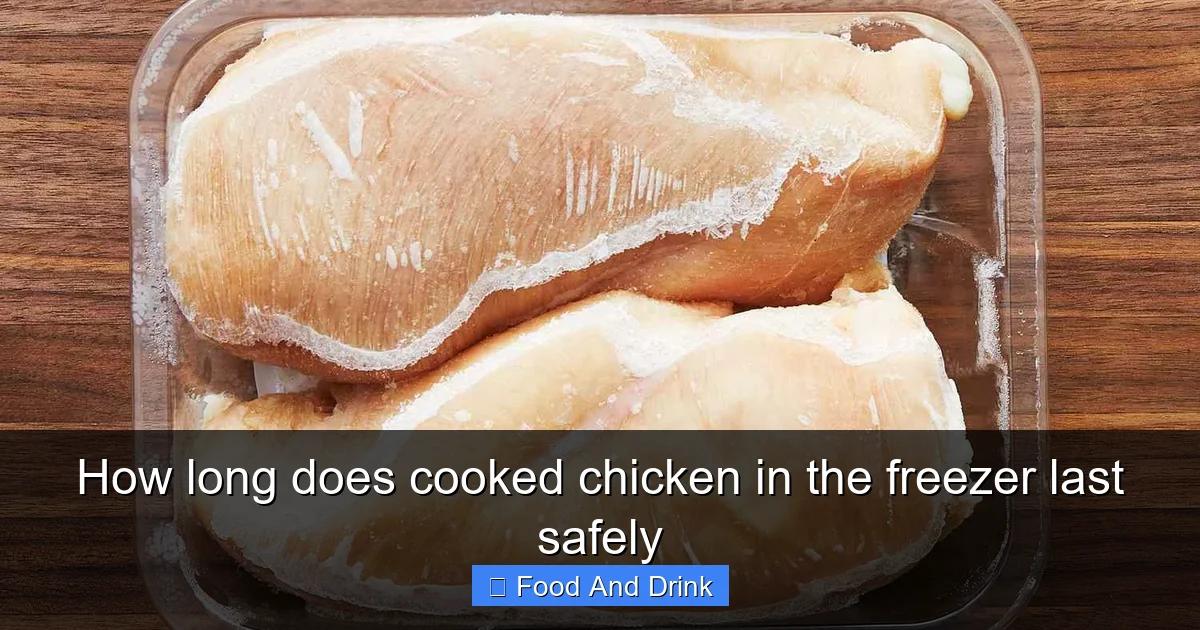
Visual guide about How long does cooked chicken in the freezer last safely
Image source: southernliving.com
Now for the main event: how long does cooked chicken in the freezer last safely? The general recommendation from food safety experts, including the U.S. Department of Agriculture (USDA), is **up to 4 months** for the best quality. After that, the chicken is still safe to eat if it has been kept at a constant 0°F (-18°C) or below, but the texture and flavor may decline.
Let’s break this down:
– **1–2 months:** Peak quality. The chicken retains its moisture, flavor, and texture. Perfect for reheating in soups, salads, or casseroles.
– **3–4 months:** Still good, but you might notice slight dryness or a change in taste, especially if not packaged well.
– **Beyond 4 months:** Safe, but quality drops. Freezer burn, dryness, and off-flavors become more likely. Best used in dishes where texture isn’t critical, like soups or sauces.
It’s important to note that these timelines apply to cooked chicken that has been properly stored from the start. If the chicken was already nearing its refrigerator expiration date before freezing, its freezer life will be shorter.
Factors That Affect Freezer Life
Several factors influence how long your cooked chicken will last in the freezer:
– **Packaging quality:** Airtight, moisture-resistant packaging extends shelf life.
– **Freezer temperature:** A consistent 0°F (-18°C) is ideal. Fluctuations reduce quality over time.
– **Type of chicken:** Boneless, skinless breasts dry out faster than bone-in or skin-on pieces. Shredded chicken has more surface area and may degrade quicker.
– **Added ingredients:** Chicken in sauces, broths, or marinades often lasts longer because the liquid helps retain moisture.
– **Frequency of freezer door opening:** Constant temperature changes can cause ice buildup and degrade quality.
For example, a container of chicken curry with sauce might stay tasty for 4–5 months, while plain grilled chicken breasts might start to dry out after 3 months. Similarly, vacuum-sealed chicken can often last closer to 6 months with minimal quality loss, though 4 months is still the recommended maximum for optimal results.
Signs Your Frozen Chicken Has Gone Bad
Even though frozen chicken is safe indefinitely, you should still check for signs of quality loss before eating. Here’s what to look for:
– **Freezer burn:** White or grayish patches on the surface. The meat may feel dry or tough.
– **Off smells:** When thawed, the chicken should smell neutral or slightly like cooked poultry. A sour, rancid, or unpleasant odor means it’s past its prime.
– **Discoloration:** Dark spots or unusual colors (like green or gray) can indicate spoilage or oxidation.
– **Ice crystals:** Large ice crystals inside the packaging suggest the chicken has been thawed and refrozen, which can compromise safety and quality.
If you notice any of these signs, it’s best to err on the side of caution and discard the chicken—even if it’s technically safe to eat.
Best Practices for Freezing Cooked Chicken
Visual guide about How long does cooked chicken in the freezer last safely
Image source: rd.com
Freezing cooked chicken the right way ensures it stays safe, tasty, and ready to use when you need it. Here’s a step-by-step guide to doing it properly.
Step 1: Cool It Down Quickly
Never put hot or warm chicken directly into the freezer. This raises the internal temperature of the freezer, which can affect other foods and cause ice buildup. Instead, let the chicken cool to room temperature—but no longer than 2 hours. To speed up cooling, divide large portions into smaller containers or spread shredded chicken on a baking sheet.
Step 2: Choose the Right Packaging
Use airtight, freezer-safe containers or heavy-duty freezer bags. Avoid regular plastic bags or containers not designed for freezing, as they can crack or leak. For best results:
– **Freezer bags:** Squeeze out as much air as possible before sealing. Consider using a straw to suck out extra air.
– **Containers:** Leave about ½ inch of headspace to allow for expansion as the chicken freezes.
– **Vacuum sealing:** This is the most effective method for long-term storage. It removes air completely and prevents freezer burn.
Step 3: Portion It Out
Instead of freezing one large block of chicken, divide it into meal-sized portions. This makes it easier to thaw only what you need and reduces the risk of refreezing, which can degrade quality. For example, freeze 1–2 cups of shredded chicken per bag for easy use in tacos, salads, or soups.
Step 4: Label and Date
Always label your packages with the contents and the date frozen. Use a permanent marker or freezer-safe labels. This helps you keep track of how long the chicken has been stored and ensures you use the oldest items first (first in, first out).
Step 5: Freeze Flat (for Bags)
If using freezer bags, lay them flat in the freezer. This saves space and allows the chicken to freeze evenly. Once frozen, you can stack the bags vertically like books for easy storage.
Step 6: Store in the Coldest Part of the Freezer
Place your chicken in the coldest part of the freezer—usually the back or bottom. Avoid the door, where temperatures fluctuate most. Keep the freezer full if possible, as a full freezer maintains temperature better than an empty one.
How to Thaw Frozen Cooked Chicken Safely
Thawing is just as important as freezing when it comes to food safety. Never thaw chicken at room temperature, as this allows bacteria to grow rapidly in the “danger zone” (40°F to 140°F or 4°C to 60°C). Instead, use one of these three safe methods:
Refrigerator Thawing (Recommended)
This is the safest and most reliable method. Place the frozen chicken in a container or on a plate (to catch any drips) and let it thaw in the refrigerator. It typically takes 24 hours for every 5 pounds of chicken. Once thawed, the chicken can be kept in the fridge for 1–2 days before cooking or reheating.
Pros: Maintains quality, prevents bacterial growth.
Cons: Requires planning ahead.
Cold Water Thawing
If you’re short on time, submerge the sealed chicken package in cold water. Change the water every 30 minutes to keep it cold. Small packages may thaw in about an hour; larger ones may take 2–3 hours.
Pros: Faster than refrigerator thawing.
Cons: Requires attention and water changes.
Microwave Thawing
Use the defrost setting on your microwave. Cook immediately after thawing, as some areas may begin to cook during the process. This method can lead to uneven thawing and texture changes, so it’s best for small portions.
Pros: Fastest method.
Cons: Can partially cook the chicken; not ideal for large quantities.
Important Notes on Thawing
– Never refreeze chicken that has been thawed at room temperature.
– If you thaw chicken in the refrigerator, you can refreeze it without cooking—though quality may decline.
– If you thaw chicken using cold water or microwave, cook it immediately and do not refreeze unless it’s been cooked first.
Reheating Frozen Cooked Chicken
Once your chicken is thawed, it’s time to reheat it safely. The goal is to bring the internal temperature to **165°F (74°C)** to ensure any potential bacteria are destroyed.
Oven Reheating
Preheat your oven to 350°F (175°C). Place the chicken in an oven-safe dish, cover with foil to retain moisture, and heat for 20–30 minutes, depending on portion size. Check the temperature with a food thermometer.
Stovetop Reheating
Great for shredded chicken or pieces in sauce. Heat over medium-low heat, stirring occasionally, until warmed through. Add a splash of broth or water if it seems dry.
Microwave Reheating
Place chicken in a microwave-safe dish, cover with a damp paper towel, and heat in 30-second intervals, stirring in between. This prevents hot spots and keeps the chicken moist.
Air Fryer Reheating
For crispy skin or texture, reheat in an air fryer at 350°F (175°C) for 5–8 minutes. Watch closely to avoid drying out.
No matter the method, always use a food thermometer to confirm the chicken has reached 165°F (74°C) in the thickest part.
Creative Ways to Use Frozen Cooked Chicken
One of the best reasons to freeze cooked chicken is convenience. Here are some delicious ways to use it:
– **Chicken salad:** Mix thawed shredded chicken with mayo, celery, and herbs.
– **Tacos or burritos:** Add to tortillas with beans, salsa, and cheese.
– **Soups and stews:** Toss into chicken noodle soup, tortilla soup, or curry.
– **Casseroles:** Use in chicken and rice, enchilada bake, or pot pie.
– **Sandwiches and wraps:** Layer on bread with lettuce, tomato, and avocado.
– **Pasta dishes:** Stir into Alfredo or marinara sauce.
Freezing cooked chicken turns meal prep into a breeze. Just thaw, reheat, and enjoy.
Conclusion
So, how long does cooked chicken in the freezer last safely? Up to 4 months for the best quality, and indefinitely for safety—as long as it’s stored at 0°F (-18°C) or below. But quality matters just as much as safety. With proper packaging, labeling, and thawing techniques, you can enjoy delicious, moist chicken weeks or even months after cooking.
Remember: cool it quickly, pack it tightly, label it clearly, and thaw it safely. Whether you’re saving leftovers or prepping meals in advance, freezing cooked chicken is a smart, sustainable choice. Just keep an eye on the calendar, and you’ll never have to wonder if that bag in the back of the freezer is still good.
By following these guidelines, you’ll reduce food waste, save time, and always have a protein-packed ingredient ready to go. So go ahead—cook that extra batch of chicken. Your future self will thank you.
🎥 Related Video: Is it OK to freeze cooked chicken?
📺 Health·WHYS
Is It OK To Freeze Cooked Chicken? ———- James Webb (2022, August 2.) Is it OK to freeze cooked chicken? WHYS.video …
Frequently Asked Questions
How long can I keep cooked chicken in the freezer?
Cooked chicken can be safely stored in the freezer for up to 4 months while maintaining the best quality. After that, it remains safe to eat if kept at 0°F (-18°C), but texture and flavor may decline.
What is freezer burn, and is it safe to eat?
Freezer burn occurs when air reaches the surface of frozen food, causing dry, grayish patches. It’s not harmful, but it affects taste and texture. Trim off affected areas before cooking.
Can I freeze chicken that’s been reheated?
Yes, you can freeze reheated cooked chicken as long as it was cooled properly and hasn’t been left out for more than 2 hours. Reheat it to 165°F (74°C) before freezing.
Should I freeze chicken in portions?
Yes, portioning cooked chicken before freezing makes it easier to thaw only what you need and reduces waste. Use 1–2 cup portions for most meals.
What’s the best way to package cooked chicken for freezing?
Use airtight freezer containers, heavy-duty freezer bags, or vacuum sealing. Remove as much air as possible to prevent freezer burn and preserve quality.
Can I freeze chicken soup or stew?
Absolutely. Chicken-based soups and stews freeze well for up to 4 months. Cool quickly, portion into containers, and leave headspace for expansion. Thaw in the refrigerator before reheating.