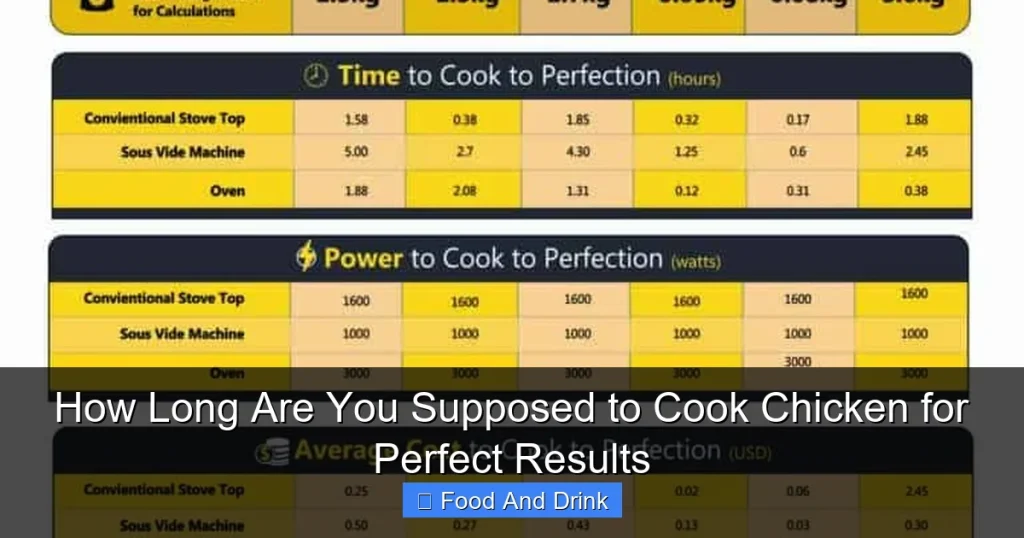

Cooking chicken to perfection isn’t just about taste—it’s about safety and texture. Getting the timing right ensures tender, flavorful meat without the risk of foodborne illness. Whether you’re grilling, baking, or frying, knowing how long to cook chicken makes all the difference.
Key Takeaways
- Chicken must reach 165°F (74°C) internally to be safe to eat. This temperature kills harmful bacteria like Salmonella and Campylobacter.
- Cooking time varies by cut and method. Boneless breasts cook faster than bone-in thighs, and grilling differs from baking.
- Use a meat thermometer for accuracy. Relying on color or timing alone can lead to undercooked or dry chicken.
- Resting time matters. Letting chicken rest for 5–10 minutes after cooking helps retain juices.
- Marinating can reduce cooking time slightly. Acidic marinades tenderize meat, allowing faster heat penetration.
- Preheating your cooking surface is essential. Cold ovens or grills lead to uneven cooking and longer times.
- Overcooking dries out chicken. Even a few extra minutes can turn juicy meat into rubbery disappointment.
Quick Answers to Common Questions
How long should I cook boneless chicken breasts in the oven?
Bake boneless, skinless chicken breasts at 375°F (190°C) for 20–25 minutes, or until the internal temperature reaches 165°F (74°C).
Can I cook chicken from frozen?
Yes, but it will take about 50% longer. Bake frozen chicken breasts at 375°F for 35–45 minutes, checking the temperature frequently. Always ensure it reaches 165°F.
How do I know if chicken is done without a thermometer?
While not recommended, you can check by cutting into the thickest part—juices should run clear, and the meat should be white with no pink. However, a thermometer is the only reliable method.
Is it safe to eat slightly pink chicken?
Only if it has reached 165°F internally. Some chicken, especially thighs, can remain slightly pink even when fully cooked due to myoglobin in the meat.
How long can I marinate chicken?
Marinate chicken for 30 minutes to 24 hours. Avoid marinating longer than 24 hours, as acidic ingredients can break down the meat too much.
📑 Table of Contents
Why Cooking Chicken Right Matters
Chicken is one of the most popular proteins in the world—and for good reason. It’s versatile, affordable, and packed with lean protein. But cooking it properly is about more than just flavor. Undercooked chicken can harbor dangerous bacteria that cause food poisoning, while overcooked chicken becomes dry, tough, and unappetizing. So, how long are you supposed to cook chicken? The answer isn’t one-size-fits-all. It depends on the cut, the cooking method, and your desired outcome.
Many home cooks rely on guesswork—peeking at the color, poking the meat, or following vague recipe instructions like “cook until done.” But this approach often leads to disappointment. The truth is, perfect chicken comes from precision. Whether you’re roasting a whole bird, grilling thighs, or pan-searing breasts, understanding the right cooking time and temperature ensures every bite is safe, juicy, and delicious. In this guide, we’ll break down everything you need to know to cook chicken like a pro—no guesswork required.
Understanding Safe Internal Temperatures
The golden rule for cooking chicken is simple: it must reach an internal temperature of 165°F (74°C) to be safe to eat. This temperature is recommended by the USDA and other food safety organizations because it instantly kills harmful bacteria like Salmonella and Campylobacter. But don’t panic—this doesn’t mean your chicken has to be dry or overcooked. With the right technique, you can hit that temperature while keeping the meat tender and moist.

Visual guide about How Long Are You Supposed to Cook Chicken for Perfect Results
Image source: healthyrecipesblogs.com
Why 165°F Is the Magic Number
At 165°F, harmful pathogens are destroyed almost immediately. Lower temperatures may take longer to achieve the same effect, which increases the risk of undercooking. For example, at 155°F, you’d need to hold the chicken at that temperature for about 45 seconds to be safe—something that’s hard to manage in home kitchens. That’s why 165°F is the standard: it’s a quick, reliable kill temperature.
Using a Meat Thermometer: Your Best Friend
The only way to know for sure that your chicken has reached 165°F is by using a digital meat thermometer. Insert the probe into the thickest part of the meat, avoiding bones and fat. For breasts, go into the center; for thighs, aim for the middle of the drumstick. Instant-read thermometers give results in seconds and are widely available for under $20. Don’t rely on color—chicken can turn white before it’s fully cooked, and some cuts stay pink even when safe.
Resting: The Secret to Juicy Chicken
After cooking, let your chicken rest for 5 to 10 minutes before slicing or serving. During this time, the juices redistribute throughout the meat, preventing them from spilling out when you cut into it. This simple step can make the difference between dry and succulent chicken. Cover loosely with foil to keep it warm while it rests.
Cooking Times by Chicken Cut
Different cuts of chicken require different cooking times due to variations in size, fat content, and bone presence. Boneless, skinless breasts cook quickly but dry out easily. Bone-in, skin-on thighs are more forgiving and stay juicy longer. Knowing how long to cook each cut ensures optimal texture and safety.

Visual guide about How Long Are You Supposed to Cook Chicken for Perfect Results
Image source: cucinabyelena.com
Boneless, Skinless Chicken Breasts
These are the most common cut for quick meals, but they’re also the most prone to overcooking. On average, boneless breasts take 6–8 minutes per side when pan-seared over medium-high heat. In the oven at 375°F (190°C), they need about 20–25 minutes. Always check the internal temperature—once it hits 165°F, remove from heat immediately. To prevent dryness, pound them to an even thickness or brine before cooking.
Bone-In, Skin-On Chicken Thighs
Thighs are richer and more forgiving. When pan-frying, cook skin-side down for 8–10 minutes until golden, then flip and cook another 6–8 minutes. In the oven at 375°F, they take 35–40 minutes. Because of their higher fat content, thighs can handle a little extra time without drying out. They’re also great for grilling—about 5–7 minutes per side over medium heat.
Chicken Drumsticks
Drumsticks are similar to thighs in cooking time and method. Bake at 375°F for 40–45 minutes, or grill for 6–8 minutes per side. They’re ideal for marinating, as the bone helps retain moisture. For extra crispiness, broil for the last 2–3 minutes of cooking.
Whole Chicken
Roasting a whole bird takes longer but yields incredible flavor. At 350°F (175°C), plan for 20 minutes per pound. A 4-pound chicken will take about 1 hour and 20 minutes. Use a meat thermometer to check the thigh—it should read 165°F. Let it rest for 15–20 minutes before carving to keep the meat juicy.
Chicken Wings
Wings cook quickly and are perfect for frying, baking, or grilling. In the oven at 400°F (200°C), bake for 40–45 minutes, flipping halfway. For crispy skin, pat them dry before cooking and toss with a little baking powder. Fried wings take about 10–12 minutes in 350°F oil. Always check the internal temperature—wings should reach 165°F.
Cooking Methods and Their Timing
The way you cook chicken dramatically affects how long it takes and how it turns out. Each method has its own ideal time and temperature range. Understanding these differences helps you choose the best approach for your meal.

Visual guide about How Long Are You Supposed to Cook Chicken for Perfect Results
Image source: cucinabyelena.com
Baking and Roasting
Baking is a hands-off method that works well for whole chickens, breasts, and thighs. Preheat your oven to 375°F (190°C) for most cuts. Breasts take 20–25 minutes, thighs 35–40 minutes, and a whole chicken about 20 minutes per pound. For extra browning, finish under the broiler for 2–3 minutes. Always use a baking dish or sheet pan with a rack to allow air circulation.
Pan-Searing and Sautéing
This method is fast and great for boneless cuts. Heat oil in a skillet over medium-high heat. Cook breasts for 6–8 minutes per side, thighs for 8–10 minutes skin-side down, then 6–8 minutes on the other side. Use a lid to trap steam and help the inside cook evenly. Don’t overcrowd the pan—cook in batches if needed.
Grilling
Grilling adds smoky flavor and beautiful grill marks. Preheat your grill to medium-high (about 375°F to 400°F). Cook boneless breasts for 5–7 minutes per side, bone-in thighs for 6–8 minutes per side, and drumsticks for 7–9 minutes per side. Use indirect heat for larger cuts to prevent burning. Always oil the grates before cooking to prevent sticking.
Frying
Deep-frying gives chicken a crispy exterior and juicy interior. Heat oil to 350°F (175°C). Fry wings for 10–12 minutes, drumsticks for 12–15 minutes, and breasts for 8–10 minutes. Use a thermometer to monitor oil temperature—too hot and the outside burns; too cool and the chicken absorbs oil. Drain on a wire rack, not paper towels, to keep the crust crispy.
Slow Cooking
Slow cookers are perfect for shredded chicken, stews, and curries. Cook on low for 6–8 hours or high for 3–4 hours. Chicken will be tender and fall-apart, but it’s best used in dishes where texture isn’t critical. Always ensure the internal temperature reaches 165°F before serving.
Tips for Perfectly Cooked Chicken Every Time
Even with the right timing, small mistakes can ruin your chicken. These pro tips will help you avoid common pitfalls and achieve consistent results.
Brining for Moisture
Brining—soaking chicken in salted water—helps it retain moisture during cooking. Use 1/4 cup salt per quart of water, and brine for 30 minutes to 2 hours (don’t exceed 4 hours or the texture may become mushy). Rinse and pat dry before cooking. This is especially helpful for lean cuts like breasts.
Marinating for Flavor and Tenderness
Marinating adds flavor and can slightly reduce cooking time by tenderizing the meat. Use acidic ingredients like lemon juice, vinegar, or yogurt, combined with oil and herbs. Marinate for at least 30 minutes, or up to 24 hours in the fridge. Always discard used marinade—don’t reuse it unless boiled first.
Bringing Chicken to Room Temperature
Cold chicken straight from the fridge cooks unevenly. Let it sit at room temperature for 15–30 minutes before cooking. This ensures the center heats up at the same rate as the outside, preventing overcooked edges and undercooked centers.
Using a Meat Thermometer Correctly
Insert the thermometer into the thickest part of the meat, avoiding bones and fat. For breasts, go straight down into the center. For thighs, angle the probe toward the joint. Clean the thermometer after each use to prevent cross-contamination.
Avoiding Cross-Contamination
Always wash your hands, utensils, and surfaces after handling raw chicken. Use separate cutting boards for meat and vegetables. Never place cooked chicken on a plate that held raw meat unless it’s been washed.
Common Mistakes and How to Fix Them
Even experienced cooks make mistakes. Here’s how to avoid—or recover from—the most common chicken-cooking errors.
Overcooked and Dry Chicken
If your chicken is dry, it’s likely overcooked. Next time, use a thermometer and remove it from heat as soon as it hits 165°F. You can also slice it thin and serve with a sauce or gravy to add moisture. For already-cooked dry chicken, try shredding it and mixing it into soups, salads, or casseroles.
Undercooked Chicken
Never eat undercooked chicken. If you suspect it’s not done, return it to the heat and cook until it reaches 165°F. Cut into the thickest part to check—if it’s still pink or juices run clear but the temp is low, keep cooking. Safety first!
Uneven Cooking
This happens when pieces are different sizes or the heat source is inconsistent. To fix it, pound breasts to even thickness, or cut larger pieces into smaller ones. Rotate pans in the oven and flip meat halfway through cooking.
Sticking to the Pan or Grill
Make sure your pan or grill is properly preheated and oiled. Don’t move the chicken too soon—let it develop a crust before flipping. Use a non-stick skillet or well-seasoned cast iron for best results.
Conclusion
Knowing how long to cook chicken is essential for both safety and satisfaction. Whether you’re baking, grilling, frying, or slow-cooking, the key is to use a meat thermometer and aim for an internal temperature of 165°F. Different cuts require different times, so adjust accordingly. With the right techniques—like brining, marinating, and resting—you can turn out juicy, flavorful chicken every single time.
Don’t let fear of undercooking or overcooking stop you from enjoying this versatile protein. With practice and the right tools, you’ll master the art of cooking chicken. So next time you’re in the kitchen, remember: precision beats guesswork. Cook with confidence, and your meals will always be a hit.
🎥 Related Video: How to cook chicken breast perfectly every time (stovetop recipe)
📺 Olivia Yi
Frequently Asked Questions
What temperature should chicken be cooked to?
Chicken must reach an internal temperature of 165°F (74°C) to be safe to eat. This temperature kills harmful bacteria instantly.
How long does it take to cook a whole chicken?
A whole chicken should be roasted at 350°F (175°C) for about 20 minutes per pound. A 4-pound bird takes roughly 1 hour and 20 minutes.
Can I cook chicken in a slow cooker?
Yes, chicken can be cooked in a slow cooker on low for 6–8 hours or high for 3–4 hours. Always check that it reaches 165°F before serving.
Why is my chicken dry?
Dry chicken is usually overcooked. Use a meat thermometer and remove it from heat as soon as it hits 165°F. Brining can also help retain moisture.
How long should I let chicken rest after cooking?
Let chicken rest for 5–10 minutes after cooking. This allows juices to redistribute, keeping the meat moist and tender.
Is it safe to reheat cooked chicken?
Yes, reheat cooked chicken to an internal temperature of 165°F. Use the oven, microwave, or stovetop, and avoid reheating more than once.