Baking chicken doesn’t have to be guesswork. Whether you’re cooking breasts, thighs, or a whole bird, knowing the right time and temperature ensures juicy, safe, and delicious results. This guide breaks down exact baking times for every cut, plus pro tips to avoid dry or undercooked meat.
Key Takeaways
- Use a meat thermometer: The safest way to know when chicken is done is by checking its internal temperature—165°F (74°C) is the magic number.
- Adjust time based on cut: Chicken breasts bake faster than thighs or drumsticks due to differences in fat and muscle density.
- Preheat your oven: Always preheat to the recommended temperature (usually 375°F to 425°F) for even cooking and better texture.
- Don’t skip resting time: Let baked chicken rest for 5–10 minutes after cooking to lock in juices and improve flavor.
- Season before baking: Marinate or season chicken at least 30 minutes ahead for deeper flavor penetration.
- Use a baking dish or sheet pan: Choose the right pan based on the cut—deeper dishes for saucy recipes, sheet pans for crispy skin.
- Flip or baste halfway: For even browning and moisture, flip pieces or baste with pan juices during cooking.
Quick Answers to Common Questions
How long do you bake boneless chicken breasts at 375°F?
Bake boneless, skinless chicken breasts at 375°F for 20–25 minutes, or until the internal temperature reaches 165°F. Use a meat thermometer for accuracy.
Can you bake chicken at 350°F?
Yes, baking chicken at 350°F is safe and effective, especially for bone-in cuts or whole chickens. It takes longer but helps retain moisture and prevents drying.
How do you keep baked chicken from drying out?
Brine or marinate the chicken, use a meat thermometer, bake with a little liquid, and let it rest after cooking. Avoid overcooking by checking the internal temperature.
Is it safe to eat chicken at 160°F?
Chicken is safe at 165°F, but some chefs remove it at 160°F and let it rest, as the temperature will rise to 165°F during resting. Use a thermometer to confirm.
Should I cover chicken when baking?
Covering chicken with foil can help retain moisture, especially at high temperatures. Remove the foil for the last 10–15 minutes to crisp the skin if desired.
📑 Table of Contents
- How Long Are You Supposed to Bake Chicken for Perfect Results
- Why Timing Matters When Baking Chicken
- Oven Temperatures and Their Impact on Baking Time
- Baking Times for Different Cuts of Chicken
- How to Tell When Chicken Is Done: The Thermometer Rule
- Tips for Juicy, Flavorful Baked Chicken
- Common Mistakes to Avoid
- Conclusion
How Long Are You Supposed to Bake Chicken for Perfect Results
There’s nothing quite like the smell of baked chicken wafting through your kitchen—crispy skin, tender meat, and rich aromas that promise a satisfying meal. But here’s the thing: getting that perfect bake isn’t just about tossing chicken in the oven and hoping for the best. So, how long are you supposed to bake chicken to achieve juicy, safe, and flavorful results every single time?
The truth is, baking chicken isn’t one-size-fits-all. The cooking time depends on several factors: the cut of chicken, its thickness, the oven temperature, and whether it’s bone-in or boneless. A thin chicken breast will cook much faster than a bone-in thigh, and a whole roasted chicken needs far more time than individual pieces. But don’t worry—once you understand the basics, you’ll be able to bake chicken like a pro, whether you’re feeding a family or impressing dinner guests.
In this guide, we’ll walk you through everything you need to know about baking chicken, from ideal temperatures and timing to expert tips for maximum flavor and moisture. You’ll learn how to avoid the two biggest pitfalls—dry, rubbery meat and undercooked, unsafe chicken—and discover how simple techniques like brining, basting, and using a meat thermometer can transform your results. By the end, you’ll have the confidence to bake chicken perfectly, no matter the recipe or cut.
Why Timing Matters When Baking Chicken

Visual guide about How Long Are You Supposed to Bake Chicken for Perfect Results
Image source: tipbuzz.com
Baking chicken might seem straightforward, but getting the timing right is crucial for both safety and taste. Undercooked chicken can harbor harmful bacteria like Salmonella and Campylobacter, which can cause foodborne illness. On the flip side, overcooked chicken becomes dry, tough, and unappetizing—no one wants to chew on rubbery meat, no matter how good the seasoning.
So, how long are you supposed to bake chicken? The answer isn’t just about minutes—it’s about reaching the right internal temperature. According to the USDA, all poultry should be cooked to a minimum internal temperature of 165°F (74°C) to be safe to eat. This temperature ensures that harmful bacteria are destroyed, making your meal both delicious and safe.
But here’s the catch: time and temperature aren’t always directly proportional. A thick chicken breast baked at 375°F (190°C) might take 25–30 minutes, while the same breast at 425°F (220°C) could be done in 20–25 minutes. That’s why relying solely on a timer can be risky. Instead, use a meat thermometer to check the internal temperature in the thickest part of the meat, avoiding bones and fat.
Another reason timing matters is texture. Chicken breasts, which are lean and low in fat, dry out quickly if overcooked. Dark meat like thighs and drumsticks, with more fat and connective tissue, are more forgiving and can handle longer cooking times without losing moisture. Understanding these differences helps you adjust your approach based on the cut you’re using.
Finally, timing affects flavor development. Baking chicken at higher temperatures (400°F–425°F) promotes browning and caramelization, which enhances flavor through the Maillard reaction. Lower temperatures (350°F–375°F) are better for even cooking and retaining moisture, especially for larger cuts like whole chickens or bone-in pieces. Choosing the right temperature and timing combo ensures your chicken is not only safe and juicy but also packed with rich, savory flavor.
Oven Temperatures and Their Impact on Baking Time

Visual guide about How Long Are You Supposed to Bake Chicken for Perfect Results
Image source: twotwistedsisters.blog
One of the most common questions home cooks ask is, “What temperature should I bake chicken at?” The answer depends on what you’re trying to achieve—crispy skin, tender meat, or quick cooking. But no matter your goal, understanding how oven temperature affects baking time is key to success.
Low and Slow: 350°F to 375°F (175°C to 190°C)
Baking chicken at lower temperatures is ideal for even cooking and moisture retention. This range works well for bone-in cuts like thighs, drumsticks, and whole chickens, which benefit from longer, gentler heat. At 375°F, a bone-in chicken breast might take 35–40 minutes, while a whole chicken could need 1.5 to 2 hours, depending on size.
The advantage of lower temperatures is that they reduce the risk of drying out the meat, especially for lean cuts. They also allow the chicken to cook through without burning the outside. This method is perfect for recipes that include a sauce or marinade, as the liquid helps keep the meat moist during the longer bake.
However, lower temperatures won’t give you that crispy, golden skin that many people love. If you’re aiming for crispiness, you might need to finish the chicken under the broiler for a few minutes at the end—just keep a close eye to prevent burning.
Medium Heat: 375°F to 400°F (190°C to 200°C)
This is the sweet spot for most baked chicken recipes. At 375°F to 400°F, you get a good balance of browning, moisture, and cooking speed. Boneless chicken breasts typically bake in 20–25 minutes at 375°F, while bone-in thighs might take 35–40 minutes at 400°F.
This temperature range is versatile and works well for sheet pan meals, casseroles, and roasted chicken with vegetables. It’s also great for achieving a lightly crisped exterior without overcooking the interior. If you’re using a marinade or dry rub, the moderate heat helps the flavors meld without burning.
High Heat: 400°F to 425°F (200°C to 220°C)
For crispy skin and faster cooking, higher temperatures are your best bet. Baking chicken at 425°F can cut cooking time by 5–10 minutes compared to lower settings, making it ideal for busy weeknights. Boneless breasts may be done in 18–22 minutes, and bone-in pieces in 30–35 minutes.
High heat promotes browning and caramelization, giving your chicken a delicious, restaurant-quality crust. It’s especially effective for skin-on cuts like thighs and drumsticks, which become golden and crackly. Just be sure to monitor the chicken closely, as high heat can dry out lean cuts if left too long.
One pro tip: if you’re baking chicken at high heat, consider covering it with foil for the first half of the cooking time. This traps steam and keeps the meat moist, then remove the foil for the final 10–15 minutes to crisp up the skin.
Broiling for the Final Touch
Sometimes, even after baking, your chicken skin isn’t as crispy as you’d like. That’s where the broiler comes in. After baking, switch your oven to broil and place the chicken under the heat for 2–4 minutes. Watch it like a hawk—broiling works fast and can burn quickly.
This technique is perfect for finishing off baked chicken breasts or thighs, giving them that irresistible golden-brown finish. Just make sure the chicken is already cooked through before broiling, as this step is only for texture, not cooking.
Baking Times for Different Cuts of Chicken
Visual guide about How Long Are You Supposed to Bake Chicken for Perfect Results
Image source: i.pinimg.com
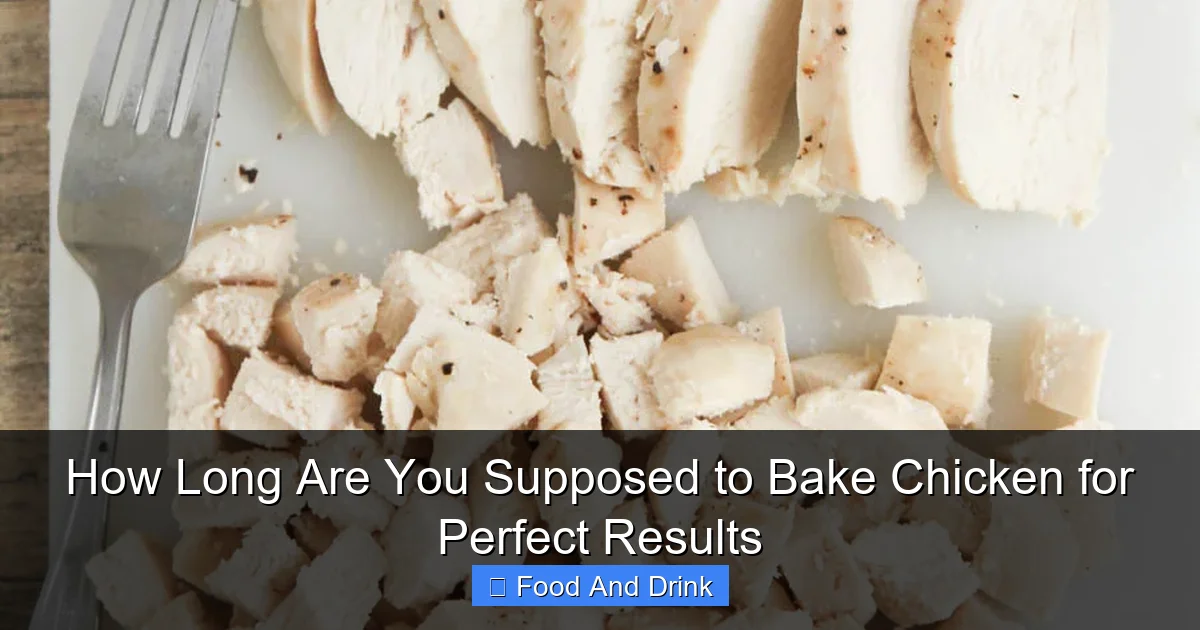
Now that you know how temperature affects cooking, let’s break down how long you’re supposed to bake chicken based on the cut. Each part of the bird has unique characteristics that influence baking time, so matching the right method to the right piece is essential.
Boneless, Skinless Chicken Breasts
These are the most popular cut for quick meals, but they’re also the most prone to drying out. Because they’re lean and lack fat or skin, they cook fast and can become tough if overcooked.
– **At 375°F (190°C):** 20–25 minutes
– **At 400°F (200°C):** 18–22 minutes
– **At 425°F (220°C):** 15–20 minutes
To keep them juicy, pound them to an even thickness (about ½ inch) before baking. This ensures they cook evenly and prevents the edges from drying out before the center is done. You can also brine them for 30 minutes in saltwater or buttermilk to boost moisture.
Pro tip: Bake them in a baking dish with a little broth, wine, or olive oil to create a steamy environment that keeps them tender.
Bone-In, Skin-On Chicken Breasts
These take longer due to the bone and skin, but they’re more flavorful and forgiving. The bone conducts heat slowly, helping the meat stay moist.
– **At 375°F (190°C):** 35–40 minutes
– **At 400°F (200°C):** 30–35 minutes
– **At 425°F (220°C):** 25–30 minutes
The skin will crisp up nicely at higher temperatures. For extra flavor, season under the skin with herbs, garlic, or butter before baking.
Chicken Thighs (Boneless and Bone-In)
Thighs are dark meat, which means they’re richer in fat and more resistant to drying out. They’re perfect for longer baking times and higher heat.
– **Boneless thighs at 375°F:** 25–30 minutes
– **Bone-in thighs at 375°F:** 35–40 minutes
– **At 400°F:** Reduce time by 5 minutes
Bone-in thighs are especially delicious when baked with the skin on. They become crispy on the outside and fall-off-the-bone tender inside. Try marinating them in soy sauce, garlic, and honey for a sweet-savory glaze.
Chicken Drumsticks
Drumsticks are similar to thighs in texture and cooking time. They’re great for sheet pan meals and family dinners.
– **At 375°F (190°C):** 40–45 minutes
– **At 400°F (200°C):** 35–40 minutes
For extra crispiness, pat them dry before seasoning and bake on a wire rack placed over a sheet pan. This allows hot air to circulate underneath, crisping all sides.
Whole Chicken
Roasting a whole chicken is a classic technique that yields juicy meat and crispy skin. The key is to calculate time based on weight.
– **At 375°F (190°C):** 20 minutes per pound (about 1.5–2 hours for a 4–5 lb bird)
– **At 425°F (220°C):** 15–18 minutes per pound (about 1–1.5 hours)
Use a meat thermometer to check the internal temperature in the thickest part of the thigh (without touching the bone). It should read 165°F. Let the chicken rest for 15–20 minutes before carving to allow juices to redistribute.
Pro tip: Truss the legs with kitchen twine and tuck the wings under the body to promote even cooking.
Chicken Tenders or Cutlets
These thin strips cook very quickly and are perfect for weeknight meals.
– **At 400°F (200°C):** 12–15 minutes, flipping halfway
– **At 425°F (220°C):** 10–12 minutes
For extra crispiness, coat them in breadcrumbs or panko before baking. Serve with a dipping sauce like honey mustard or ranch.
How to Tell When Chicken Is Done: The Thermometer Rule
We’ve said it before, but it’s worth repeating: the only reliable way to know if chicken is done is by using a meat thermometer. Timers are helpful guides, but they can’t account for variations in oven temperature, chicken size, or starting temperature (frozen vs. thawed).
Where to Insert the Thermometer
Insert the probe into the thickest part of the meat, avoiding bones, fat, and the pan. For breasts, this is usually the center. For thighs or drumsticks, aim for the middle of the meat, near the bone but not touching it.
The Magic Number: 165°F (74°C)
This is the temperature recommended by food safety experts. At 165°F, harmful bacteria are destroyed, and the chicken is safe to eat. Some chefs argue that chicken can be removed at 160°F and allowed to rest, as the temperature will continue to rise to 165°F during resting. This method can help prevent overcooking, especially for lean cuts.
Resting Is Essential
After baking, let the chicken rest for 5–10 minutes (longer for whole chickens). During this time, the juices redistribute throughout the meat, resulting in a juicier bite. Cover loosely with foil to keep it warm, but don’t wrap tightly—this can steam the skin and make it soggy.
Visual Cues (But Don’t Rely on Them Alone)
While a thermometer is best, you can also look for these signs:
– Juices run clear when pierced (not pink)
– Meat is no longer translucent
– Skin is golden and crispy (if applicable)
But remember: color isn’t a reliable indicator. Some chicken may look done before it’s safe, and vice versa.
Tips for Juicy, Flavorful Baked Chicken
Even with perfect timing and temperature, baked chicken can fall flat without the right techniques. Here are some pro tips to elevate your chicken game.
Brining for Moisture
Brining involves soaking chicken in a saltwater solution (sometimes with sugar and spices) for 30 minutes to 2 hours. The salt helps the meat retain moisture during cooking, resulting in juicier results. Use ¼ cup salt per quart of water, and add herbs or citrus for extra flavor.
Marinating for Flavor
Marinate chicken for at least 30 minutes, or up to 24 hours in the fridge. Acidic ingredients like lemon juice, vinegar, or yogurt tenderize the meat, while oils and spices infuse flavor. Pat dry before baking to ensure proper browning.
Basting for Richness
Basting involves spooning pan juices or melted butter over the chicken during baking. Do this every 10–15 minutes to keep the surface moist and enhance flavor. Use a silicone brush or spoon for easy application.
Using a Rack
Place chicken on a wire rack set inside a baking sheet. This allows hot air to circulate underneath, promoting even browning and preventing soggy bottoms. It’s especially helpful for skin-on cuts.
Seasoning Under the Skin
For bone-in, skin-on chicken, gently lift the skin and rub seasoning (like garlic butter or herb paste) directly onto the meat. This infuses flavor deep into the chicken and keeps it moist.
Adding Liquid to the Pan
Pour a small amount of broth, wine, or water into the baking dish before adding chicken. This creates steam, which helps keep the meat tender, especially for lean cuts. Just don’t submerge the chicken—this can lead to poaching instead of baking.
Common Mistakes to Avoid
Even experienced cooks make mistakes when baking chicken. Here are the most common pitfalls and how to avoid them.
Not Preheating the Oven
Starting with a cold oven leads to uneven cooking and longer bake times. Always preheat for at least 10–15 minutes before adding the chicken.
Overcrowding the Pan
Piling too much chicken in one dish restricts airflow and causes steaming instead of baking. Use a large enough pan or bake in batches for even browning.
Skipping the Thermometer
Relying on time alone is risky. Always check the internal temperature to ensure safety and doneness.
Cutting Into the Chicken Too Soon
Cutting into chicken immediately after baking releases precious juices. Let it rest first to keep the meat moist.
Using Cold Chicken Straight from the Fridge
Cold chicken cooks unevenly. Let it sit at room temperature for 15–20 minutes before baking to promote even cooking.
Ignoring Carryover Cooking
Chicken continues to cook after it’s removed from the oven. Remove it when it’s 5°F below the target temperature (e.g., 160°F) and let it rest to reach 165°F.
Conclusion
So, how long are you supposed to bake chicken? The answer depends on the cut, temperature, and your desired outcome—but the golden rule is always the same: cook to an internal temperature of 165°F (74°C). Whether you’re baking boneless breasts, crispy thighs, or a whole roasted bird, using a meat thermometer, choosing the right oven temperature, and following a few simple techniques will ensure juicy, safe, and delicious results every time.
Baking chicken doesn’t have to be complicated. With the right knowledge and a little practice, you can turn this humble protein into a star of your dinner table. So preheat that oven, season with confidence, and bake your way to perfection.
🎥 Related Video: How to Bake Chicken Breasts: Temperature & How Long | How to Cook Chicken by MOMables
📺 MOMables – Laura Fuentes
Learn how to bake chicken breasts in the oven and the temperature for chicken when you want juicy oven baked chicken breasts …
Frequently Asked Questions
How long should I bake a whole chicken?
Bake a whole chicken at 375°F for about 20 minutes per pound. A 4-pound chicken will take roughly 1 hour and 20 minutes. Always check the internal temperature in the thigh—it should reach 165°F.
Can I bake frozen chicken?
Yes, but it will take 50% longer than thawed chicken. Bake at 375°F and use a meat thermometer to ensure it reaches 165°F. Avoid baking frozen chicken at high heat to prevent uneven cooking.
Why is my baked chicken dry?
Dry chicken is usually caused by overcooking, especially with lean cuts like breasts. Use a thermometer, brine the meat, and bake with a little liquid to keep it moist.
How do I make baked chicken crispy?
Use skin-on cuts, bake at 400°F or higher, and finish under the broiler for 2–4 minutes. Pat the skin dry before seasoning and bake on a wire rack for even crisping.
Can I bake chicken and vegetables together?
Absolutely! Use a sheet pan and arrange chicken and vegetables in a single layer. Bake at 400°F for 25–35 minutes, depending on the vegetables. Denser veggies like potatoes may need a head start.
How long does baked chicken last in the fridge?
Store leftover baked chicken in an airtight container in the fridge for up to 3–4 days. Reheat gently in the oven or microwave to preserve moisture.