



Rubbery grilled chicken breast often results from overcooking, poor brining, or incorrect cooking techniques. This guide breaks down the science behind texture issues and offers practical solutions to ensure your chicken stays moist, tender, and delicious—no more tough, chewy meals.
Grilling chicken breast should be simple, right? You toss it on the grill, wait a few minutes, flip it, and voilà—dinner is ready. But too often, what comes off the grill is a dry, tough, rubbery piece of meat that’s more like chewing on a pencil eraser than enjoying a juicy, flavorful meal. If you’ve ever stared at your plate wondering, “Why is my grilled chicken breast rubbery?”—you’re not alone. In fact, it’s one of the most common grilling frustrations home cooks face.
The good news? Rubberiness isn’t inevitable. It’s usually the result of a few fixable mistakes in technique, timing, or preparation. Chicken breast is naturally lean, with very little fat to keep it moist during high-heat cooking. That makes it especially prone to drying out if not handled correctly. But with the right approach—whether it’s brining, temperature control, or proper resting—you can turn that rubbery disappointment into a tender, succulent centerpiece for your next meal.
In this guide, we’ll dive deep into the science behind why grilled chicken turns rubbery, explore the most common culprits, and give you actionable, easy-to-follow solutions. Whether you’re a weekend griller or a seasoned backyard chef, these tips will help you master the art of juicy grilled chicken breast—every single time.
Key Takeaways
- Overcooking is the #1 cause: Chicken breast dries out quickly when cooked beyond 165°F (74°C), leading to a rubbery texture.
- Brining adds moisture and flavor: Soaking chicken in saltwater or buttermilk helps retain juiciness during grilling.
- Proper thickness matters: Uneven cuts cook inconsistently—pound or slice chicken evenly for uniform doneness.
- Resting is essential: Letting chicken rest 5–10 minutes after grilling allows juices to redistribute.
- Use a meat thermometer: Relying on time alone leads to guesswork—always check internal temperature.
- Marinate wisely: Acidic marinades can toughen proteins if left too long; limit to 2–4 hours.
- Grill temperature control: High heat sears but doesn’t cook through; use two-zone grilling for best results.
Quick Answers to Common Questions
Why is my grilled chicken breast rubbery even though I didn’t overcook it?
It could be due to lack of moisture—try brining or marinating to add juiciness. Uneven thickness or high-heat cooking without indirect zones can also cause rubberiness.
Can I fix rubbery grilled chicken after it’s cooked?
Not really—once proteins tighten, they can’t un-tighten. But you can slice it thin and serve with sauce or in a sandwich to mask the texture.
Is it safe to eat chicken at 160°F instead of 165°F?
Yes, if held at 160°F for at least 17 seconds, it’s safe. Many chefs cook to 160°F and let carryover cooking reach 165°F.
How long should I brine chicken breast?
30 minutes to 2 hours for wet brining; 4–12 hours for dry brining. Don’t exceed 2 hours for highly acidic brines.
Should I rinse brined chicken before grilling?
Yes, rinse lightly and pat dry to remove excess salt and prevent overly salty skin.
📑 Table of Contents
- Understanding Why Chicken Breast Turns Rubber
- Overcooking: The #1 Culprit Behind Rubber Chicken
- The Role of Brining and Moisture Retention
- Proper Thickness and Even Cooking
- Marinating: Flavor vs. Texture Balance
- Grill Temperature and Cooking Technique
- Resting: The Final Step for Juicy Chicken
- Conclusion
Understanding Why Chicken Breast Turns Rubber
Before we fix the problem, let’s understand what’s happening at a molecular level. Chicken breast is made up primarily of protein fibers, mostly myosin and actin. When heat is applied—like on a hot grill—these proteins begin to denature and contract. As they tighten, they squeeze out moisture. A little contraction is normal and even desirable—it’s what gives cooked chicken its firm texture. But too much heat, applied for too long, causes excessive protein tightening. The result? A dry, rubbery, almost spongy texture that’s tough to chew.
Think of it like squeezing a wet sponge. At first, a gentle press releases a little water—fine. But if you keep squeezing harder and longer, the sponge becomes stiff, dry, and unyielding. That’s exactly what happens to overcooked chicken. The proteins have contracted so much that they’ve pushed out nearly all the moisture, leaving behind a dense, rubbery mass.
Another factor is the lack of fat. Unlike chicken thighs or drumsticks, breast meat contains very little intramuscular fat. Fat acts as a natural lubricant and flavor carrier, helping keep meat moist during cooking. Without it, chicken breast relies entirely on its own water content—and once that’s gone, there’s nothing left to save it. That’s why even a few extra minutes on the grill can turn a perfectly good piece of chicken into something inedible.
Understanding this process is the first step toward prevention. Once you know that rubberiness comes from over-contracted proteins and moisture loss, you can take steps to protect your chicken. It’s not about avoiding heat altogether—it’s about managing it wisely. With the right techniques, you can cook chicken breast to the perfect internal temperature without crossing the line into rubbery territory.
Overcooking: The #1 Culprit Behind Rubber Chicken
Visual guide about Why Is My Grilled Chicken Breast Rubber and How to Fix It
Image source: themediterraneandish.com
Let’s be honest—most of us have done it. We leave the chicken on the grill a little too long, worried it’s not done, and end up with a dry, tough mess. Overcooking is by far the most common reason grilled chicken breast turns rubbery. And it’s easy to do, especially when you’re relying on guesswork instead of science.
The USDA recommends cooking chicken to an internal temperature of 165°F (74°C) to ensure food safety. But here’s the catch: chicken doesn’t instantly become unsafe below that temperature, nor does it instantly turn rubbery at exactly 165°F. The real danger zone for texture is between 160°F and 170°F. At 160°F, chicken is safe to eat and still juicy. At 165°F, it’s fully cooked but may start to dry out. By 170°F, the proteins have tightened so much that the meat becomes tough and rubbery.
Many home cooks make the mistake of cooking chicken until it “looks done”—white throughout, no pink—but visual cues are unreliable. Chicken can appear fully cooked long before it hits 165°F, or it can still have a slight pink hue even when it’s safe. That’s why using a meat thermometer is non-negotiable if you want consistently juicy results.
Another overcooking trap is flipping too often or not using proper heat management. Constant flipping can prevent a good sear and lead to uneven cooking. Meanwhile, cooking over direct high heat the entire time can cause the outside to burn before the inside reaches the right temperature. The solution? Use a two-zone fire: sear over high heat to develop flavor, then move to indirect heat to finish cooking gently.
Let’s say you’re grilling four chicken breasts for dinner. You place them all over direct heat, flip them every minute, and pull them off when they look white. Chances are, at least one is overcooked. But if you instead sear them for 2–3 minutes per side over high heat, then move them to a cooler part of the grill to finish cooking, you’ll get a better result. And by checking the internal temperature with a thermometer, you’ll know exactly when to take them off—no guessing required.
The Role of Brining and Moisture Retention
Visual guide about Why Is My Grilled Chicken Breast Rubber and How to Fix It
Image source: hotpankitchen.com
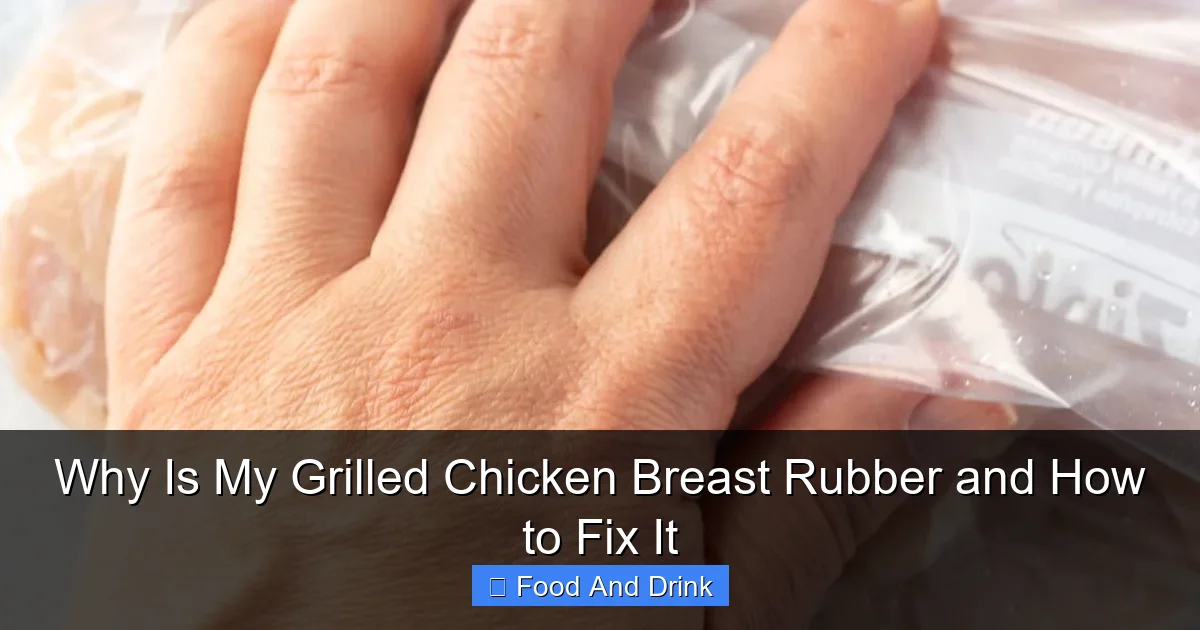
If overcooking is the enemy, moisture is the hero. And one of the best ways to ensure your grilled chicken stays juicy is by brining it before cooking. Brining is the process of soaking meat in a saltwater solution—sometimes with sugar, herbs, or spices—to enhance moisture retention and flavor.
So how does it work? Salt changes the structure of muscle proteins in the chicken, allowing them to hold onto more water. When you brine chicken breast, the salt penetrates the meat and causes the proteins to unwind slightly. This creates space for water molecules to bind more tightly, effectively increasing the meat’s water-holding capacity. The result? Even if the chicken loses some moisture during grilling, it still has more to begin with—so it stays juicy.
There are two main types of brining: wet brining and dry brining. Wet brining involves submerging the chicken in a saltwater solution (typically 1/4 to 1/2 cup of salt per quart of water) for 30 minutes to 2 hours. Dry brining, on the other hand, involves rubbing salt directly onto the meat and letting it sit uncovered in the fridge for several hours or overnight. Both methods work, but wet brining is faster and more consistent for beginners.
Let’s say you’re planning to grill chicken for tacos tonight. Instead of seasoning and throwing it on the grill right away, take 30 minutes to brine it. Mix 4 cups of water with 1/4 cup of kosher salt and 2 tablespoons of sugar. Add a bay leaf, a few peppercorns, and a garlic clove if you like. Submerge the chicken breasts and let them soak for 45 minutes. Rinse lightly, pat dry, and grill as usual. You’ll notice a dramatic difference in texture—the chicken will be plumper, juicier, and far less likely to turn rubbery.
Buttermilk brining is another excellent option, especially for grilled chicken. The lactic acid in buttermilk gently tenderizes the meat while the liquid content adds moisture. Simply submerge the chicken in buttermilk for 1–4 hours before grilling. The result is tender, flavorful chicken with a slight tang—perfect for pairing with spices or sauces.
Proper Thickness and Even Cooking

Visual guide about Why Is My Grilled Chicken Breast Rubber and How to Fix It
Image source: i.stack.imgur.com
Have you ever grilled chicken and found that one end is dry and tough while the other is still slightly undercooked? That’s a classic sign of uneven thickness. Chicken breasts are notoriously irregular—thick at the top (the “drumette” end) and tapered toward the bottom. If you cook them as-is, the thin part will overcook before the thick part is done.
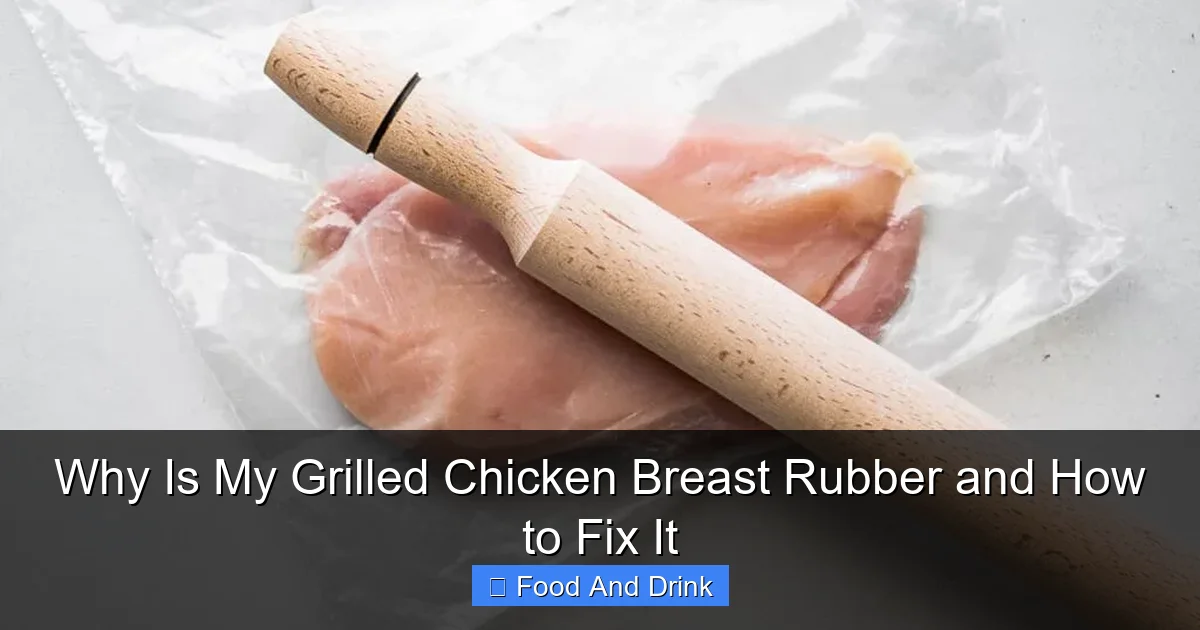
The solution? Butterfly or pound the chicken to an even thickness. Butterflying involves slicing the breast horizontally almost all the way through, then opening it like a book. This creates a larger, thinner piece that cooks more evenly. Pounding uses a meat mallet or rolling pin to gently flatten the breast to about 1/2 inch thick throughout.
Let’s say you’re making grilled chicken sandwiches. Instead of grilling whole breasts, butterfly them so they’re uniform in thickness. This way, they’ll cook through at the same rate, and you won’t have to worry about one side drying out. Plus, thinner pieces cook faster, reducing the risk of overcooking.
Another tip: trim any excess fat or connective tissue. While chicken breast is lean, there’s often a thin layer of fat or a tough membrane on one side. Removing it helps the chicken cook more evenly and prevents curling on the grill.
If you don’t have a meat mallet, you can use a heavy skillet or even a wine bottle. Place the chicken between two sheets of plastic wrap or parchment paper to prevent tearing. Pound gently but firmly until the thickness is consistent. Aim for about 1/2 inch—this is the sweet spot for quick, even grilling.
Marinating: Flavor vs. Texture Balance
Marinating is a great way to add flavor to grilled chicken, but it can backfire if done incorrectly. Many marinades contain acidic ingredients like lemon juice, vinegar, or yogurt. While these add tang and help tenderize the surface, too much acid can actually make chicken rubbery.
Here’s why: acids break down protein structures. A little breakdown is good—it helps flavors penetrate and can make meat more tender. But prolonged exposure to acid causes excessive protein denaturation, leading to a mushy or rubbery texture. This is especially true for chicken breast, which is already prone to drying out.
So how long should you marinate? For most chicken breasts, 30 minutes to 2 hours is ideal. If you’re using a highly acidic marinade (like one with lemon juice or vinegar), stick to the lower end of that range. For milder marinades with oil, herbs, and minimal acid, you can go up to 4 hours—but never overnight unless the recipe specifically calls for it.
Let’s say you’re making grilled chicken with a lemon-herb marinade. Mix olive oil, lemon juice, garlic, rosemary, and black pepper. Add the chicken and marinate for 1 hour. That’s enough time for the flavors to infuse without over-tenderizing the meat. If you leave it in for 8 hours, the lemon juice will start to “cook” the chicken (like in ceviche), resulting in a chalky, rubbery texture.
Oil-based marinades are safer for longer soaking times. They add flavor and help keep the chicken moist without the risk of over-acidification. Try a simple mix of olive oil, soy sauce, honey, and garlic. This combo adds sweetness, umami, and moisture—perfect for grilling.
Grill Temperature and Cooking Technique
Grill temperature plays a huge role in whether your chicken turns out juicy or rubbery. High heat is great for searing and creating those beautiful grill marks, but it’s not ideal for cooking the entire piece through. That’s where the two-zone grilling method comes in.
Two-zone grilling means setting up your grill with one side hot (direct heat) and one side cooler (indirect heat). Start by searing the chicken over direct heat for 2–3 minutes per side to develop flavor and color. Then move it to the indirect side to finish cooking gently. This prevents the outside from burning while allowing the inside to reach the right temperature without overcooking.
If you’re using a gas grill, turn one burner to high and leave the other off. On a charcoal grill, pile the coals on one side and leave the other side empty. This creates the perfect environment for controlled cooking.
Another technique is the “reverse sear” method. Cook the chicken first over indirect heat until it reaches about 150°F (65°C), then finish it over direct heat for a quick sear. This ensures even cooking and a crispy exterior without drying out the interior.
Let’s say you’re grilling chicken for a summer BBQ. Set up your grill with two zones. Sear the chicken for 3 minutes per side over high heat, then move it to the cooler side. Close the lid and cook for another 5–7 minutes, checking the temperature. When it hits 160°F, take it off. It will continue to rise to 165°F as it rests—perfectly cooked and juicy.
Avoid flipping too often. While it’s tempting to keep turning the chicken to ensure even cooking, frequent flipping prevents a good sear and can lead to moisture loss. Flip just once or twice—once after the initial sear, and once more if needed.
Resting: The Final Step for Juicy Chicken
You’ve grilled your chicken to perfection—160°F internal temperature, beautiful grill marks, and a golden-brown crust. But don’t slice into it right away. Resting is one of the most overlooked yet crucial steps in cooking chicken.
When meat cooks, the juices are pushed toward the center. If you cut into it immediately, those juices spill out onto the cutting board, leaving the chicken dry. Resting allows the proteins to relax and the juices to redistribute throughout the meat. This ensures every bite is moist and flavorful.
Let grilled chicken breast rest for 5–10 minutes before slicing or serving. Cover it loosely with foil to keep it warm, but don’t wrap it tightly—that can steam the skin and make it soggy.
Think of it like this: you wouldn’t jump out of a hot shower and immediately put on clothes without drying off. Resting is the chicken’s way of “drying off” and settling after the heat. Skip it, and you risk losing all that hard-earned juiciness.
Conclusion
Rubbery grilled chicken breast doesn’t have to be a rite of passage for home cooks. With a few simple adjustments—brining, even thickness, proper temperature control, and resting—you can transform your grilling game. Remember, the key is moisture retention and precision. Use a thermometer, don’t overcook, and give your chicken the time it needs to shine.
Next time you fire up the grill, keep these tips in mind. Your taste buds—and your family—will thank you.
Frequently Asked Questions
What temperature should grilled chicken breast be?
Grilled chicken breast should reach an internal temperature of 165°F (74°C) for safety. However, removing it at 160°F and letting it rest allows carryover cooking to reach 165°F while keeping it juicier.
Can I use a meat thermometer on thin chicken breasts?
Yes, insert the probe sideways into the thickest part. For very thin pieces, use an instant-read thermometer to avoid over-piercing.
Does pounding chicken make it less nutritious?
No, pounding only changes the shape—it doesn’t affect protein, vitamins, or minerals. It actually helps ensure even cooking and better texture.
Can I grill frozen chicken breast?
It’s not recommended. Frozen chicken cooks unevenly and is more likely to turn rubbery. Always thaw in the fridge before grilling.
Why does my chicken taste bland even after marinating?
Marinating time may be too short, or the marinade lacks salt. Salt enhances flavor, so ensure your marinade or brine includes it.
Is it better to grill chicken on high or low heat?
Use high heat to sear, then lower or indirect heat to finish. This balances flavor development with even, juicy cooking.


