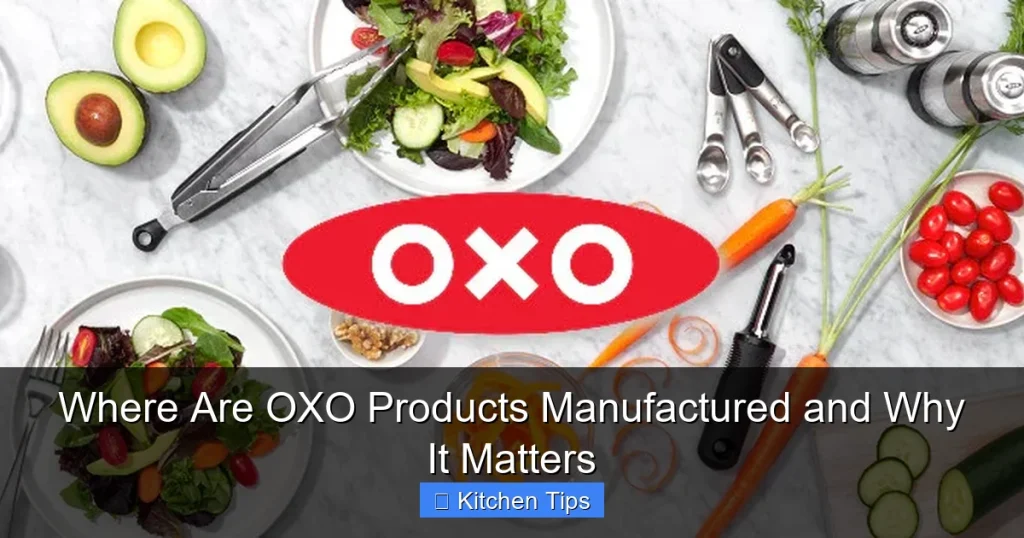

OXO products are primarily manufactured in China, with some production in the USA and other countries. Understanding their manufacturing origins helps consumers make informed choices about quality, ethics, and sustainability.
If you’ve ever reached for a sleek OXO Good Grips vegetable peeler or a sturdyOXO measuring cup while cooking, you’ve likely appreciated the brand’s thoughtful design and reliable performance. But have you ever stopped to wonder where these popular kitchen tools are actually made? It’s a question more consumers are asking—not just out of curiosity, but because the origins of the products we use daily can say a lot about their quality, ethics, and environmental impact.
OXO, known for its ergonomic designs and user-friendly kitchen gadgets, has built a strong reputation over the past three decades. From peelers and can openers to food storage containers and coffee tools, OXO products are staples in homes around the world. But behind every well-designed tool is a complex supply chain. Understanding where OXO products are manufactured isn’t just about geography—it’s about transparency, responsibility, and the values that guide modern consumer choices.
In this article, we’ll explore where OXO products are made, why the company chooses certain manufacturing locations, and what that means for you as a buyer. Whether you’re passionate about sustainability, concerned about labor practices, or simply want to know your kitchen tools are built to last, this deep dive will give you the insights you need.
Key Takeaways
- Most OXO products are made in China: The majority of OXO’s kitchen tools and gadgets are manufactured in carefully vetted factories across China, ensuring consistent quality and cost efficiency.
- Some products are made in the USA: Select OXO items, especially those involving complex assembly or specialized materials, are produced in American facilities to support local manufacturing and faster turnaround.
- OXO emphasizes ethical manufacturing: The company partners with factories that meet strict labor, safety, and environmental standards, often exceeding local regulations.
- Quality control is a top priority: OXO conducts regular audits and testing to ensure durability, safety, and performance across all products, regardless of location.
- Sustainability is part of the process: OXO is committed to reducing waste, using recyclable packaging, and minimizing its carbon footprint in manufacturing and shipping.
- Transparency builds trust: While OXO doesn’t publicly list every factory, it shares its commitment to responsible sourcing and welcomes consumer inquiries.
- Knowing where products are made matters: It affects everything from environmental impact to labor practices, helping you support brands that align with your values.
Quick Answers to Common Questions
Where are most OXO products made?
Most OXO products are manufactured in China, where the company partners with specialized factories that meet strict quality and ethical standards.
Are any OXO products made in the USA?
Yes, select OXO products—such as certain food storage containers—are manufactured in the United States to support local production and reduce shipping emissions.
Does OXO ensure fair labor practices in its factories?
Yes, OXO is a member of the Fair Labor Association and requires its manufacturing partners to comply with international labor standards, including fair wages and safe working conditions.
How does OXO maintain quality across global factories?
OXO uses in-house quality managers, third-party audits, and real-world testing to ensure consistency and reliability, regardless of where a product is made.
What is OXO doing to reduce its environmental impact?
OXO is working to make all packaging recyclable by 2025, using eco-friendly materials, and optimizing shipping to lower its carbon footprint.
📑 Table of Contents
Where Are OXO Products Manufactured?
The short answer? Most OXO products are manufactured in China. That might raise eyebrows for some, especially in an era where “Made in USA” labels carry emotional and political weight. But the reality is more nuanced. OXO’s manufacturing strategy balances global efficiency with rigorous quality standards, and China plays a central role in that equation.
China offers a unique combination of advanced manufacturing infrastructure, skilled labor, and cost-effectiveness—especially for producing high volumes of precision-engineered kitchen tools. OXO partners with a network of factories across China, primarily in regions like Guangdong and Jiangsu, which are known for their electronics and consumer goods production. These facilities are not generic assembly lines; they are specialized partners that meet OXO’s strict requirements for quality, safety, and ethical labor practices.
But it’s not all made overseas. Some OXO products—particularly those involving complex assembly, custom molding, or materials that are harder to source internationally—are manufactured in the United States. For example, certain OXO food storage containers and select kitchen tools are produced in American facilities. This allows for faster prototyping, tighter quality control, and reduced shipping emissions for domestic customers.
Why China? The Practical Reasons
So why does OXO rely so heavily on Chinese manufacturing? It’s not just about lower labor costs. China has developed a robust ecosystem for consumer goods production, with suppliers that can handle everything from plastic injection molding to metal stamping and electronic integration. This vertical integration means OXO can design a product in New York and have it produced, tested, and shipped efficiently—often within weeks.
Additionally, Chinese factories have invested heavily in automation and quality systems. Many of OXO’s manufacturing partners use ISO-certified processes and undergo regular third-party audits. This ensures consistency across production runs, which is critical for a brand that prides itself on reliability.
Made in the USA: A Strategic Choice
While China handles the bulk of production, OXO’s U.S.-based manufacturing is intentional. Producing certain items domestically allows the company to respond quickly to market demands, reduce lead times, and support American jobs. It also aligns with OXO’s commitment to sustainability—shorter shipping distances mean lower carbon emissions.
For example, OXO’s popular POP Container line includes models made in the USA. These containers are assembled and packaged domestically, reducing the environmental footprint associated with long-haul shipping. This hybrid approach—global scale with local precision—is a hallmark of OXO’s supply chain strategy.
How OXO Ensures Quality Across Global Factories
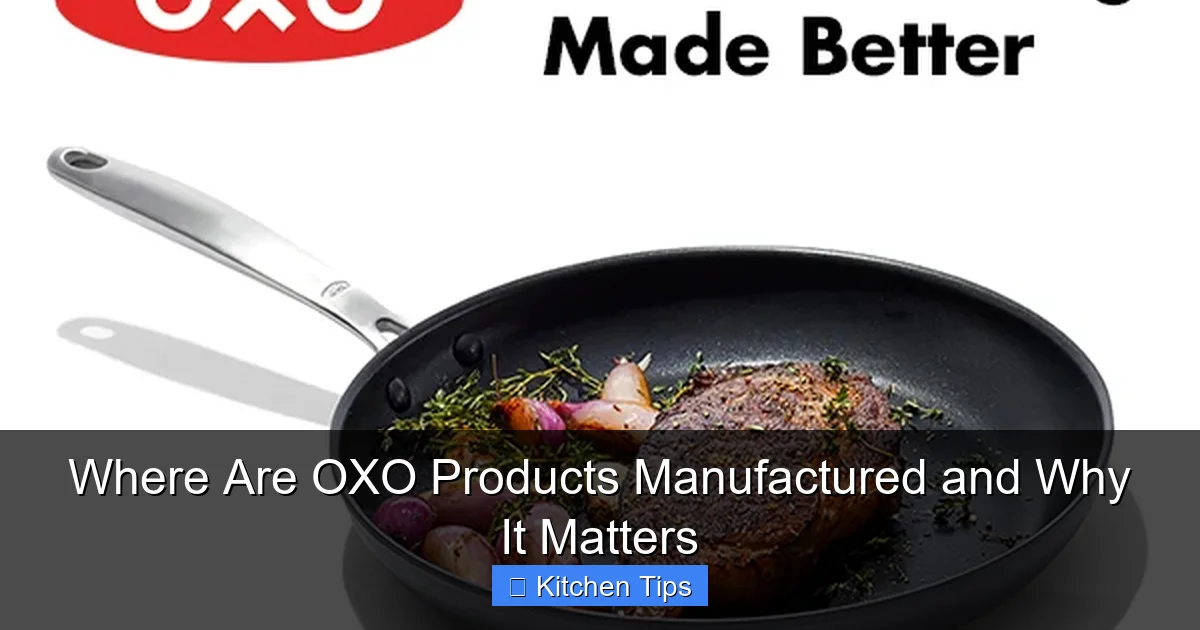
Visual guide about Where Are OXO Products Manufactured and Why It Matters
Image source: m.media-amazon.com
One of the biggest concerns consumers have about overseas manufacturing is quality control. After all, how can a company based in New York ensure that a peeler made in Guangzhou performs as well as one made in Ohio? OXO tackles this challenge head-on with a multi-layered quality assurance system.
Every OXO product goes through extensive design and testing phases before it ever reaches a factory. The company’s in-house design team works closely with engineers and manufacturers to create prototypes that meet exacting standards. These prototypes are tested for durability, safety, and usability—often by real people in real kitchens.
Once production begins, OXO maintains strict oversight. The company employs quality control managers who work directly with factory partners. These managers conduct regular inspections, review production processes, and ensure that materials meet OXO’s specifications. In many cases, OXO requires factories to use specific molds, components, or assembly techniques to maintain consistency.
Third-Party Audits and Certifications
To further ensure accountability, OXO partners with third-party auditors who evaluate factory conditions, labor practices, and environmental compliance. These audits go beyond checking boxes—they involve interviews with workers, reviews of payroll records, and inspections of safety equipment.
Many of OXO’s manufacturing partners are certified under international standards such as ISO 9001 (quality management) and ISO 14001 (environmental management). Some also comply with social accountability standards like SA8000, which focuses on worker rights and fair treatment.
Real-World Testing and Feedback Loops
OXO doesn’t just rely on factory reports. The company actively gathers feedback from customers and retailers. If a product shows higher-than-expected failure rates or receives consistent complaints, OXO investigates the root cause—whether it’s a design flaw, material issue, or manufacturing error—and makes adjustments.
This feedback loop is part of OXO’s “Good Grips” philosophy: designing products that work for real people. Whether a product is made in China or the USA, it must pass the same real-world tests.
Ethical Manufacturing and Labor Practices
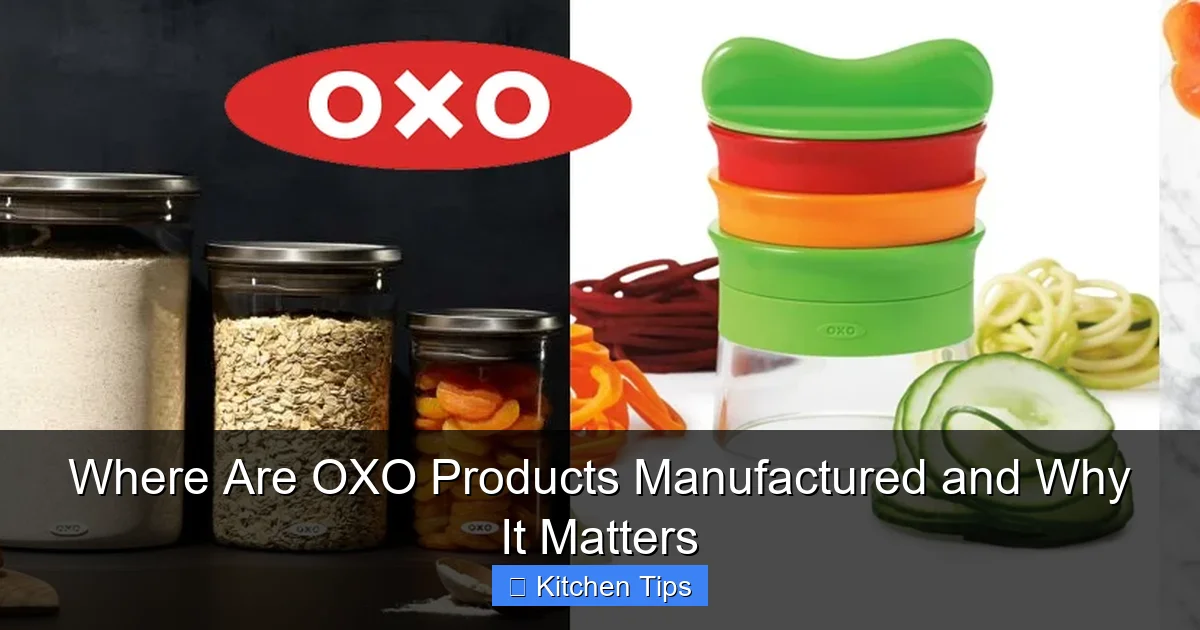
Visual guide about Where Are OXO Products Manufactured and Why It Matters
Image source: extraingredient.com
In today’s world, where stories of sweatshops and unsafe working conditions dominate headlines, consumers want to know that the products they buy are made ethically. OXO takes this responsibility seriously.
The company is a member of the Fair Labor Association (FLA), a nonprofit organization that promotes humane working conditions worldwide. As an FLA member, OXO commits to upholding core labor standards, including the prohibition of child labor, forced labor, and discrimination. The company also supports fair wages, reasonable working hours, and safe environments.
Transparency and Accountability
While OXO doesn’t publish a full list of its manufacturing partners—citing competitive and proprietary reasons—it does share its commitment to ethical sourcing. The company publishes an annual sustainability report that outlines its progress on labor practices, environmental goals, and supply chain transparency.
OXO also encourages dialogue with stakeholders. If a customer has concerns about a product’s origin or manufacturing practices, the company’s customer service team can provide information and escalate issues to the appropriate departments.
Worker Well-Being Initiatives
Beyond compliance, OXO supports initiatives that improve worker well-being. Some of its factory partners offer training programs, health services, and educational opportunities for employees. These efforts reflect OXO’s belief that ethical manufacturing isn’t just about avoiding harm—it’s about creating positive impact.
Sustainability and Environmental Impact
Visual guide about Where Are OXO Products Manufactured and Why It Matters
Image source: lunaskitchentips.com
Manufacturing location also affects a product’s environmental footprint. Shipping goods across oceans consumes fuel and emits greenhouse gases. OXO is aware of this and has taken steps to reduce its impact.
One strategy is regional manufacturing. By producing certain items closer to key markets—like making POP Containers in the USA for North American customers—OXO cuts down on long-distance shipping. The company also uses sea freight instead of air freight whenever possible, which significantly reduces emissions.
Eco-Friendly Materials and Packaging
OXO is increasingly using recycled and recyclable materials in its products and packaging. For example, many OXO food storage containers are made from BPA-free Tritan plastic, which is durable and recyclable. The company has also eliminated single-use plastic from most of its packaging, opting for cardboard and paper instead.
In 2022, OXO announced a goal to make 100% of its packaging recyclable, compostable, or reusable by 2025. This commitment extends to manufacturing processes, where the company encourages factories to reduce waste and energy use.
Carbon Footprint and Future Goals
While OXO doesn’t yet publish a full carbon footprint analysis, it has committed to measuring and reducing emissions across its supply chain. The company is exploring renewable energy options for its facilities and working with logistics partners to optimize shipping routes.
These efforts show that OXO understands the connection between manufacturing location and environmental responsibility—and is taking action to improve.
Why It Matters: What Consumers Should Know
So, why should you care where your OXO peeler or measuring cup is made? Because it’s not just about geography—it’s about values.
When you buy a product, you’re supporting a chain of decisions: how it’s designed, who makes it, what materials are used, and how it’s shipped. Knowing where OXO products are manufactured helps you align your purchases with your principles.
If you prioritize ethical labor practices, OXO’s partnerships with audited factories and FLA membership offer reassurance. If sustainability is key, the company’s efforts to reduce packaging waste and emissions are steps in the right direction. And if you value quality and innovation, OXO’s global manufacturing strategy ensures you get well-designed, durable tools at a fair price.
Making Informed Choices
You don’t have to sacrifice performance for ethics. OXO proves that a brand can be both high-quality and responsible. By understanding where and how your kitchen tools are made, you can shop with confidence—knowing that your choices support better practices across the industry.
Conclusion
OXO products are primarily manufactured in China, with select items produced in the USA and other regions. This global approach allows OXO to balance cost, quality, and speed while maintaining high standards for ethics and sustainability. Through rigorous quality control, third-party audits, and a commitment to worker well-being, OXO ensures that its products—no matter where they’re made—meet the expectations of discerning consumers.
Understanding where OXO products are manufactured isn’t just about satisfying curiosity. It’s about making informed decisions that reflect your values. Whether you’re buying a simple peeler or a full set of food storage containers, knowing the story behind the product adds meaning to your purchase.
In a world where transparency is increasingly important, OXO stands out by taking responsibility for its supply chain. And for home cooks who care about quality, ethics, and the planet, that’s something worth supporting.
Frequently Asked Questions
Are OXO products safe to use?
Yes, OXO products are rigorously tested for safety and durability. They are made from food-safe materials and comply with international health and safety standards.
Does OXO use child labor in its factories?
No, OXO strictly prohibits child labor and requires all manufacturing partners to adhere to ethical labor practices as part of its membership in the Fair Labor Association.
Can I find out exactly which factory made my OXO product?
OXO does not publicly disclose specific factory locations for competitive reasons, but it shares its commitment to ethical sourcing and welcomes customer inquiries.
Why doesn’t OXO make all its products in the USA?
While some products are made in the USA, global manufacturing allows OXO to maintain affordability, scale production, and access specialized expertise while upholding quality standards.
Are OXO products environmentally friendly?
OXO is committed to sustainability, using recyclable materials, reducing plastic packaging, and working toward carbon-neutral goals across its supply chain.
How long do OXO products typically last?
OXO products are designed for long-term use. Many customers report using their OXO tools for years, thanks to durable materials and thoughtful design.