

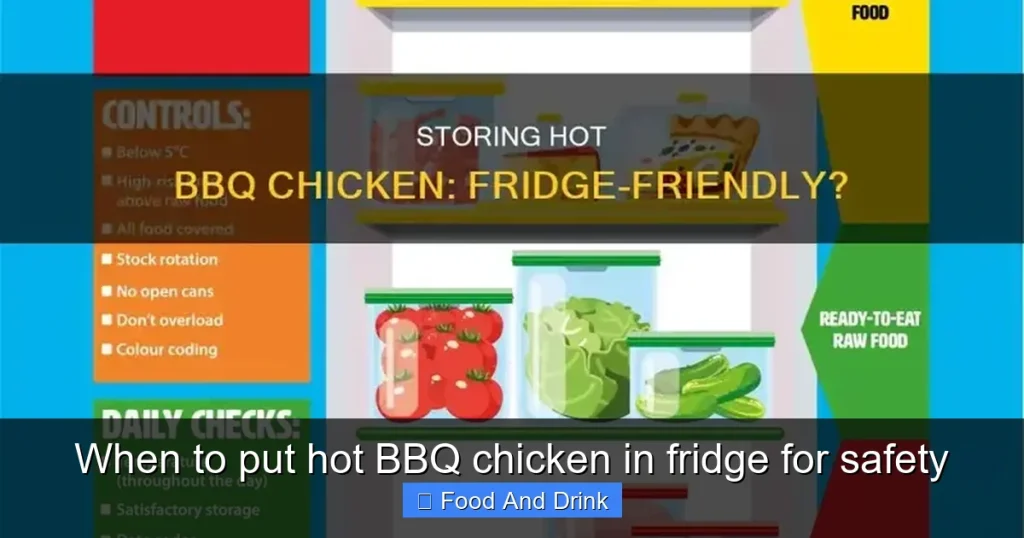

Putting hot BBQ chicken in the fridge too soon or too late can be risky. To keep your food safe, cool it quickly and refrigerate within two hours—or one hour if it’s over 90°F outside. This prevents bacteria growth and ensures your leftovers stay delicious and safe to eat.
Key Takeaways
- Refrigerate within 2 hours: Hot BBQ chicken should go into the fridge within two hours of cooking to avoid the “danger zone” (40°F–140°F) where bacteria multiply rapidly.
- One-hour rule in hot weather: If the outdoor temperature is above 90°F, refrigerate within one hour to reduce spoilage risk.
- Cool before covering: Let chicken cool slightly (but not at room temperature for too long) before covering to prevent condensation and sogginess.
- Use shallow containers: Transfer chicken to shallow, airtight containers to speed up cooling and improve fridge efficiency.
- Don’t overcrowd the fridge: Allow space around containers so cold air circulates and cools food evenly.
- Reheat safely: When reheating, bring chicken to an internal temperature of 165°F to kill any potential bacteria.
- Label and date: Always label leftovers with the date to track freshness and avoid eating spoiled food.
Quick Answers to Common Questions
Can I put hot BBQ chicken straight into the fridge?
It’s best to let it cool for 10–15 minutes first, then transfer to shallow containers. Putting very hot chicken directly in the fridge can raise the internal temperature and affect other foods.
How long can BBQ chicken sit out before going bad?
No more than two hours at room temperature, or one hour if the temperature is above 90°F. After that, bacteria can grow to dangerous levels.
Is it safe to eat BBQ chicken left out overnight?
No. Chicken left out for more than two hours (or one hour in heat) should be discarded, even if it looks and smells fine.
Can I freeze BBQ chicken after refrigerating?
Yes. Freeze within 3–4 days of cooking. Wrap tightly in freezer-safe bags or containers and use within 4 months for best quality.
How do I know if refrigerated BBQ chicken is still good?
Check for slimy texture, bad smell, or discoloration. If it looks or smells off, throw it away. Otherwise, it’s safe to eat within 3–4 days.
📑 Table of Contents
- Why Timing Matters When Storing Hot BBQ Chicken
- Understanding the Danger Zone: The Science Behind Food Safety
- The 2-Hour Rule: When to Refrigerate Hot BBQ Chicken
- How to Cool Hot BBQ Chicken Safely Before Refrigerating
- Best Storage Practices for BBQ Chicken Leftovers
- Reheating BBQ Chicken Safely
- Common Mistakes to Avoid
- Conclusion: Safe Storage Starts with Smart Timing
Why Timing Matters When Storing Hot BBQ Chicken
BBQ chicken is one of those summer staples that brings people together—whether it’s a backyard cookout, a family reunion, or a casual Friday night dinner. The smoky aroma, the tangy glaze, the tender, juicy meat—it’s hard to resist. But once the feast is over, what do you do with the leftovers? That’s where things can get tricky.
Many people assume that because the chicken is hot, it’s safe to leave out for a while. After all, heat kills bacteria, right? Well, yes—but only while the food is actively being cooked. Once the chicken comes off the grill, it starts cooling down, and that’s when the danger begins. Bacteria like Salmonella, E. coli, and Listeria love warm environments, especially between 40°F and 140°F—a range known as the “danger zone.” If hot BBQ chicken sits in this zone for too long, bacteria can multiply to dangerous levels, leading to food poisoning.
So, the big question is: when should you put hot BBQ chicken in the fridge? The answer isn’t just about convenience—it’s about food safety. Getting the timing right ensures your leftovers stay safe, tasty, and free from harmful pathogens. In this guide, we’ll walk you through the best practices for cooling and storing hot BBQ chicken, so you can enjoy your leftovers without worry.
Understanding the Danger Zone: The Science Behind Food Safety
Visual guide about When to put hot BBQ chicken in fridge for safety
Image source: foodsguy.com
To understand why timing is so critical, let’s break down the science. The “danger zone” is a temperature range where bacteria grow most rapidly. According to the USDA, this zone spans from 40°F to 140°F. When food stays in this range for more than two hours, bacteria can double every 20 minutes. That means a small amount of bacteria can become a serious health risk in just a few hours.
Hot BBQ chicken, straight off the grill, is usually around 165°F—the safe internal temperature for poultry. But as it cools, it passes through the danger zone. If you leave it on the counter for too long, you’re essentially giving bacteria a free pass to multiply. This is especially true in warm environments. On a hot summer day, when the temperature is above 90°F, the risk increases. In these conditions, the USDA recommends refrigerating perishable food within just one hour.
But it’s not just about how long the chicken sits out—it’s also about how it cools. Large pieces of meat, like a whole roasted chicken or a tray of drumsticks, cool slowly from the outside in. The center can stay in the danger zone for hours, even if the surface feels cool. That’s why proper cooling techniques are essential.
How Bacteria Grow on Cooked Chicken
Bacteria are everywhere—on our hands, in the air, on kitchen surfaces. While cooking kills most of them, some can survive or recontaminate food after cooking. For example, if you use the same tongs to handle raw and cooked chicken, you can transfer bacteria. Or, if the chicken sits on a contaminated surface, pathogens can latch on.
Once the chicken starts cooling, these bacteria begin to multiply. Salmonella, for instance, can cause symptoms like diarrhea, fever, and stomach cramps within 6 to 48 hours of ingestion. Listeria is even more dangerous, especially for pregnant women, newborns, and people with weakened immune systems. It can lead to severe illness or even death.
The key to prevention is minimizing the time food spends in the danger zone. That’s why refrigerating hot BBQ chicken promptly is so important. But “promptly” doesn’t mean immediately—there’s a right way and a wrong way to do it.
The 2-Hour Rule: When to Refrigerate Hot BBQ Chicken
Visual guide about When to put hot BBQ chicken in fridge for safety
Image source: practicalcooks.com
The general rule of thumb is simple: refrigerate hot BBQ chicken within two hours of cooking. This applies to most indoor environments where the temperature is below 90°F. If you’re at home, in an air-conditioned space, or during cooler months, two hours is your safety window.
But why two hours? It’s based on extensive food safety research. Studies show that after two hours in the danger zone, bacterial counts can reach levels that cause illness. By refrigerating within this timeframe, you stop the growth cycle and keep the chicken safe.
Of course, this rule isn’t one-size-fits-all. Several factors can influence how quickly bacteria grow, including:
– Ambient temperature
– Humidity
– The size and shape of the chicken pieces
– How the chicken is stored (covered vs. uncovered)
For example, a large tray of BBQ chicken will cool more slowly than individual pieces on a plate. Similarly, chicken left in a deep container will retain heat longer than chicken spread out in a shallow pan.
Adjusting for Hot Weather: The 1-Hour Rule
When the temperature rises above 90°F—common during summer barbecues or outdoor events—the two-hour rule shortens to one hour. This is because heat accelerates bacterial growth. In hot conditions, food can enter the danger zone faster, and bacteria multiply more quickly.
Imagine you’re at a picnic on a 95°F day. You’ve just grilled a batch of BBQ chicken, and everyone is eating. After the meal, you pack up the leftovers. If you wait two hours to refrigerate, you’re taking a big risk. The chicken may have already spent too much time in the danger zone.
In these situations, aim to refrigerate within one hour. If possible, bring a cooler with ice packs to the event. Transfer the chicken to the cooler as soon as everyone has finished eating. This keeps it cold and safe until you can get it home and into the fridge.
What If You’re Not Sure How Long It’s Been Out?
Sometimes, life gets busy. You’re hosting a party, and before you know it, three hours have passed. The chicken has been sitting out—what now?
If the chicken has been at room temperature for more than two hours (or one hour in hot weather), the safest choice is to discard it. While it might look and smell fine, bacteria can’t be detected by sight, smell, or taste. Eating it could make you sick.
However, if it’s been less than two hours and the chicken still feels warm, you can still save it—but act quickly. Transfer it to shallow containers, cover loosely, and get it into the fridge as soon as possible. The faster it cools, the lower the risk.
How to Cool Hot BBQ Chicken Safely Before Refrigerating
Visual guide about When to put hot BBQ chicken in fridge for safety
Image source: practicalcooks.com
Now that you know when to refrigerate, let’s talk about how to cool the chicken properly. Putting hot food directly into the fridge might seem like the fastest option, but it can actually cause problems.
When you place a large, hot item in the fridge, it raises the internal temperature. This can put other foods at risk and force the fridge to work harder, potentially leading to spoilage. Additionally, trapping heat inside a covered container can create steam, which leads to condensation. This moisture makes the chicken soggy and can promote bacterial growth.
So, how do you cool hot BBQ chicken safely?
Step 1: Let It Rest—But Not Too Long
After grilling, it’s okay to let the chicken rest for 10 to 15 minutes. This allows the juices to redistribute, making the meat more tender. But don’t let it sit out for longer than that. Remember, the clock starts ticking as soon as the chicken comes off the heat.
Step 2: Transfer to Shallow Containers
Once the chicken has rested, transfer it to shallow, airtight containers. Shallow containers allow heat to escape more quickly, speeding up the cooling process. Aim for a depth of no more than two inches. If you have a large amount of chicken, divide it into multiple containers.
For example, instead of putting a whole tray of BBQ wings in one deep pan, spread them out in two or three smaller containers. This ensures even cooling and reduces the risk of the center staying warm too long.
Step 3: Cover Loosely at First
Cover the containers loosely with lids or plastic wrap. This allows steam to escape while preventing contamination. Once the chicken has cooled to room temperature (usually within 30 to 60 minutes), you can seal the containers tightly.
Step 4: Use an Ice Bath for Faster Cooling
If you’re in a hurry—say, you’re packing up after a picnic—use an ice bath to speed up cooling. Place the container of chicken in a larger bowl or sink filled with ice water. Stir the chicken occasionally to ensure even cooling. This method can cool food from 140°F to 70°F in about 30 minutes.
Step 5: Don’t Overcrowd the Fridge
When you’re ready to refrigerate, make sure there’s enough space around the containers. Cold air needs to circulate to cool the food evenly. Avoid stacking containers or placing them too close to the walls or back of the fridge.
Best Storage Practices for BBQ Chicken Leftovers
Once your BBQ chicken is safely in the fridge, proper storage ensures it stays fresh and safe to eat. Here are some best practices to follow:
Use Airtight Containers
Store chicken in airtight containers or resealable plastic bags. This prevents exposure to air, which can dry out the meat and cause off-flavors. It also keeps the chicken from absorbing odors from other foods in the fridge.
Label and Date Everything
Always label your containers with the date you stored the chicken. This helps you keep track of freshness. Cooked chicken should be eaten within 3 to 4 days. If you won’t eat it in that time, consider freezing it.
Store on the Right Shelf
Place chicken on a middle or lower shelf, not in the door. The door is the warmest part of the fridge and experiences temperature fluctuations every time you open it. The middle shelves maintain a more consistent cold temperature.
Keep It Separate from Raw Foods
Store cooked chicken away from raw meats, especially raw poultry. This prevents cross-contamination. Use separate containers and place cooked foods on higher shelves than raw ones.
Freeze for Long-Term Storage
If you have more leftovers than you can eat in a few days, freeze the chicken. Wrap it tightly in freezer-safe bags or containers, removing as much air as possible. Frozen BBQ chicken can last up to 4 months. When ready to eat, thaw it in the fridge overnight and reheat thoroughly.
Reheating BBQ Chicken Safely
Reheating leftovers properly is just as important as storing them correctly. When reheating BBQ chicken, the goal is to bring it to an internal temperature of 165°F. This ensures any bacteria that may have developed during storage are killed.
Best Methods for Reheating
– **Oven:** Preheat to 350°F. Place chicken in a baking dish, cover with foil, and heat for 20–30 minutes, or until hot throughout.
– **Stovetop:** Use a skillet over medium heat. Add a splash of broth or water to keep the chicken moist. Stir occasionally until heated through.
– **Microwave:** Place chicken on a microwave-safe plate, cover with a damp paper towel, and heat in 30-second intervals, checking the temperature each time.
Avoid reheating chicken more than once. Each time you cool and reheat, you increase the risk of bacterial growth. If you have a large portion, reheat only what you plan to eat.
Signs That Chicken Has Gone Bad
Even with proper storage, chicken can spoil. Before eating leftovers, check for these signs:
– Slimy or sticky texture
– Sour or unpleasant smell
– Discoloration (gray or green patches)
– Mold
If you notice any of these, throw the chicken away—even if it’s only been a day or two.
Common Mistakes to Avoid
Even experienced cooks make mistakes when storing leftovers. Here are some common pitfalls to watch out for:
Leaving Chicken Out Too Long
This is the biggest mistake. Whether it’s because you’re busy or forgetful, leaving chicken out for more than two hours is risky. Set a timer if you need to.
Putting Hot Chicken Directly in the Fridge
While it’s important to refrigerate promptly, don’t shove a steaming hot pan into the fridge. Let it cool slightly first to avoid temperature spikes.
Using Deep Containers
Deep containers slow down cooling. Always use shallow ones for faster, safer results.
Not Covering Properly
Covering too tightly traps steam, making the chicken soggy. Cover loosely at first, then seal once cooled.
Ignoring the 1-Hour Rule in Heat
Don’t assume the two-hour rule applies in all conditions. In hot weather, act fast.
Conclusion: Safe Storage Starts with Smart Timing
Storing hot BBQ chicken safely isn’t complicated, but it does require attention to detail. The key is timing—refrigerate within two hours, or one hour in hot weather. Cool the chicken properly using shallow containers and, if needed, an ice bath. Store it in airtight containers, label it, and reheat it to 165°F.
By following these guidelines, you protect yourself and your loved ones from foodborne illness. You also preserve the flavor and texture of your delicious BBQ chicken, so every leftover bite tastes as good as the first.
Food safety might not be the most exciting part of cooking, but it’s one of the most important. A few simple steps can make a big difference. So next time you fire up the grill, remember: when it comes to hot BBQ chicken, timing isn’t just about taste—it’s about safety.
Frequently Asked Questions
Can I reheat BBQ chicken more than once?
It’s not recommended. Each time you cool and reheat chicken, you increase the risk of bacterial growth. Reheat only the portion you plan to eat.
Should I cover BBQ chicken while it’s cooling?
Cover it loosely at first to allow steam to escape. Once it’s cooled to room temperature, seal the container tightly before refrigerating.
Is it safe to eat cold BBQ chicken?
Yes, as long as it’s been stored properly and is within the 3–4 day window. Cold chicken is safe to eat, though some prefer it reheated.
Can I store BBQ chicken in the same container I grilled it in?
It’s better to transfer it to shallow, airtight containers. Grilling pans are often too deep and don’t cool food evenly.
What’s the best way to cool a large amount of BBQ chicken?
Divide it into smaller portions and use an ice bath. This speeds up cooling and reduces the time spent in the danger zone.
Does marinating affect how long BBQ chicken can sit out?
No, marinating doesn’t change the storage rules. Once cooked, the chicken should still be refrigerated within two hours (or one hour in heat).


