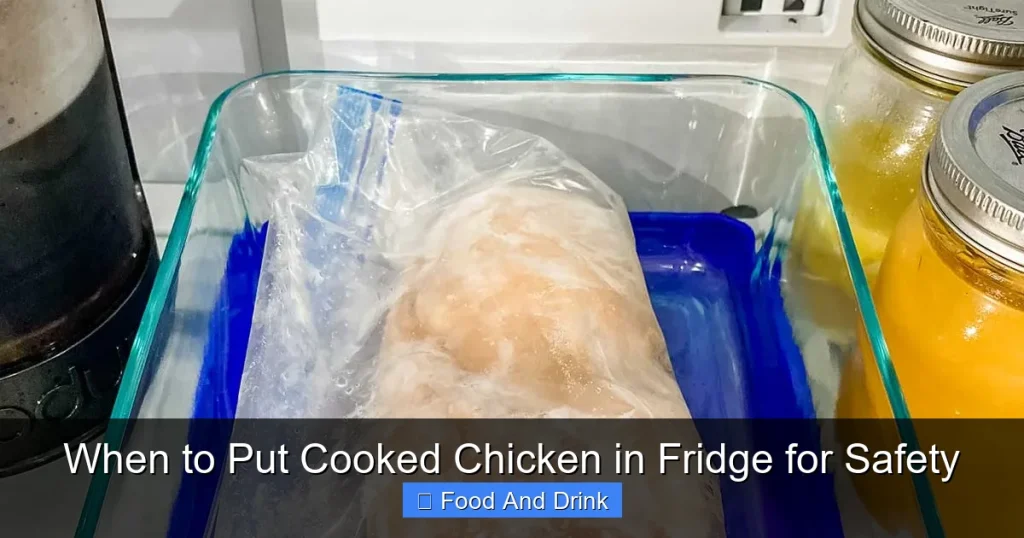

Putting cooked chicken in the fridge within two hours of cooking is essential for food safety. Leaving it out longer risks bacterial growth, which can cause food poisoning. Proper cooling and storage help maintain quality and prevent illness.
Key Takeaways
- Refrigerate within 2 hours: Always place cooked chicken in the fridge within two hours of cooking—or one hour if the room temperature is above 90°F (32°C).
- Cool it down first: Let chicken rest at room temperature for no more than 20–30 minutes before refrigerating to avoid raising the fridge’s internal temperature.
- Use shallow containers: Store chicken in shallow, airtight containers to promote even and rapid cooling.
- Label and date: Always label leftovers with the date so you know when to use them—cooked chicken lasts 3–4 days in the fridge.
- Reheat safely: Reheat chicken to an internal temperature of 165°F (74°C) to kill any potential bacteria.
- Avoid repeated warming: Don’t let cooked chicken sit out multiple times—this increases contamination risk.
- Freeze for longer storage: If not eating within 3–4 days, freeze cooked chicken for up to 4 months for best quality.
Quick Answers to Common Questions
Can I put hot chicken directly in the fridge?
It’s not recommended. Hot chicken can raise the fridge’s temperature, risking other foods. Let it cool for 20–30 minutes first, then refrigerate.
How long can cooked chicken sit out at room temperature?
No more than 2 hours—or 1 hour if the temperature is above 90°F (32°C). After that, bacteria can grow rapidly.
Can I freeze cooked chicken?
Yes! Freeze cooked chicken in airtight containers or freezer bags for up to 4 months. Thaw in the fridge before reheating.
Is it safe to eat cooked chicken that smells fine but has been in the fridge for 5 days?
No. Cooked chicken should be eaten within 3–4 days. Even if it smells okay, bacteria may still be present.
Can I reheat cooked chicken more than once?
It’s best to avoid it. Each reheating cycle increases the time spent in the danger zone. Reheat only the portion you plan to eat.
📑 Table of Contents
Why Timing Matters When Storing Cooked Chicken
Cooked chicken is one of the most popular proteins in home kitchens—and for good reason. It’s versatile, affordable, and packed with protein. But it’s also highly perishable. Unlike some foods that can sit out for a while, cooked chicken is a breeding ground for harmful bacteria like Salmonella, Listeria, and Campylobacter if not handled properly.
The moment your chicken comes off the grill, out of the oven, or off the stovetop, the clock starts ticking. Bacteria multiply rapidly in the “danger zone”—between 40°F and 140°F (4°C and 60°C). This is the temperature range where food is neither cold enough to slow bacterial growth nor hot enough to kill it. That’s why knowing when to put cooked chicken in the fridge isn’t just a suggestion—it’s a critical step in food safety.
Many people assume that because the chicken was just cooked at high heat, it’s safe to leave out for a while. But that’s a dangerous myth. While cooking kills bacteria, it doesn’t make the food immune to recontamination. Once the chicken starts cooling, any bacteria present in the air, on surfaces, or from handling can begin to grow—especially if the chicken stays in the danger zone too long.
The 2-Hour Rule: A Golden Standard
The USDA and food safety experts agree: cooked chicken should be refrigerated within two hours of being removed from heat. This rule applies whether you’re storing leftovers from dinner, packing lunch, or saving extra for tomorrow’s meal prep.
But what if it’s a hot summer day? The rule tightens. When the ambient temperature is above 90°F (32°C)—common during summer barbecues or outdoor events—you should refrigerate cooked chicken within just one hour. Heat accelerates bacterial growth, so the window for safe storage shrinks significantly.
For example, imagine you’ve just grilled a batch of chicken wings for a backyard party. The sun is beating down, and the temperature is 95°F. If you leave those wings on the counter while you chat with guests, you’re giving bacteria a fast track to multiply. By the time you decide to store them, they may already be unsafe to eat.
Why Bacteria Love Cooked Chicken
Cooked chicken is especially vulnerable because it’s moist, nutrient-rich, and often handled multiple times during preparation and serving. These factors create the perfect environment for bacteria to thrive.
Even if your chicken was perfectly safe when it came off the heat, cross-contamination can occur quickly. For instance, using the same tongs to serve chicken that were used to handle raw meat can transfer bacteria. Or, placing hot chicken in a container that wasn’t properly cleaned can introduce new pathogens.
Additionally, chicken often cools unevenly. The outer layers may feel cool to the touch, but the center can still be warm—keeping it in the danger zone longer. This is why proper cooling techniques are just as important as timing.
How to Cool Cooked Chicken Safely Before Refrigerating

Visual guide about When to Put Cooked Chicken in Fridge for Safety
Image source: publish.purewow.net
One of the biggest mistakes people make is putting hot chicken directly into the fridge. While it might seem like the fastest way to cool it down, this can actually do more harm than good.
When you place a large portion of hot food in the refrigerator, it raises the internal temperature of the entire unit. This not only strains your fridge’s cooling system but also puts other foods at risk. If the fridge temperature climbs above 40°F, bacteria in other perishable items—like dairy, deli meats, or fresh produce—can start to grow.
So, how do you cool chicken safely without leaving it out too long?
Let It Rest—But Not Too Long
After cooking, allow the chicken to rest at room temperature for no more than 20 to 30 minutes. This brief resting period helps redistribute juices and makes the meat more flavorful. But don’t let it sit out for an hour while you finish cleaning up or setting the table.
During this time, cover the chicken loosely with foil to protect it from dust and insects, but avoid sealing it tightly. A tight seal traps steam, which can create a moist environment ideal for bacterial growth.
Use the Ice Bath Method for Faster Cooling
If you’re in a hurry or dealing with a large batch of chicken, an ice bath can speed up the cooling process. Here’s how:
1. Place the cooked chicken in a large bowl or container.
2. Fill a larger bowl or your sink with ice and cold water.
3. Submerge the chicken container in the ice bath, making sure the water level is below the rim to avoid contamination.
4. Stir or flip the chicken occasionally to ensure even cooling.
5. Once the chicken reaches room temperature (usually within 30–45 minutes), transfer it to the fridge.
This method is especially useful for meal preppers or caterers who need to cool food quickly.
Divide Large Portions into Smaller Containers
Another effective strategy is to divide large portions of chicken into smaller, shallow containers. For example, instead of storing an entire roasted chicken in one big dish, cut it into pieces and spread them out in multiple containers.
Shallow containers allow heat to escape more quickly, reducing the time the chicken spends in the danger zone. This also makes reheating easier and more even later on.
Proper Storage Techniques for Maximum Freshness
Once your chicken has cooled, it’s time to store it properly. How you store cooked chicken can make a big difference in how long it stays safe and tasty.
Choose the Right Containers
Always use airtight containers or heavy-duty resealable plastic bags. These prevent air and moisture from getting in, which can dry out the chicken or lead to freezer burn if you plan to freeze it.
Glass containers are ideal because they’re non-reactive, easy to clean, and don’t absorb odors. If using plastic, make sure it’s food-grade and BPA-free.
Avoid storing chicken in its original packaging—like the foil tray from a rotisserie chicken—unless it’s specifically designed for refrigeration. These trays often don’t seal well and can allow bacteria to enter.
Label and Date Everything
It’s easy to forget when you cooked that chicken. To avoid confusion, always label your containers with the date it was cooked. Use a permanent marker or a reusable label.
This simple habit helps you follow the “first in, first out” rule—using older items before newer ones. It also prevents you from accidentally eating chicken that’s past its prime.
Store in the Right Part of the Fridge
Not all parts of the refrigerator are created equal. The door, for example, is the warmest area due to frequent opening and closing. Avoid storing cooked chicken here.
Instead, place it on a shelf in the main compartment, preferably toward the back where the temperature is most consistent. The ideal fridge temperature is 40°F (4°C) or below. Use a refrigerator thermometer to check if you’re unsure.
How Long Does Cooked Chicken Last in the Fridge?
Knowing when to put cooked chicken in the fridge is only half the battle. You also need to know how long it’s safe to keep it.
According to the USDA, cooked chicken can be safely stored in the refrigerator for 3 to 4 days. After that, the risk of bacterial growth increases, even if the chicken looks and smells fine.
But how can you tell if it’s still good?
Signs of Spoiled Chicken
Even if you followed all the rules, chicken can still spoil. Here are some warning signs:
– **Slimy texture:** If the surface feels sticky or slimy, even after rinsing, it’s a sign of bacterial growth.
– **Off smell:** Fresh cooked chicken should have a mild, neutral odor. If it smells sour, ammonia-like, or just “off,” toss it.
– **Discoloration:** Gray or greenish spots indicate spoilage.
– **Mold:** Visible mold means the chicken is no longer safe to eat.
When in doubt, throw it out. It’s not worth risking food poisoning.
Freezing for Longer Storage
If you won’t be eating the chicken within 3–4 days, freezing is your best option. Cooked chicken can be frozen for up to 4 months while maintaining good quality.
To freeze properly:
– Cool the chicken completely.
– Portion it into meal-sized servings.
– Wrap tightly in plastic wrap or aluminum foil, then place in a freezer-safe bag.
– Remove as much air as possible to prevent freezer burn.
– Label with the date.
When ready to use, thaw in the refrigerator overnight—not on the counter. Reheat to 165°F (74°C) before eating.
Safe Reheating Practices
Reheating cooked chicken safely is just as important as storing it properly. Improper reheating can leave harmful bacteria alive, even if the chicken was stored correctly.
Reheat to the Right Temperature
Always reheat cooked chicken to an internal temperature of 165°F (74°C). Use a food thermometer to check the thickest part—avoid guessing.
This temperature ensures that any bacteria that may have developed during storage are destroyed.
Best Methods for Reheating
– **Oven:** Preheat to 350°F (175°C). Place chicken in a baking dish, cover with foil, and heat for 20–30 minutes.
– **Stovetop:** Add a little broth or water to prevent drying. Heat over medium heat, stirring occasionally.
– **Microwave:** Use a microwave-safe dish and cover with a lid or damp paper towel. Heat in 30-second intervals, stirring in between.
Avoid reheating chicken more than once. Each time it goes from cold to hot and back, it spends more time in the danger zone.
Common Mistakes to Avoid
Even experienced cooks make mistakes when storing cooked chicken. Here are some common pitfalls:
Leaving Chicken Out Overnight
It’s tempting to leave leftovers out after a late dinner, but this is a major food safety risk. Bacteria can double every 20 minutes in the danger zone. By morning, the chicken could be teeming with pathogens.
Using the Same Plate for Raw and Cooked Chicken
Never place cooked chicken back on the same plate that held raw chicken—even if you rinsed it. Residual bacteria can survive and contaminate the cooked meat.
Storing in Deep Containers
Deep containers trap heat, slowing down cooling. This gives bacteria more time to grow. Always use shallow containers for faster, safer cooling.
Ignoring the 1-Hour Rule in Hot Weather
On hot days, don’t wait two hours. Refrigerate within one hour to stay safe.
Conclusion
Knowing when to put cooked chicken in the fridge is a simple but vital step in food safety. By refrigerating within two hours (or one hour in hot weather), cooling it properly, and storing it in airtight containers, you can enjoy delicious, safe chicken for days.
Remember: food poisoning isn’t worth the risk. A few extra minutes of care can prevent illness and keep your meals enjoyable. Whether you’re meal prepping, hosting a party, or saving leftovers, follow these guidelines to keep your chicken safe, tasty, and ready to eat.
Frequently Asked Questions
Can I store cooked chicken in the same container I used for raw chicken?
No, never reuse a container that held raw chicken without washing it thoroughly with hot, soapy water. Residual bacteria can contaminate the cooked meat.
How can I tell if cooked chicken is still safe to eat?
Check for slimy texture, off smells, discoloration, or mold. If any of these are present, discard the chicken immediately.
Is it safe to eat cold cooked chicken?
Yes, as long as it was stored properly and hasn’t been in the fridge longer than 3–4 days. Cold chicken is safe and can be eaten as-is or reheated.
Can I refrigerate chicken immediately after cooking?
You can, but it’s better to let it cool for 20–30 minutes first. Placing very hot food in the fridge can raise its internal temperature and affect other foods.
What’s the best way to cool a whole roasted chicken?
Cut it into smaller pieces and place them in shallow containers. This allows for faster, more even cooling before refrigeration.
Can I store cooked chicken in the freezer longer than 4 months?
Technically yes, but quality will decline. After 4 months, the chicken may develop freezer burn or lose flavor and texture.