Knowing the correct cooked chicken internal temp is crucial for both safety and taste. Undercooked chicken can cause foodborne illness, while overcooked meat turns dry and tough. This guide breaks down the ideal temperatures for different cuts and cooking methods.
Key Takeaways
- Safe Minimum Internal Temperature: All poultry, including whole chicken, breasts, thighs, and ground chicken, must reach at least 165°F (74°C) to kill harmful bacteria like Salmonella and Campylobacter.
- Use a Food Thermometer: Visual cues like clear juices or white meat aren’t reliable. A digital instant-read thermometer is the only way to accurately check the cooked chicken internal temp.
- Resting Time Matters: Let chicken rest for 3–5 minutes after cooking. The internal temperature can rise 5–10°F during this time, ensuring it reaches the safe zone even if slightly under initially.
- Different Cuts, Same Temp: Whether you’re grilling chicken breasts or roasting a whole bird, the target cooked chicken internal temp remains 165°F—though cooking times vary.
- Ground Chicken Needs Extra Care: Ground poultry is especially prone to contamination and must hit 165°F throughout, with no pink spots remaining.
- Carryover Cooking: Remove chicken from heat when it’s 5–10°F below the target temp. Residual heat will continue cooking it to the safe zone.
- Color Isn’t a Reliable Indicator: Chicken can turn white before reaching 165°F, and some dark meat may still look slightly pink even when fully cooked and safe.
Quick Answers to Common Questions
What is the safe internal temperature for cooked chicken?
The safe internal temperature for all chicken, including breasts, thighs, and ground chicken, is 165°F (74°C). This temperature ensures harmful bacteria like Salmonella are destroyed.
Can I eat chicken if it’s slightly pink but reads 165°F?
Yes. Some dark meat may retain a pinkish color even when fully cooked. As long as the internal temperature reaches 165°F, the chicken is safe to eat.
Do I need a thermometer to cook chicken safely?
Yes. Visual cues like color or juice clarity are unreliable. A food thermometer is the only accurate way to check the cooked chicken internal temp.
Can I cook chicken to a lower temperature if I cook it longer?
Technically yes, but it’s risky for home cooks. The 165°F rule is simple, safe, and recommended by food safety experts.
How long should I let chicken rest after cooking?
Let chicken rest for 3–5 minutes for pieces, or 10–15 minutes for a whole bird. This allows carryover cooking and keeps the meat juicy.
📑 Table of Contents
- Why the Cooked Chicken Internal Temp Matters More Than You Think
- The Golden Rule: 165°F Is the Magic Number
- How to Accurately Measure the Cooked Chicken Internal Temp
- Cooked Chicken Internal Temp for Different Cuts and Methods
- Resting: The Secret to Juicy Chicken
- Common Myths About Chicken Doneness
- Food Safety Tips Beyond Temperature
- Conclusion: Master the Cooked Chicken Internal Temp for Safe, Delicious Meals
Why the Cooked Chicken Internal Temp Matters More Than You Think
Chicken is one of the most popular proteins in kitchens around the world. It’s versatile, affordable, and loved by kids and adults alike. But behind its mild flavor and tender texture lies a serious food safety concern: undercooked chicken can make you seriously sick. That’s why understanding the correct cooked chicken internal temp isn’t just a cooking tip—it’s a health essential.
Every year, thousands of people suffer from foodborne illnesses linked to poultry. Bacteria like Salmonella and Campylobacter thrive in raw chicken and can survive unless the meat reaches a high enough temperature to kill them. The good news? These risks are completely avoidable. By cooking chicken to the right internal temperature, you eliminate harmful pathogens and enjoy safe, delicious meals every time.
But here’s the catch: you can’t rely on looks, texture, or cooking time alone. Chicken breasts might turn white and firm before they’re fully safe. Dark meat can still look slightly pink even when cooked through. That’s why the only surefire way to know your chicken is done is by using a food thermometer to check the cooked chicken internal temp. It’s a simple step that makes a huge difference in both safety and taste.
The Golden Rule: 165°F Is the Magic Number
Visual guide about Whats Cooked Chicken Internal Temp You Need to Know
Image source: i0.wp.com
When it comes to chicken, there’s one temperature that rules them all: 165°F (74°C). This is the minimum safe internal temperature recommended by the U.S. Department of Agriculture (USDA), the Food and Drug Administration (FDA), and food safety experts worldwide. At this temperature, harmful bacteria are destroyed, making the chicken safe to eat.
But why 165°F? It’s not arbitrary. Scientific studies show that Salmonella and other dangerous pathogens are eliminated almost instantly when poultry reaches this temperature. Even if the chicken was heavily contaminated, hitting 165°F ensures it’s safe. This applies to all forms of chicken—whole birds, breasts, thighs, wings, and even ground chicken.
Now, you might be wondering: “Can I cook it to a lower temp if I cook it longer?” Technically, yes—there’s something called “time and temperature combination” cooking. For example, holding chicken at 145°F for over 30 minutes can also kill bacteria. But this method requires precise temperature control and is risky for home cooks. The 165°F rule is simple, foolproof, and designed for everyday use.
So whether you’re grilling, baking, frying, or slow-cooking, always aim for that 165°F cooked chicken internal temp. It’s the easiest way to protect your family and enjoy perfectly cooked chicken every time.
What Happens If You Go Below 165°F?
Cooking chicken below 165°F increases the risk of foodborne illness. Even if it looks done, bacteria may still be alive and active. Symptoms of food poisoning—like nausea, vomiting, diarrhea, and fever—can appear within hours or days after eating undercooked chicken. In severe cases, especially for young children, older adults, or people with weakened immune systems, it can lead to hospitalization.
Can You Overcook Chicken at 165°F?
Yes—but not because of the temperature. Overcooking happens when chicken is left on heat too long after reaching 165°F. This dries out the meat, making it tough and chewy. The key is to remove the chicken from heat as soon as it hits the target temp, then let it rest. This preserves juiciness while ensuring safety.
How to Accurately Measure the Cooked Chicken Internal Temp
Visual guide about Whats Cooked Chicken Internal Temp You Need to Know
Image source: clipground.com
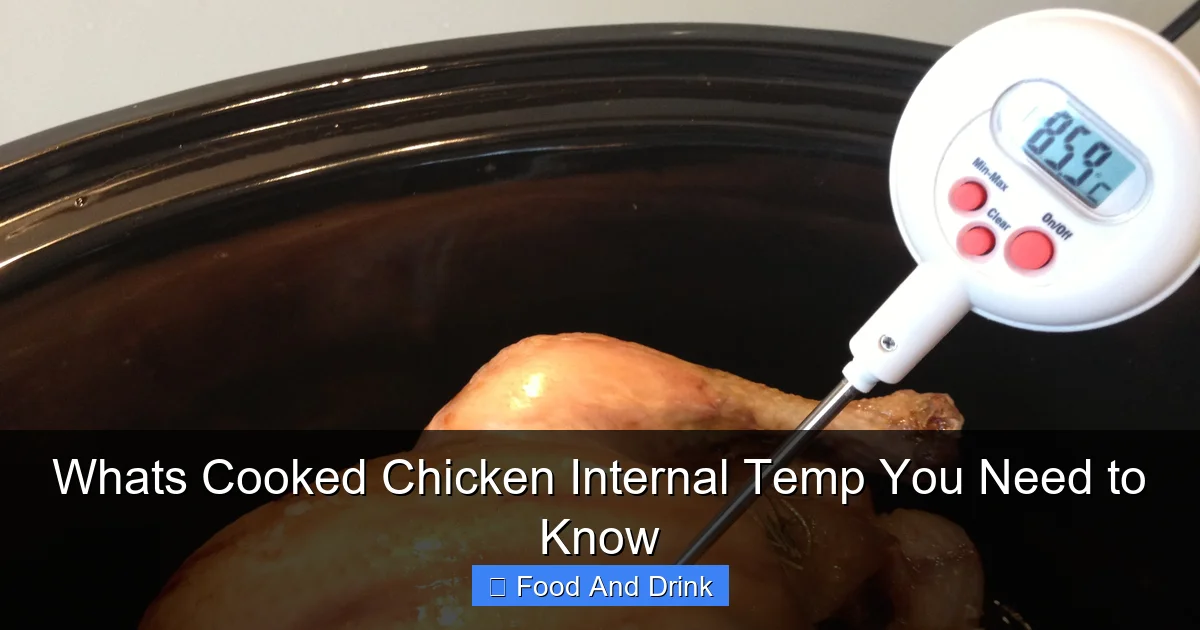
Knowing the right temperature is one thing—measuring it correctly is another. Using a food thermometer seems simple, but a few common mistakes can lead to inaccurate readings. Here’s how to do it right.
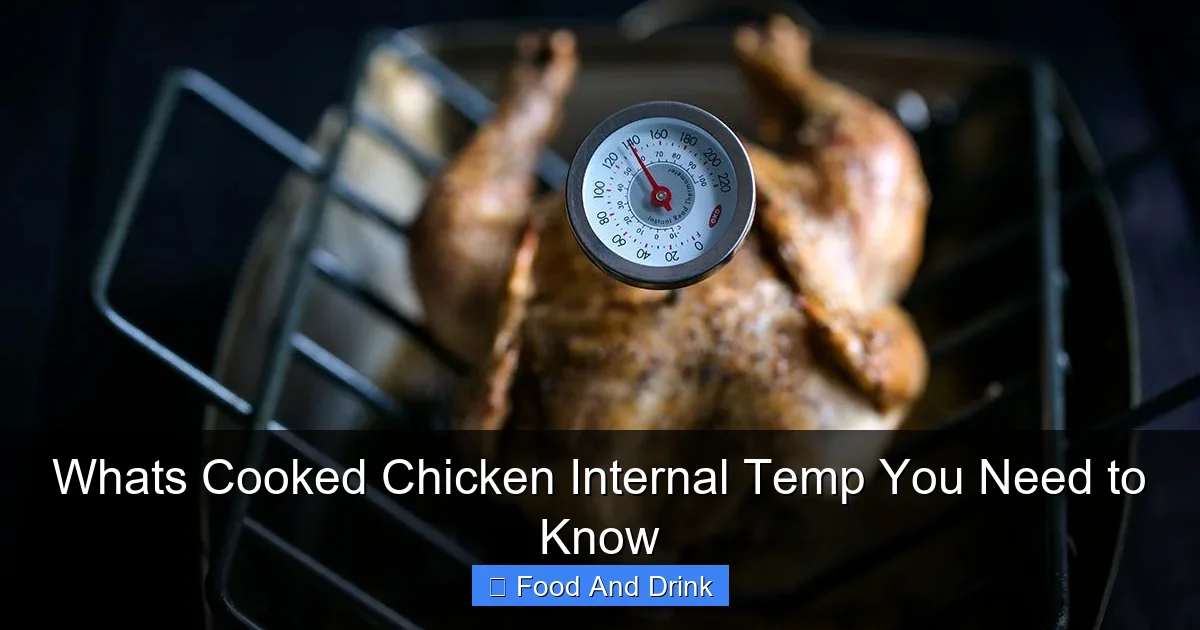
First, choose the right tool. A digital instant-read thermometer is your best bet. It gives a reading in seconds and is highly accurate. Avoid analog dial thermometers—they’re slower and less precise. For whole chickens, an oven-safe probe thermometer can monitor the temp as it cooks, but always double-check with an instant-read before serving.
Next, know where to insert the probe. For chicken breasts, thighs, or drumsticks, insert the thermometer into the thickest part of the meat, avoiding bone, fat, or gristle. Bones conduct heat differently and can give false readings. For whole chickens, check the temperature in the innermost part of the thigh, near the breast—but not touching the bone.
Timing is also important. Don’t wait until the very end to check. Start testing about 10–15 minutes before you think the chicken will be done. This gives you time to adjust heat or remove it promptly when it reaches 165°F.
Pro Tip: Calibrate Your Thermometer
Thermometers can drift over time. To ensure accuracy, test yours in ice water (should read 32°F) or boiling water (212°F at sea level). If it’s off, adjust or replace it. A faulty thermometer is worse than no thermometer at all.
Common Mistakes to Avoid
- Checking the temperature too early or too late
- Touching the probe to bone or pan
- Using a dirty or damaged thermometer
- Not cleaning the probe between uses (cross-contamination risk)
By following these steps, you’ll get an accurate reading every time and cook chicken that’s both safe and delicious.
Cooked Chicken Internal Temp for Different Cuts and Methods
Visual guide about Whats Cooked Chicken Internal Temp You Need to Know
Image source: savorysimple.net
While 165°F is the universal target, different cuts and cooking methods affect how quickly chicken reaches that temperature—and how it turns out. Let’s break it down.
Chicken Breasts
Boneless, skinless chicken breasts are a weeknight staple. They cook quickly but can dry out fast. Aim for 165°F, but remove them from heat when they hit 160°F—carryover cooking will bring them up to 165°F during resting. Cook at 375°F (190°C) for 20–25 minutes, or grill over medium heat for 6–8 minutes per side.
Chicken Thighs and Drumsticks
Dark meat is more forgiving and stays juicy even if slightly overcooked. Still, target 165°F. Bone-in thighs take longer—about 35–40 minutes at 375°F. Grilling? 8–10 minutes per side over medium heat.
Whole Roasted Chicken
A whole bird requires careful monitoring. Insert the thermometer into the thigh, near the breast. Cook at 350°F (175°C) for 20 minutes per pound, or until the internal temp hits 165°F. Let it rest 15–20 minutes before carving—this redistributes juices and finishes cooking.
Ground Chicken
Ground poultry is riskier because bacteria can be mixed throughout. Cook until no pink remains and the internal temp reaches 165°F. Use a thermometer—don’t guess. Great for burgers, meatballs, or tacos.
Fried Chicken
Deep-frying requires precise temperature control. Oil should be 350°F (175°C). Cook until the internal temp hits 165°F—usually 12–15 minutes for pieces. Use a thermometer to check the center of the thickest piece.
Slow-Cooked Chicken
In a crockpot, cook on low for 6–8 hours or high for 3–4 hours. Check the temp before serving. Even if it’s been cooking for hours, it must reach 165°F to be safe.
Grilled Chicken
Preheat the grill to medium-high (375–400°F). Cook chicken until the internal temp hits 165°F. Flip once halfway through. Let it rest 5 minutes before slicing.
No matter the method, the cooked chicken internal temp rule stays the same: 165°F. But adjusting for cut and technique ensures juicy, flavorful results.
Resting: The Secret to Juicy Chicken
You’ve cooked your chicken to 165°F—now what? Don’t slice it right away. Resting is a crucial step that many home cooks skip, but it makes a big difference in texture and safety.
When you remove chicken from heat, the internal temperature continues to rise—a phenomenon called carryover cooking. For example, if you pull chicken breasts off the grill at 160°F, they might reach 165°F during the resting period. This means you can actually remove them a few degrees early, preventing overcooking.
Resting also allows juices to redistribute. When meat cooks, juices move toward the center. If you cut into it immediately, those juices spill out, leaving the meat dry. By resting for 3–5 minutes (or 10–15 minutes for a whole bird), the fibers relax and reabsorb the moisture.
How to Rest Chicken Properly
- Transfer chicken to a clean plate or cutting board.
- Tent loosely with foil—don’t wrap tightly, or it’ll steam and toughen.
- Let it sit at room temperature. Don’t refrigerate during resting.
- Use this time to prepare sides or make a sauce.
Resting might feel like an extra step, but it’s worth it. You’ll get more flavorful, tender chicken every time—and still hit that safe cooked chicken internal temp.
Common Myths About Chicken Doneness
Even experienced cooks fall for myths about how to tell if chicken is done. Let’s clear up some of the most common misconceptions.
Myth 1: “If the juices run clear, it’s done.”
Not true. Juices can run clear even when chicken is undercooked. Conversely, some fully cooked chicken may still have slightly pink juices. The only reliable method is checking the cooked chicken internal temp.
Myth 2: “White meat means it’s safe.”
Chicken turns white around 140°F—well below the safe zone. Relying on color alone can lead to undercooked meals.
Myth 3: “If it’s not pink, it’s done.”
Some dark meat, especially thighs, can retain a pinkish hue even at 165°F. This is due to myoglobin, a protein that reacts with heat. As long as the temp is right, it’s safe.
Myth 4: “Cooking longer at lower temps is safer.”
While time and temperature combinations can work, they’re hard to control at home. The 165°F rule is simpler and more reliable.
Myth 5: “You can tell by poking or pressing.”
Texture varies by cut and cooking method. A firm feel doesn’t guarantee safety. Always use a thermometer.
By ditching these myths and focusing on temperature, you’ll cook safer, better chicken.
Food Safety Tips Beyond Temperature
Hitting 165°F is essential, but food safety starts before cooking and continues after. Here’s how to handle chicken safely from store to plate.
Thawing Safely
Never thaw chicken on the counter. Bacteria grow rapidly at room temperature. Use one of these methods:
- Refrigerator: Plan ahead—allow 24 hours per 5 pounds.
- Cold Water: Submerge in leak-proof bag, change water every 30 minutes.
- Microwave: Use the defrost setting, then cook immediately.
Preventing Cross-Contamination
Raw chicken juices can spread bacteria. Always:
- Wash hands before and after handling.
- Use separate cutting boards for raw meat and produce.
- Clean surfaces, utensils, and plates that touched raw chicken.
- Never rinse raw chicken—it splashes bacteria around the sink.
Storing Cooked Chicken
Refrigerate cooked chicken within 2 hours (1 hour if it’s above 90°F outside). Store in airtight containers for up to 4 days. Reheat to 165°F before eating.
Freezing Tips
Freeze raw or cooked chicken in freezer-safe bags. Label with the date—use within 9–12 months for best quality.
By following these practices, you protect your family from illness and keep your meals safe and delicious.
Conclusion: Master the Cooked Chicken Internal Temp for Safe, Delicious Meals
Cooking chicken doesn’t have to be stressful. Once you understand the importance of the cooked chicken internal temp, it becomes second nature. Remember: 165°F is the safe minimum for all chicken, regardless of cut or method. Use a reliable thermometer, check in the right spot, and let the meat rest.
Don’t rely on color, texture, or guesswork. Those old tricks might have worked sometimes, but they’re not worth the risk. Foodborne illness is no joke—but it’s completely preventable.
With these tips, you’ll cook chicken that’s not only safe but also juicy, flavorful, and perfectly done. Whether you’re grilling burgers, roasting a Sunday dinner, or whipping up a quick stir-fry, knowing the right temperature gives you confidence in the kitchen.
So next time you’re cooking chicken, grab that thermometer. Check the temp. Rest the meat. And enjoy every bite—knowing it’s both delicious and safe.
Frequently Asked Questions
Is it safe to eat chicken cooked to 160°F?
Chicken cooked to 160°F is close to safe, but not guaranteed. The USDA recommends 165°F to ensure all bacteria are destroyed instantly. If you remove chicken at 160°F, let it rest—carryover cooking may bring it to 165°F.
Can I use a meat thermometer for other foods?
Yes! A food thermometer works for beef, pork, fish, and leftovers. Each protein has its own safe internal temperature, so always check guidelines.
Why does my chicken dry out even at 165°F?
Overcooking after reaching 165°F causes dryness. Remove chicken from heat as soon as it hits the target temp, and let it rest to preserve moisture.
Is ground chicken safer than whole cuts?
No—ground chicken is actually riskier because bacteria can be mixed throughout. It must reach 165°F and show no pink spots.
Can I reheat chicken to a lower temperature?
No. Reheat cooked chicken to 165°F to ensure any bacteria that may have grown during storage are destroyed.
What if my thermometer breaks? Can I still cook chicken safely?
Without a thermometer, it’s hard to guarantee safety. Consider it a kitchen essential. If yours breaks, replace it before cooking poultry.