

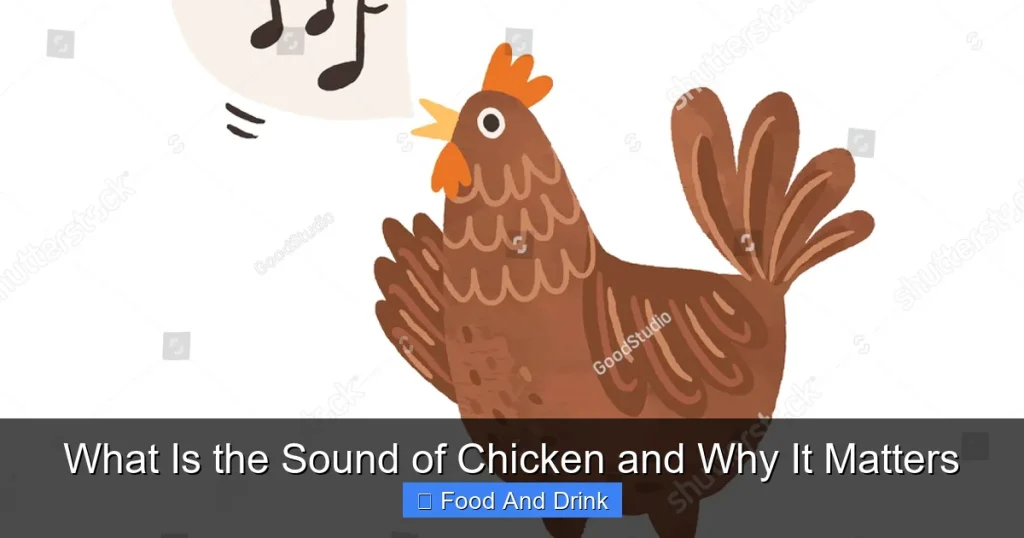

Ever wondered what is the sound of chicken? From clucks to cackles, each vocalization has meaning. These sounds help chickens communicate, stay safe, and maintain flock harmony—and understanding them can improve your experience with poultry.
Key Takeaways
- Chickens make over 30 different sounds: Each sound serves a unique purpose, from warning calls to mating signals.
- Clucking is the most common sound: Hens cluck to communicate with chicks, signal safety, or announce food.
- Crowing is a rooster’s signature call: It marks territory, signals time of day, and asserts dominance.
- Understanding chicken sounds improves care: Recognizing distress or contentment helps you respond better as a keeper.
- Sound affects flock dynamics: Vocalizations help maintain order, coordinate movement, and protect the group.
- Backyard chicken owners benefit from listening: Early detection of health or safety issues often starts with unusual noises.
- Cultural and culinary connections exist: Chicken sounds influence language, folklore, and even food branding.
Introduction: The Hidden Language of Chickens
When you think of farm animals, cows moo, pigs oink, and sheep bleat—but what about chickens? Most people imagine a simple “cluck” or a loud “cock-a-doodle-doo,” but the truth is far richer. The sound of chicken is not just noise; it’s a complex system of communication that shapes how these birds live, interact, and survive. From the soft peeps of day-old chicks to the bold crow of a rooster at dawn, every chirp, squawk, and warble carries meaning.
You might not realize it, but chickens are surprisingly vocal creatures. In fact, researchers have identified more than 30 distinct sounds in the chicken repertoire. These aren’t random noises—they’re intentional signals used to warn of danger, call for food, attract mates, or keep the flock together. Whether you’re raising backyard chickens, working on a farm, or simply curious about where your eggs come from, understanding what is the sound of chicken can deepen your appreciation for these feathered friends.
Why Chicken Sounds Matter More Than You Think
At first glance, chicken sounds might seem trivial—just background noise on a farm or in a rural neighborhood. But dig a little deeper, and you’ll find that these vocalizations are essential to the birds’ well-being and social structure. Chickens are social animals that rely heavily on sound to coordinate their daily lives. Without vocal communication, a flock would quickly fall into chaos.
For example, a mother hen uses specific clucks to guide her chicks to food or away from danger. A sudden, sharp alarm call can send the entire flock scrambling for cover if a hawk is spotted overhead. Even the timing of a rooster’s crow isn’t just about waking up the neighborhood—it’s a territorial announcement that says, “This is my flock, and I’m watching over it.”
Understanding these sounds also has practical benefits for chicken keepers. If you know what normal chicken behavior sounds like, you can quickly spot when something’s wrong. A change in tone, frequency, or volume might indicate illness, stress, or injury. Early detection means faster treatment and better outcomes for your birds.
Beyond the farm, chicken sounds have cultural and economic significance. They appear in children’s books, cartoons, and even brand logos (think of the iconic “cluck” in fast-food advertising). In many cultures, the crow of a rooster marks the start of a new day, symbolizing renewal and vigilance. Even in urban settings, the occasional backyard flock brings a touch of rural charm—and sound—to city life.
The Science Behind Chicken Vocalizations
How Chickens Make Sound
Like all birds, chickens produce sound using a specialized organ called the syrinx, located at the base of the trachea where it splits into the lungs. Unlike the human larynx, the syrinx allows birds to create multiple tones at once, giving them a wide range of vocal flexibility. This is why chickens can produce everything from soft murmurs to loud, piercing calls.
The syrinx is controlled by muscles that adjust the tension and position of the vocal folds, much like how we change pitch when speaking or singing. Air from the lungs passes through the syrinx, creating vibrations that become sound. Chickens also use their beaks, throat, and body posture to modulate these sounds—opening their beaks wider for louder calls or tucking their heads for softer ones.
Interestingly, chickens don’t just “talk” with their syrinx. They also make non-vocal sounds, such as wing flapping, foot stomping, and beak clicking. These physical actions often accompany vocalizations, adding emphasis or context. For example, a hen might cluck while flapping her wings to gather her chicks, or a rooster might crow while puffing up his chest to appear larger.
Types of Chicken Sounds and Their Meanings
Now that we know how chickens make sound, let’s explore what those sounds actually mean. While there’s no universal “chicken dictionary,” researchers and experienced keepers have identified several common vocalizations and their likely purposes.
Clucking: This is the most familiar chicken sound—a soft, rhythmic “cluck-cluck-cluck.” Hens cluck for many reasons: to call their chicks, signal that food is available, or simply to stay in touch with the flock. After laying an egg, a hen often lets out a loud, excited cluck known as the “egg song.” While it might sound like she’s celebrating, it’s more likely a way to announce her presence and claim the nesting spot.
Crowing: The iconic “cock-a-doodle-doo” is the rooster’s trademark sound. Roosters crow to mark their territory, assert dominance, and signal the time of day—usually at dawn, but sometimes throughout the day. Crowing can also be a response to loud noises, such as a car backfiring or a neighbor’s alarm clock. Interestingly, not all roosters crow at the same volume or frequency. Some are naturally quieter, while others seem to enjoy being the loudest in the neighborhood.
Alarm Calls: When a chicken spots a predator—like a hawk, fox, or even a curious cat—it emits a sharp, repetitive squawk. This alarm call alerts the rest of the flock to danger and triggers a coordinated response, such as freezing in place or fleeing to cover. Hens and roosters both give alarm calls, but roosters tend to be louder and more persistent.
Mating Calls: Roosters use a soft, warbling sound called a “tidbitting call” to attract hens. This sound is often accompanied by a physical display, such as dropping one wing and dancing in a circle. If a hen is interested, she may respond with a low cluck or approach the rooster. This ritual helps strengthen pair bonds and ensures successful mating.
Broodiness Sounds: When a hen becomes broody—meaning she wants to sit on eggs and hatch chicks—she makes a low, guttural cluck. This sound is different from her normal clucking and often comes with fluffed-up feathers and a protective stance. Broody hens may also peck or squawk if you try to move them from the nest.
Distress Calls: If a chicken is injured, trapped, or separated from the flock, it may emit a high-pitched, frantic squawk. This sound is designed to attract help—either from other chickens or from a human caretaker. Distress calls are hard to ignore, and they often prompt immediate action.
Chick Peeps: Baby chicks make soft “peep-peep” sounds to stay in contact with their mother and siblings. These sounds help them stay together in a group and signal hunger or discomfort. As chicks grow, their vocalizations become more varied and complex.
How Chicken Sounds Affect Flock Behavior
Communication and Coordination
In the wild, chickens—descended from the red junglefowl of Southeast Asia—live in small groups with a clear social hierarchy. Sound plays a crucial role in maintaining this structure. Vocalizations help chickens coordinate their movements, share information, and resolve conflicts without physical fights.
For example, when foraging, chickens use soft clucks to stay within earshot of each other. If one bird finds a tasty bug or seed, it may call the others over with a specific “food call.” This sharing behavior strengthens social bonds and ensures that everyone gets a chance to eat.
Sound also helps chickens navigate their environment. In dense vegetation or low light, visual cues are limited, so auditory signals become even more important. A hen might cluck to guide her chicks through tall grass, or a rooster might crow to help the flock regroup after a disturbance.
Social Hierarchy and Dominance
Chickens have a pecking order—a ranking system that determines access to food, nesting sites, and mates. While physical confrontations do occur, much of this hierarchy is established and maintained through sound.
Dominant roosters, for instance, crow more frequently and loudly than subordinate ones. Their calls serve as a constant reminder of their status. Subordinate roosters may crow less or only when the dominant bird is out of earshot. In some cases, younger roosters will practice crowing in private, perfecting their technique before challenging the leader.
Hens also use sound to assert dominance. A high-ranking hen might cluck sharply at a lower-ranking one to claim a prime nesting spot or the best perch. These vocal “reminders” help prevent constant squabbling and keep the flock running smoothly.
Stress, Health, and Emotional Well-being
Just like humans, chickens experience stress, fear, and contentment—and their sounds reflect these emotions. A calm, relaxed flock will produce soft, rhythmic clucks and occasional murmurs. In contrast, a stressed or frightened flock will be loud, chaotic, and full of alarm calls.
Chickens that are sick or in pain often become quieter than usual. They may stop clucking altogether or produce weak, irregular sounds. This silence can be a red flag for keepers, signaling that a bird needs attention. Conversely, a sudden increase in noise—especially distress calls—might indicate injury, illness, or a predator threat.
Environmental factors also influence chicken sounds. Loud noises, such as thunderstorms or construction, can startle chickens and trigger alarm calls. Changes in routine, like introducing new birds or moving the coop, can also cause temporary increases in vocal activity as the flock adjusts.
Practical Tips for Chicken Keepers
Listening to Your Flock
One of the best ways to care for your chickens is to simply listen to them. Spend time near the coop or run, especially in the morning and evening when chickens are most active. Pay attention to the types of sounds you hear and how they change throughout the day.
Start by learning the “normal” sounds of your flock. Note how your hens cluck when they’re content, how your rooster crows at dawn, and how the chicks peep when they’re happy. Once you know what’s typical, you’ll be better equipped to spot unusual noises that might signal a problem.
Keep a journal or use a voice recorder to track changes in your chickens’ vocalizations. This can help you identify patterns and respond quickly to issues. For example, if you notice a hen making weak, raspy sounds, she might be developing a respiratory infection.
Responding to Unusual Sounds
When you hear something out of the ordinary, don’t panic—but do investigate. A sudden burst of alarm calls could mean a predator is nearby. A lone chicken making repeated distress calls might be trapped or injured. A rooster that stops crowing altogether could be sick or stressed.
Approach the situation calmly and observe from a distance if possible. Chickens are easily startled, and sudden movements can make them more anxious. If you need to intervene, do so gently and quietly.
Common issues to watch for include:
- Respiratory infections: Wheezing, coughing, or labored breathing sounds.
- Egg binding: Straining, panting, or weak clucking in a hen.
- Predator attacks: Screams, flapping, or sudden silence after loud calls.
- Social stress: Excessive squawking, feather pecking, or isolation.
Early detection and treatment can prevent minor issues from becoming serious. If you’re unsure what’s causing a sound, consult a poultry vet or an experienced chicken keeper.
Creating a Calm Environment
Chickens thrive in peaceful, predictable environments. Loud noises, frequent disturbances, and overcrowding can increase stress and lead to excessive vocalization. To keep your flock calm and healthy, consider the following tips:
- Place the coop in a quiet, sheltered area away from traffic and loud machinery.
- Provide plenty of space—both inside the coop and in the run—so birds aren’t crowded.
- Maintain a consistent daily routine for feeding, cleaning, and letting birds out.
- Use sound-dampening materials, like straw or wood shavings, to reduce echo in the coop.
- Introduce new birds gradually to avoid social upheaval.
A calm flock is a happy flock—and happy chickens make pleasant, predictable sounds.
Cultural and Culinary Connections
Chicken Sounds in Language and Folklore
Chicken sounds have left their mark on human culture for centuries. In many languages, onomatopoeic words mimic the sound of chicken. English has “cluck,” “cackle,” and “cock-a-doodle-doo.” In Spanish, a rooster crows “quiquiriquí,” while in French, it’s “cocorico.” These words aren’t just fun to say—they reflect how deeply chicken sounds are woven into our daily lives.
Folklore and mythology also feature chickens prominently. In ancient Egypt, the rooster was associated with the sun god Ra and believed to herald the dawn. In Chinese culture, the rooster is one of the 12 zodiac animals, symbolizing honesty, confidence, and punctuality. Many cultures believe that a rooster’s crow can ward off evil spirits.
Chickens also appear in children’s stories and nursery rhymes. “Henny Penny” (also known as “Chicken Little”) tells the tale of a chicken who believes the sky is falling after an acorn hits her head. The story uses exaggerated chicken sounds to create humor and teach lessons about fear and misinformation.
Chicken Sounds in Food and Branding
In the food industry, chicken sounds are used to evoke freshness, authenticity, and rural charm. Fast-food chains often use cartoonish clucks and crows in their advertising to suggest farm-fresh ingredients. Egg brands may feature images of happy hens with speech bubbles saying “cluck!” to emphasize natural, cage-free farming.
Even the sound of frying chicken—the sizzle and crackle—has become iconic in food marketing. Think of the famous “finger lickin’ good” slogan from KFC, which pairs taste with sensory appeal. While not a vocalization, this sound is part of the broader “soundscape” of chicken consumption.
For backyard chicken keepers, the connection between sound and food is even more direct. The cluck of a hen after laying an egg is a daily reminder of where your breakfast comes from. Many people find this connection rewarding, fostering a deeper appreciation for sustainable, homegrown food.
Conclusion: Tuning Into the World of Chicken Sounds
So, what is the sound of chicken? It’s not just a simple “cluck” or “cock-a-doodle-doo.” It’s a rich, layered language of communication that helps chickens survive, thrive, and connect with each other. From the soft peeps of chicks to the bold crow of a rooster, every sound has purpose and meaning.
Understanding these vocalizations isn’t just fascinating—it’s practical. Whether you’re raising chickens for eggs, meat, or companionship, listening to your flock can improve their health, reduce stress, and deepen your bond with these remarkable birds. You’ll become more attuned to their needs, quicker to spot problems, and more appreciative of their unique personalities.
Beyond the farm, chicken sounds remind us of our connection to nature, tradition, and the rhythms of daily life. They appear in our stories, our language, and even our meals. So the next time you hear a chicken cluck or crow, take a moment to listen. You might just learn something new.
Quick Q&A
What is the sound of chicken called?
The most common sound chickens make is called a “cluck,” especially from hens. Roosters are known for their “crow,” often described as “cock-a-doodle-doo.”
Do all chickens make the same sounds?
No, different chickens make different sounds based on age, sex, and situation. Hens cluck, roosters crow, and chicks peep. Each sound has a specific purpose.
Why do hens cluck after laying an egg?
Hens often cluck loudly after laying an egg, a behavior known as the “egg song.” It may help them claim the nesting spot or alert the flock.
Can chickens hear each other’s sounds?
Yes, chickens have excellent hearing and rely on sound to communicate. They can distinguish between different types of calls, like alarm vs. food calls.
Do chickens make sounds when they’re happy?
Yes, content chickens make soft, rhythmic clucks and murmurs. A calm, quiet flock is usually a happy one.
FAQS
Why do roosters crow at night?
Roosters may crow at night due to disturbances like bright lights, loud noises, or perceived threats. Unlike popular belief, they don’t only crow at dawn.
Can you tell if a chicken is sick by its sound?
Yes, sick chickens often become quieter or make weak, raspy sounds. Changes in vocalization can be an early sign of illness.
Do chickens talk to each other?
Yes, chickens use a variety of sounds to communicate. They share information about food, danger, and social status through vocalizations.
Why do chickens make alarm calls?
Alarm calls warn the flock of predators. These sharp, repetitive sounds trigger a group response, like freezing or fleeing to safety.
Can chickens recognize human voices?
Yes, chickens can learn to recognize familiar voices, including their keeper’s. They may respond with clucks or approach when called.
Is it normal for chickens to be noisy?
Yes, chickens are naturally vocal. However, excessive noise could indicate stress, illness, or environmental issues that need attention.
This is a comprehensive guide about what is the sound of chicken.
Key Takeaways
- Understanding what is the sound of chicken: Provides essential knowledge
Quick Answers to Common Questions
What is what is the sound of chicken?
what is the sound of chicken refers to essential knowledge and techniques.
Frequently Asked Questions
What is what is the sound of chicken?
what is the sound of chicken is an important topic with many practical applications.


