



Bringing chicken to room temperature before roasting can improve cooking consistency and texture, but it’s not always necessary—especially with modern techniques. While some chefs swear by it for even browning and juiciness, food safety and practicality also matter. This guide breaks down the science, benefits, and safer alternatives to help you roast perfect chicken every time.
Key Takeaways
- Room temperature chicken roasts more evenly: Cold chicken from the fridge can lead to uneven cooking, with overcooked edges and undercooked centers.
- It promotes better browning and crispy skin: Warmer meat surfaces allow for faster moisture evaporation, helping skin crisp up faster in the oven.
- Food safety is a top concern: Leaving chicken out too long can encourage bacterial growth, so timing is critical if you choose this method.
- Modern ovens and techniques reduce the need: High-heat roasting and convection settings can compensate for cold starts, making room-temp prep less essential.
- Smaller cuts benefit more than whole birds: Boneless breasts or thighs heat up faster and gain more from room-temp prep than large roasting chickens.
- Alternative methods exist: Patting dry, brining, or using a two-stage roast can deliver great results without the food safety risk.
- Personal preference and recipe matter: Some recipes specifically call for room-temp chicken, so always check your instructions first.
Quick Answers to Common Questions
Should I take chicken out of the fridge before roasting?
Yes, for boneless breasts and skin-on pieces, taking chicken out 30 to 60 minutes before roasting can improve even cooking and browning. But for whole birds or in warm kitchens, it’s often safer to roast from cold.
How long can chicken sit out before roasting?
Chicken should not sit out for more than 2 hours, and ideally no more than 30 to 60 minutes. In warm kitchens (above 75°F), limit it to 30 minutes to reduce bacterial risk.
Does room temperature chicken cook faster?
Yes, slightly. Room-temperature chicken may reduce roasting time by 5 to 10 minutes, but the bigger benefit is more even cooking and better texture.
Can I roast chicken straight from the fridge?
Absolutely. Many modern recipes and ovens are designed for cold-start roasting. Use high heat, convection settings, or dry brining to compensate.
What’s the safest way to prepare chicken for roasting?
Pat it dry, season well, and roast immediately. If you choose to bring it to room temperature, do so for no more than 60 minutes and handle it safely to avoid cross-contamination.
📑 Table of Contents
- Should Chicken Be Room Temp Before Roasting for Best Results?
- The Science Behind Room Temperature Chicken
- Benefits of Bringing Chicken to Room Temperature
- Food Safety Concerns: Is It Safe to Leave Chicken Out?
- When Room Temperature Makes the Biggest Difference
- Modern Techniques That Reduce the Need for Room Temperature
- Step-by-Step Guide: How to Roast Chicken from Room Temperature
- Conclusion: Should You Bring Chicken to Room Temperature?
Should Chicken Be Room Temp Before Roasting for Best Results?
When it comes to roasting chicken, everyone wants the same thing: juicy meat, crispy skin, and even doneness from edge to edge. It’s the holy grail of home cooking. But one question keeps popping up in kitchens across the world: *Should chicken be room temperature before roasting?*
You’ve probably heard conflicting advice. Some old-school chefs insist that taking chicken out of the fridge 30 to 60 minutes before cooking is non-negotiable. Others say it’s an outdated step that’s more trouble than it’s worth. So who’s right? The answer isn’t black and white—it depends on your goals, your kitchen setup, and how much you value food safety versus texture.
In this guide, we’ll dive deep into the science, tradition, and practicality of bringing chicken to room temperature before roasting. We’ll explore why some cooks swear by it, when it actually makes a difference, and how you can achieve fantastic results—even if you forget to take the chicken out early. Whether you’re roasting a whole bird, chicken breasts, or drumsticks, you’ll walk away with clear, actionable advice to elevate your next roast.
The Science Behind Room Temperature Chicken

Visual guide about Should Chicken Be Room Temp Before Roasting for Best Results
Image source: izzycooking.com
To understand whether chicken should be room temp before roasting, it helps to know what happens when cold meat hits a hot oven. When you pull a chicken straight from the refrigerator—typically around 40°F (4°C)—and place it in a 375°F to 425°F (190°C to 220°C) oven, the outer layers begin cooking immediately. But the inside is still cold, so it takes longer to reach the safe internal temperature of 165°F (74°C).
This temperature gap creates a problem: the outside can overcook before the inside is done. Think of it like a race where the finish line is 165°F. The surface sprints ahead, while the center lags behind. The result? Dry, stringy edges and undercooked centers—or worse, a bird that’s technically safe but far from delicious.
Now, imagine the same chicken has been sitting out for 30 to 60 minutes. Its internal temperature rises to around 60°F to 70°F (15°C to 21°C). When it goes into the oven, the temperature difference between the surface and the core is smaller. This means the heat penetrates more evenly, reducing the risk of overcooked edges and underdone centers.
How Heat Transfers in Meat
Heat moves through meat via conduction—slowly, from the outside in. The colder the meat, the more resistance it offers to heat transfer. Room-temperature chicken has less thermal resistance, so the oven’s heat can do its job more efficiently. This leads to more uniform cooking, which is especially important for larger cuts like whole chickens or bone-in thighs.
Additionally, surface moisture plays a role. Cold chicken often has condensation on its skin from the fridge. When it hits the hot pan, that moisture turns to steam, which can prevent browning. Room-temperature chicken, especially if patted dry, has less surface moisture, allowing the skin to crisp up faster and more evenly.
The Role of Carryover Cooking
Another factor is carryover cooking—the phenomenon where meat continues to cook even after it’s removed from the oven. As heat redistributes from the hot exterior to the cooler interior, the internal temperature can rise by 5°F to 10°F (3°C to 6°C). If your chicken starts cold, you might need to pull it out earlier to avoid overcooking, but that risks leaving the center underdone. Room-temperature chicken reduces this margin of error, giving you more control over the final result.
Benefits of Bringing Chicken to Room Temperature
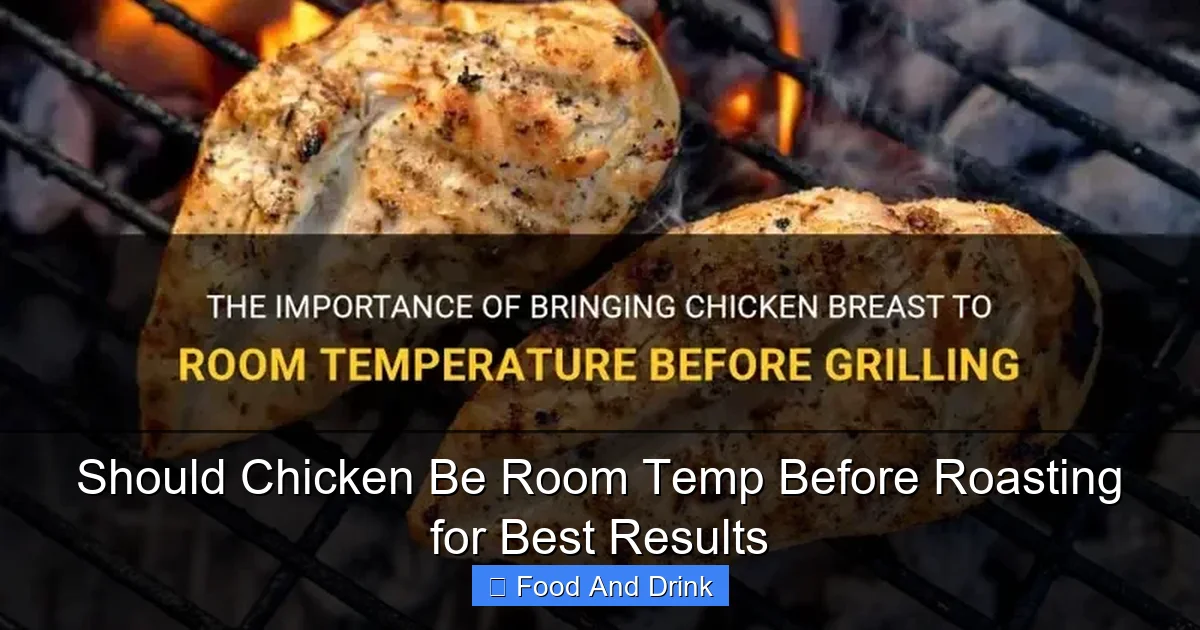
Visual guide about Should Chicken Be Room Temp Before Roasting for Best Results
Image source: shungrill.com
So, what are the real benefits of letting chicken come to room temperature before roasting? Let’s break them down.
More Even Cooking
This is the biggest advantage. When chicken starts at room temperature, the entire piece heats up at a more consistent rate. This is especially noticeable with boneless, skinless breasts, which are prone to drying out. A room-temperature breast will cook through without the edges becoming tough and rubbery.
For whole chickens, the benefit is subtler but still meaningful. The breast meat, which cooks faster than the thighs, is less likely to dry out before the legs reach doneness. This balance is key to a perfectly roasted bird.
Crispier, Better-Browned Skin
Crispy skin is one of the hallmarks of a great roast chicken. And it starts with dryness. Cold chicken often has moisture on the skin from refrigeration. When that moisture hits the hot pan, it steams the skin instead of crisping it. Room-temperature chicken, especially after being patted dry with paper towels, has less surface moisture. This allows the skin to render fat and brown quickly, creating that golden, crackling crust everyone loves.
Even if you’re roasting chicken parts with skin, this principle applies. Drumsticks and thighs benefit from a head start at room temperature, leading to more uniform browning and a better texture.
Shorter Cooking Time
While not a huge time-saver, room-temperature chicken can reduce roasting time by 5 to 10 minutes, depending on the size. This might not seem like much, but it can make a difference on a busy weeknight. More importantly, shorter cooking time means less risk of overcooking, which is a win for juiciness.
Improved Texture and Juiciness
Even cooking leads to better texture. When the meat heats evenly, the proteins denature at a similar rate, preserving moisture. Cold-start roasting can cause the outer layers to tighten and squeeze out juices before the inside is ready. Room-temperature chicken reduces this effect, helping retain that tender, juicy bite.
Food Safety Concerns: Is It Safe to Leave Chicken Out?

Visual guide about Should Chicken Be Room Temp Before Roasting for Best Results
Image source: shungrill.com
Now for the elephant in the room: food safety. The USDA and other food safety organizations warn against leaving perishable foods—like raw chicken—at room temperature for more than two hours. The danger zone for bacterial growth is between 40°F and 140°F (4°C and 60°C), and chicken can spend too much time in this range if left out too long.
So, is it safe to bring chicken to room temperature before roasting? The short answer is: *yes, but with limits.*
Safe Time Limits
Most experts agree that 30 to 60 minutes at room temperature is generally safe, especially if your kitchen is cool (below 70°F or 21°C). Bacteria like Salmonella and Campylobacter grow slowly at lower temperatures, so a short window is unlikely to pose a significant risk—especially since roasting will kill any bacteria present.
However, if your kitchen is warm (above 75°F or 24°C), or if you’re leaving the chicken out for more than an hour, the risk increases. In hot climates or during summer months, it’s better to err on the side of caution.
Best Practices for Safe Handling
If you choose to bring chicken to room temperature, follow these tips to minimize risk:
– **Limit exposure time:** Take the chicken out 30 to 60 minutes before roasting—no more.
– **Keep it covered:** Place the chicken on a plate and loosely cover it with plastic wrap or foil to prevent cross-contamination.
– **Don’t rinse:** Rinsing raw chicken can spread bacteria around your sink. Pat it dry instead.
– **Wash hands and surfaces:** Always wash your hands, utensils, and cutting boards after handling raw chicken.
– **Roast immediately:** Once the chicken is room temperature, get it into the oven right away.
When to Skip Room Temperature
There are times when it’s better to skip this step altogether:
– **Hot weather:** If your kitchen is warm, the risk of bacterial growth increases.
– **Large birds:** A whole chicken takes longer to come to room temperature, increasing the time it spends in the danger zone.
– **Time constraints:** If you’re short on time, it’s safer to roast from cold and adjust your technique.
When Room Temperature Makes the Biggest Difference
Not all chicken cuts benefit equally from room-temperature prep. Here’s when it matters most—and when you can skip it.
Boneless, Skinless Chicken Breasts
These are the most prone to drying out. They’re lean, cook quickly, and have little fat to keep them moist. Bringing them to room temperature before roasting (or baking) helps them cook evenly and stay tender. If you’re roasting breasts at 400°F (200°C), taking them out 30 minutes ahead can make a noticeable difference in texture.
Bone-In, Skin-On Pieces
Thighs, drumsticks, and wings benefit from room temperature because of their skin. Crispy skin requires dry surfaces and even heat. Cold skin steams instead of crisping. For best results, pat the skin dry and let the pieces sit out for 30 to 45 minutes before roasting.
Whole Roasting Chickens
The benefit here is more subtle. A whole bird has more mass, so it takes longer to come to room temperature. The outer parts (breast) still cook faster than the inner parts (thighs), so the temperature gradient remains. However, some chefs argue that even a small reduction in cooking time and improved browning is worth the effort.
That said, many modern recipes and ovens are designed to handle cold-start roasting. High-heat roasting (425°F to 450°F or 220°C to 230°C) can compensate for the cold start by quickly bringing the surface to temperature.
Ground Chicken or Chicken Meatballs
For ground chicken or formed items like meatballs, room temperature isn’t typically recommended. These items cook quickly and are often pan-fried or baked at high heat. The risk of bacterial growth outweighs any minor texture benefit.
Modern Techniques That Reduce the Need for Room Temperature
Thanks to advances in cooking methods and equipment, the need to bring chicken to room temperature has diminished. Here are some techniques that deliver great results—even with cold chicken.
High-Heat Roasting
Roasting at 425°F to 450°F (220°C to 230°C) quickly brings the surface of the chicken to temperature, reducing the impact of starting cold. This method is especially effective for whole chickens. Start at high heat for 20 to 30 minutes to crisp the skin, then reduce to 350°F to 375°F (175°C to 190°C) to finish cooking.
Convection Ovens
Convection ovens circulate hot air, which speeds up cooking and promotes even browning. The moving air helps overcome the temperature gradient in cold chicken, making room-temperature prep less critical. If you have a convection setting, use it—especially for chicken parts or smaller cuts.
Reverse Searing
This method involves cooking the chicken at a low temperature first (250°F to 275°F or 120°C to 135°C) until it reaches near-done, then finishing at high heat to crisp the skin. Because the chicken spends a long time in the oven at low heat, starting cold doesn’t matter as much. The slow cook ensures even internal temperature, and the high-heat finish delivers crispy skin.
Brining or Dry Brining
Brining (soaking in saltwater) or dry brining (salting in advance) improves moisture retention and flavor. A dry-brined chicken, even if roasted from cold, will stay juicier and develop better browning. Salting the chicken 12 to 24 hours ahead draws out moisture, which is then reabsorbed, seasoning the meat and improving texture.
Patting Dry and Air-Drying
One of the simplest ways to improve roasting results is to pat the chicken dry with paper towels before cooking. For even better results, place the chicken on a rack in the fridge, uncovered, for a few hours or overnight. This air-drying step removes surface moisture, leading to crispier skin—even if you roast from cold.
Step-by-Step Guide: How to Roast Chicken from Room Temperature
If you decide to bring your chicken to room temperature, here’s a simple, safe method to follow.
1. Remove Chicken from Fridge
Take the chicken out of the refrigerator 30 to 60 minutes before roasting. Place it on a plate or tray to catch any drips.
2. Pat Dry Thoroughly
Use paper towels to pat the chicken dry, especially the skin. This step is crucial for crispy results.
3. Season Generously
Season the chicken inside and out with salt, pepper, and any herbs or spices you like. For extra flavor, try a dry brine: salt the chicken 12 to 24 hours ahead and refrigerate uncovered.
4. Preheat the Oven
Preheat your oven to 425°F (220°C). A hot oven ensures quick browning and even cooking.
5. Roast the Chicken
Place the chicken on a rack in a roasting pan, breast-side up. Roast for 20 minutes, then reduce the heat to 375°F (190°C) and continue roasting until the internal temperature reaches 165°F (74°C) in the thickest part of the thigh.
6. Rest Before Serving
Let the chicken rest for 10 to 15 minutes before carving. This allows the juices to redistribute, keeping the meat moist.
Conclusion: Should You Bring Chicken to Room Temperature?
So, should chicken be room temp before roasting? The answer is: *it depends.*
For boneless breasts and skin-on pieces, bringing chicken to room temperature can improve even cooking, browning, and juiciness. It’s a small step that can make a noticeable difference in texture and flavor. However, food safety must come first—limit the time the chicken spends at room temperature to 30 to 60 minutes, especially in warm kitchens.
For whole chickens and busy weeknights, modern techniques like high-heat roasting, convection ovens, and dry brining can deliver excellent results without the extra step. And if you forget to take the chicken out early? Don’t panic. A little extra cooking time and a well-preheated oven can compensate.
Ultimately, the best method is the one that fits your lifestyle and delivers the results you love. Whether you’re a stickler for tradition or a fan of efficiency, the goal is the same: a perfectly roasted chicken that’s juicy, flavorful, and safe to eat. With the right techniques, you can achieve that—room temperature or not.
Frequently Asked Questions
Is it safe to leave chicken at room temperature before cooking?
Yes, but only for a short time—30 to 60 minutes is generally safe in a cool kitchen. Avoid leaving it out longer, especially in warm environments, to prevent bacterial growth.
Does bringing chicken to room temperature make it juicier?
It can help by promoting more even cooking, which reduces the risk of overcooking and drying out. However, techniques like brining and proper resting also play a big role in juiciness.
Should I bring a whole chicken to room temperature before roasting?
It’s not necessary. Whole chickens take a long time to come to room temperature, increasing food safety risks. High-heat roasting or convection ovens work well with cold starts.
Can I roast frozen chicken without thawing?
It’s not recommended. Frozen chicken cooks unevenly and takes much longer. Always thaw chicken in the fridge, microwave, or cold water before roasting.
What’s the best way to get crispy skin on roast chicken?
Pat the skin dry, air-dry it in the fridge uncovered, and roast at high heat. Starting at room temperature can help, but dry skin and hot ovens are more important.
Does salting chicken in advance replace the need for room temperature?
Yes, in part. Dry brining (salting 12 to 24 hours ahead) improves moisture retention and browning, making room-temperature prep less critical for juicy, flavorful results.


