

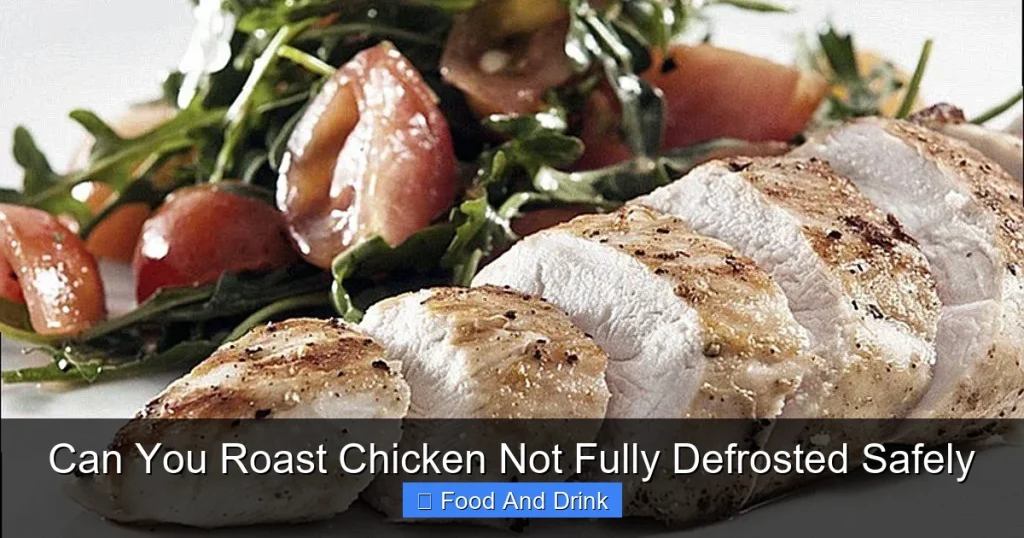

Roasting chicken that’s not fully defrosted is possible but comes with serious food safety risks if not handled correctly. While some methods allow partial thawing, uneven cooking and bacterial growth are major concerns. Always prioritize safety by using proper techniques like lower oven temperatures, longer cook times, and a reliable meat thermometer.
Key Takeaways
- Safety first: Roasting partially frozen chicken can lead to uneven cooking and foodborne illness if not done carefully.
- Use lower temperatures: Cooking at 325°F (163°C) instead of higher heat helps ensure the inside cooks thoroughly without burning the outside.
- Increase cooking time: Expect to add 50% more time when roasting chicken that’s not fully defrosted.
- Check internal temperature: Always use a meat thermometer—chicken is safe at 165°F (74°C) in the thickest part of the breast and thigh.
- Avoid the danger zone: Keep chicken out of the 40°F–140°F (4°C–60°C) range as much as possible to prevent bacterial growth.
- Partial thawing helps: Letting the chicken sit in the fridge for a few hours before roasting improves safety and evenness.
- Never refreeze cooked chicken: Once roasted, do not refreeze unless it’s cooled properly and stored safely.
Quick Answers to Common Questions
Can you roast a whole chicken that’s still frozen?
Yes, but it’s safer and more effective to roast it partially thawed. Fully frozen chicken takes much longer to cook and increases the risk of uneven cooking. Use a lower oven temperature and add extra time.
How long does it take to roast a 4-pound partially frozen chicken?
Plan for 2 to 2.5 hours at 325°F (163°C), covered with foil for the first hour, then uncovered to crisp the skin. Always check the internal temperature.
Is it safe to eat chicken if the center was still cold after roasting?
No. If the center hasn’t reached 165°F (74°C), harmful bacteria may still be present. Return it to the oven until it’s fully cooked.
Can you refreeze roasted chicken?
Yes, but only if it’s cooled quickly and stored properly. Divide into portions, freeze in airtight containers, and use within 4 months.
What’s the best way to thaw chicken quickly?
The fastest safe method is cold water thawing: submerge the chicken in cold water, changing the water every 30 minutes. Microwave defrosting works too, but cook immediately after.
📑 Table of Contents
- Can You Roast Chicken Not Fully Defrosted Safely?
- Understanding the Risks of Cooking Partially Frozen Chicken
- Safe Methods for Roasting Partially Frozen Chicken
- How Long to Roast Partially Frozen Chicken
- Food Safety Tips When Handling Frozen Chicken
- Common Mistakes to Avoid
- Conclusion: Yes, You Can—But Do It Right
Can You Roast Chicken Not Fully Defrosted Safely?
So, you’ve planned a cozy Sunday roast chicken dinner, but when you pull the bird from the freezer, you realize it’s still half-frozen. Panic sets in. Can you even roast it like that? Is it safe? Will it taste terrible?
The short answer? Yes, you *can* roast chicken that’s not fully defrosted—but it’s not as simple as tossing it in the oven and hoping for the best. There are real risks involved, especially when it comes to food safety and even cooking. But with the right approach, you can still end up with a juicy, flavorful roast chicken without starting over.
In this guide, we’ll walk you through everything you need to know about roasting partially frozen chicken. From understanding the science behind safe cooking to practical tips and step-by-step methods, you’ll learn how to handle this common kitchen dilemma like a pro. Whether you’re a busy parent, a last-minute cook, or just someone who forgot to plan ahead, this article will help you turn a potential disaster into a delicious meal.
Understanding the Risks of Cooking Partially Frozen Chicken

Visual guide about Can You Roast Chicken Not Fully Defrosted Safely
Image source: pastimebarandgrill.com
Before we jump into how to roast chicken that’s not fully defrosted, it’s important to understand *why* this situation is tricky. Frozen or partially frozen chicken poses two main challenges: uneven cooking and food safety hazards.
When chicken is frozen, the water inside forms ice crystals. These crystals take time to melt, and during that process, the outer layers of the meat can begin to cook while the inside is still icy. This creates a dangerous gap in temperature. The outside might reach a safe cooking temperature quickly, but the center—especially in a whole bird—can lag behind, leaving it undercooked.
Undercooked chicken is a breeding ground for harmful bacteria like Salmonella and Campylobacter. These pathogens thrive in the “danger zone” between 40°F and 140°F (4°C and 60°C), where food is warm enough to support bacterial growth but not hot enough to kill them. If your chicken spends too much time in this range—especially in the center—you’re increasing the risk of foodborne illness.
Another issue is texture. Chicken that cooks unevenly can end up dry on the outside and tough or rubbery in the middle. The skin may burn before the meat is done, or the breast could overcook while the legs are still pink. This is especially true with whole chickens, which have varying thicknesses and densities.
So, while it’s technically possible to roast partially frozen chicken, it’s not risk-free. The key is to manage the cooking process carefully to minimize these dangers. That means adjusting your method, monitoring temperatures closely, and being patient.
The Science Behind Safe Thawing and Cooking
To understand how to safely roast chicken that’s not fully defrosted, it helps to know a bit about how heat transfers through frozen meat.
When you place frozen chicken in a hot oven, the outer layers begin to thaw and cook almost immediately. But heat moves slowly through ice, so the center remains cold for much longer. This is why the outside can appear done while the inside is still frozen solid.
The USDA recommends thawing chicken in the refrigerator, under cold running water, or in the microwave—methods that keep the meat out of the danger zone as much as possible. But if you’re short on time and your chicken is still partially frozen, you’re essentially doing a “cook-thaw” process in the oven.
This isn’t inherently unsafe, but it requires extra care. The goal is to ensure that every part of the chicken reaches 165°F (74°C)—the temperature at which harmful bacteria are destroyed—without letting the outer layers dry out or burn.
One way to help is by using a lower oven temperature. Instead of roasting at 400°F (204°C), try 325°F (163°C). This gentler heat allows the inside more time to thaw and cook evenly, reducing the risk of overcooking the outside.
Another tip is to cover the chicken loosely with foil for the first part of cooking. This traps steam, which helps thaw the interior faster and keeps the meat moist. You can remove the foil during the last 20–30 minutes to crisp up the skin.
Signs Your Chicken Isn’t Fully Defrosted
How do you know if your chicken is still partially frozen? Here are a few telltale signs:
– The chicken feels hard or icy in the center when you press it.
– Ice crystals are visible inside the cavity or under the skin.
– The legs or wings are stiff and won’t bend easily.
– Water pools around the chicken when you take it out of the packaging.
If you notice any of these, don’t panic—just adjust your cooking plan. It’s better to know what you’re working with than to assume it’s ready to cook.
Safe Methods for Roasting Partially Frozen Chicken
Visual guide about Can You Roast Chicken Not Fully Defrosted Safely
Image source: pastimebarandgrill.com
Now that you understand the risks, let’s talk about how to roast chicken that’s not fully defrosted safely. There are a few proven methods that can help you get a delicious, safe meal without starting from scratch.
Method 1: Low and Slow Roasting
This is the most reliable way to cook partially frozen chicken. By lowering the oven temperature and increasing the cooking time, you give the inside more time to thaw and cook evenly.
Here’s how to do it:
1. Preheat your oven to 325°F (163°C).
2. Place the chicken on a roasting pan or baking dish, breast-side up.
3. Cover the chicken loosely with aluminum foil. This helps trap moisture and speeds up thawing.
4. Roast for about 50% longer than you would for a fully thawed chicken. For example, if a thawed 4-pound chicken takes 1 hour and 15 minutes, plan for 1 hour and 45 minutes to 2 hours.
5. After the first hour, check the internal temperature with a meat thermometer. Insert it into the thickest part of the breast, avoiding the bone.
6. Once the temperature reaches 160°F (71°C), remove the foil and increase the oven temperature to 400°F (204°C) to crisp the skin.
7. Continue roasting until the internal temperature hits 165°F (74°C) in both the breast and thigh.
This method works well because the lower heat prevents the outside from drying out while the inside catches up. The foil helps create a steamy environment, which aids in thawing.
Method 2: The Cold Water Thaw + Roast Combo
If you have a little more time, you can partially thaw the chicken before roasting. This reduces the risk of uneven cooking and shortens the roasting time.
Here’s what to do:
1. Place the frozen chicken in a leak-proof plastic bag to prevent water from getting in.
2. Submerge it in a large bowl or sink filled with cold water. Change the water every 30 minutes to keep it cold.
3. A whole chicken typically takes about 30 minutes per pound to thaw this way. So a 4-pound chicken would take about 2 hours.
4. Once the chicken is partially thawed (soft enough to bend the legs, but still cool in the center), pat it dry and roast as usual.
This method keeps the chicken out of the danger zone better than leaving it on the counter, and it gives you more control over the cooking process.
Method 3: Microwave Thaw + Immediate Roast
If you’re in a real hurry, you can use the microwave to thaw the chicken—but only if you plan to cook it immediately afterward.
Most microwaves have a “defrost” setting based on weight. Use it to thaw the chicken until it’s pliable but still cold. Be careful: microwaving can start cooking parts of the chicken, creating hot spots that are unsafe if not cooked through immediately.
Once thawed, transfer the chicken to the oven right away. Don’t let it sit at room temperature. Roast using the low and slow method above to ensure even cooking.
Tips for Even Cooking
No matter which method you choose, these tips will help ensure your chicken cooks evenly and safely:
– **Use a meat thermometer:** This is non-negotiable. Visual cues like color or texture aren’t reliable. Only a thermometer can tell you if the chicken is truly done.
– **Truss the legs:** Tying the legs together with kitchen twine helps them cook at the same rate as the breast.
– **Let it rest:** After roasting, let the chicken rest for 15–20 minutes before carving. This allows the juices to redistribute, keeping the meat moist.
– **Baste occasionally:** If the skin starts to dry out, baste with pan juices or melted butter to keep it from burning.
How Long to Roast Partially Frozen Chicken
Visual guide about Can You Roast Chicken Not Fully Defrosted Safely
Image source: pastimebarandgrill.com
One of the biggest questions when roasting chicken that’s not fully defrosted is: How long will it take?
The answer depends on several factors, including the size of the chicken, how frozen it is, and your oven temperature. But as a general rule, you should expect to add about 50% more time than you would for a fully thawed bird.
Here’s a rough guide:
| Chicken Weight | Thawed Roasting Time | Partially Frozen Roasting Time |
|—————-|———————-|——————————-|
| 3 lbs | 1 hour 15 minutes | 1 hour 45 minutes – 2 hours |
| 4 lbs | 1 hour 30 minutes | 2 hours – 2 hours 30 minutes |
| 5 lbs | 1 hour 45 minutes | 2 hours 30 minutes – 3 hours |
These times assume you’re roasting at 325°F (163°C) covered with foil for the first part, then uncovered at 400°F (204°C) to crisp the skin.
Keep in mind that these are estimates. The only way to know for sure is to check the internal temperature. Start checking after the minimum time, but don’t be surprised if it takes longer.
Why Timing Is So Important
Cooking time matters because it directly affects food safety. If you pull the chicken out too early, the center might not have reached 165°F (74°C), leaving harmful bacteria alive. If you leave it in too long, the meat can dry out.
Partially frozen chicken is especially tricky because the ice inside acts as a heat sink, absorbing energy and slowing down the cooking process. That’s why you can’t rely on standard roasting times.
Instead, think of it as a two-stage process: first, thawing; second, cooking. The oven has to melt the ice *and* cook the meat, which takes extra time.
Signs Your Chicken Is Done
Even with a thermometer, it’s helpful to know other signs that your chicken is fully cooked:
– The juices run clear when you pierce the thigh with a knife.
– The legs move easily in their sockets.
– The skin is golden brown and crispy.
– The meat pulls away from the bones.
But again, don’t rely on these alone. Always confirm with a thermometer.
Food Safety Tips When Handling Frozen Chicken
Roasting chicken that’s not fully defrosted isn’t just about cooking—it’s also about handling the meat safely from start to finish. Here are some essential food safety tips to keep in mind.
Keep It Cold Until Cooking
Never leave frozen or partially thawed chicken at room temperature for more than 2 hours (or 1 hour if it’s above 90°F/32°C). Bacteria multiply rapidly in the danger zone, so the less time your chicken spends there, the better.
If you’re using the cold water thaw method, make sure the water stays cold. Don’t use warm or hot water—it can push the outer layers into the danger zone while the inside is still frozen.
Prevent Cross-Contamination
Frozen chicken can still carry bacteria, so treat it like raw meat. Always wash your hands, utensils, and surfaces after handling it. Use separate cutting boards and plates for raw and cooked chicken.
Don’t rinse the chicken before cooking—this can splash bacteria around your sink and countertops. Cooking will kill any pathogens, so rinsing is unnecessary and risky.
Store Leftovers Properly
Once your chicken is roasted and cooled, store it in an airtight container in the refrigerator within 2 hours. Use leftovers within 3–4 days, or freeze them for up to 4 months.
Never refreeze raw chicken that’s been thawed, unless it was thawed in the refrigerator and hasn’t been left out. Once cooked, you can freeze leftovers, but don’t refreeze them more than once.
When in Doubt, Throw It Out
If you’re unsure whether your chicken was handled safely—maybe it sat out too long, or you lost track of how frozen it was—it’s better to be safe than sorry. Foodborne illness isn’t worth the risk.
Common Mistakes to Avoid
Even experienced cooks make mistakes when dealing with partially frozen chicken. Here are some common pitfalls and how to avoid them.
Roasting at High Heat Right Away
One of the biggest mistakes is cranking the oven to 425°F (218°C) and expecting the chicken to cook evenly. High heat will sear the outside while the inside remains frozen, leading to dry, overcooked meat and undercooked centers.
Instead, start low and slow. Let the chicken thaw gradually as it cooks.
Not Using a Thermometer
Guessing when chicken is done is a recipe for disaster. Color, texture, and timing aren’t reliable indicators. Always use a meat thermometer to check the internal temperature.
Letting Chicken Sit at Room Temperature
Some people think leaving frozen chicken on the counter will help it thaw faster. But this is dangerous. The outer layers can enter the danger zone while the center is still frozen, creating a perfect environment for bacteria.
Stick to safe thawing methods: fridge, cold water, or microwave.
Overcrowding the Pan
If you’re roasting vegetables with your chicken, don’t pack them too tightly. Good airflow helps the chicken cook evenly and the skin crisp up. Use a roasting rack if possible to elevate the chicken.
Skipping the Resting Period
Cutting into the chicken immediately after roasting lets all the juices run out, leaving the meat dry. Let it rest for 15–20 minutes so the juices redistribute.
Conclusion: Yes, You Can—But Do It Right
So, can you roast chicken not fully defrosted safely? The answer is a cautious yes—*if* you follow the right steps.
While it’s always best to thaw chicken completely before cooking, life happens. Forgotten plans, last-minute meals, and busy schedules mean we don’t always have the luxury of perfect timing. But that doesn’t mean you have to skip roast chicken night.
By using lower oven temperatures, increasing cooking time, and monitoring the internal temperature with a meat thermometer, you can safely roast partially frozen chicken. Methods like low and slow roasting, cold water thawing, or microwave defrosting (followed immediately by cooking) can help you get a juicy, flavorful bird without compromising safety.
Just remember: food safety is non-negotiable. Avoid the danger zone, prevent cross-contamination, and never guess when it comes to doneness. With a little patience and the right tools, you can turn a kitchen mishap into a delicious success.
So next time you pull a half-frozen chicken from the freezer, don’t panic. Grab your thermometer, preheat the oven, and roast with confidence.
Frequently Asked Questions
Is it safe to roast chicken that’s not fully defrosted?
Yes, but only if you use safe cooking methods. Roasting partially frozen chicken requires lower temperatures and longer cook times to ensure even cooking and food safety.
How do I know if my chicken is safe to eat after roasting?
The only reliable way is to use a meat thermometer. The internal temperature must reach 165°F (74°C) in the thickest part of the breast and thigh.
Can I roast frozen chicken at high heat to cook it faster?
No. High heat will cook the outside before the inside thaws, leading to dry, overcooked meat and undercooked centers. Use lower heat for safety.
What happens if I eat undercooked chicken?
Undercooked chicken can contain harmful bacteria like Salmonella, leading to food poisoning with symptoms like nausea, vomiting, diarrhea, and fever.
Can I thaw chicken on the counter before roasting?
No. Thawing at room temperature allows bacteria to grow in the danger zone. Always use the fridge, cold water, or microwave methods.
Should I rinse frozen chicken before cooking?
No. Rinsing can spread bacteria around your kitchen. Cooking will kill any pathogens, so rinsing is unnecessary and unsafe.


