


Roast Chicken Walkers crisps are not officially halal-certified, despite being suitable for vegetarians. While they contain no meat, the flavoring process may involve non-halal ingredients or cross-contamination risks. Muslim consumers should check packaging and contact the manufacturer for the latest updates.
If you’re a fan of crispy, savory snacks and follow a halal diet, you’ve probably asked yourself: *Is Roast Chicken Walkers halal?* It’s a fair question—especially when you’re standing in the snack aisle, staring at that familiar red-and-yellow packet, wondering if it’s safe to enjoy without compromising your faith. Walkers is one of the UK’s most beloved crisp brands, known for its bold flavors and consistent quality. But when it comes to dietary restrictions like halal, things get a little more complicated.
Halal isn’t just about avoiding pork or alcohol—it’s a comprehensive standard that covers how food is sourced, processed, and handled. For many Muslims, even trace amounts of non-halal substances or cross-contamination can make a product unsuitable. So, while Walkers Roast Chicken crisps might *seem* harmless—after all, they’re vegetarian—there are hidden factors that could affect their halal status. In this complete guide, we’ll dive deep into the ingredients, manufacturing processes, certifications, and what experts say about whether you can confidently enjoy these crisps as part of a halal lifestyle.
Whether you’re snacking at home, packing lunch for school, or hosting friends, knowing what’s in your food matters. Let’s break down everything you need to know about Roast Chicken Walkers and halal compliance—so you can snack with peace of mind.
Key Takeaways
- No Official Halal Certification: Walkers Roast Chicken crisps do not carry a recognized halal certification logo on their packaging.
- Vegetarian-Friendly but Not Halal-Guaranteed: Though labeled as suitable for vegetarians, this does not automatically mean they are halal.
- Flavoring Ingredients Under Scrutiny: The “roast chicken flavor” may include non-halal additives like alcohol-based extracts or animal-derived enzymes.
- Cross-Contamination Risks: Produced in facilities that may process non-halal products, increasing potential contamination.
- Manufacturer Guidance Recommended: Always verify with Walkers directly or check their official website for updated halal status.
- Alternative Halal Snack Options Available: Many certified halal crisp brands offer similar flavors without uncertainty.
- Global Variations Exist: Halal status may differ by country due to regional manufacturing and certification standards.
Quick Answers to Common Questions
Are Walkers Roast Chicken crisps halal?
No, Walkers Roast Chicken crisps are not halal-certified and do not carry a halal logo on their packaging.
Can vegetarians eat Walkers Roast Chicken crisps?
Yes, they are labeled as suitable for vegetarians, but this does not guarantee they are halal.
Do Walkers use alcohol in their flavorings?
Walkers does not confirm or deny the use of alcohol in flavorings, but natural flavorings may involve alcohol-based extracts.
Are there halal-certified crisp alternatives?
Yes, brands like Tyrrells, KP Snacks, and Lay’s offer halal-certified crisps in certain regions.
Can I contact Walkers for halal information?
Yes, Walkers encourages customers to contact their customer service team for the latest ingredient and certification details.
📑 Table of Contents
- Understanding Halal Food Standards
- Walkers Roast Chicken Crisps: Ingredients and Labeling
- What Does Walkers Say About Halal Status?
- Cross-Contamination and Manufacturing Risks
- Halal Alternatives to Roast Chicken Walkers
- Global Variations and Regional Differences
- Conclusion: Should You Eat Roast Chicken Walkers?
Understanding Halal Food Standards
Before we can answer whether Roast Chicken Walkers are halal, it’s important to understand what “halal” actually means in the context of food. Halal is an Arabic term that translates to “permissible” under Islamic law. When it comes to food, halal guidelines are detailed and cover everything from animal sourcing to processing methods.
At its core, halal food must meet several criteria. First, it must not contain any pork or pork by-products—this includes gelatin, lard, or enzymes derived from pigs. Second, any meat used must come from animals that were slaughtered according to Islamic rites, known as *dhabihah*. This involves a specific method of cutting the animal’s throat while invoking the name of Allah, ensuring the blood is fully drained. Third, halal food must be free from alcohol and intoxicants. Even small amounts of alcohol used in flavorings or preservatives can render a product non-halal.
But halal isn’t just about what’s *in* the food—it’s also about how it’s made. Cross-contamination is a major concern. If a product is manufactured on the same equipment as non-halal items, especially those containing pork or alcohol, it may be considered contaminated. That’s why many halal-certified products are produced in dedicated facilities or undergo rigorous cleaning protocols.
For vegetarians, the line can get blurry. Just because a product doesn’t contain meat doesn’t automatically make it halal. Many vegetarian foods use flavorings, enzymes, or additives that may be derived from non-halal sources. For example, some cheese uses animal rennet from non-halal slaughtered animals, and some flavorings use alcohol as a solvent. These nuances are why halal certification is so important—it provides assurance that every step of the process has been vetted by a trusted Islamic authority.
In the UK and Europe, halal certification is typically provided by organizations like the Halal Food Authority (HFA), the Islamic Food and Nutrition Council of America (IFANCA), or local halal certification bodies. These groups inspect facilities, review ingredient sourcing, and monitor production lines to ensure compliance. A product with a halal logo has passed these checks and is considered safe for Muslim consumption.
So, when we ask, “Is Roast Chicken Walkers halal?” we’re really asking: Does it meet all these standards? The answer isn’t always straightforward—especially when the product is flavored to taste like meat but contains no actual meat. Let’s explore that next.
Walkers Roast Chicken Crisps: Ingredients and Labeling
Visual guide about Is Roast Chicken Walkers Halal A Complete Guide
Image source: imgv2-2-f.scribdassets.com
Now that we understand halal standards, let’s take a closer look at Walkers Roast Chicken crisps. The first step in determining halal status is examining the ingredient list. Walkers is transparent about what goes into their crisps, and the packaging provides a detailed breakdown.
The main ingredients in Roast Chicken Walkers crisps are:
– Potatoes
– Sunflower oil
– Roast chicken flavor
– Salt
– Sugar
– Onion powder
– Garlic powder
– Yeast extract
– Herbs (including thyme and rosemary)
– Natural flavoring
– Acid (lactic acid)
– Antioxidant (rosemary extract)
At first glance, this list looks clean. No pork, no alcohol, no obvious red flags. The crisps are also labeled as “suitable for vegetarians,” which means they don’t contain any meat or animal fat. That’s a good sign—but as we’ve learned, vegetarian doesn’t always equal halal.
The key concern lies in the “roast chicken flavor” and “natural flavoring” components. These are proprietary blends, and manufacturers aren’t required to disclose every single ingredient. While the flavor is designed to mimic roast chicken, it’s created using a combination of plant-based ingredients, yeasts, and chemical compounds. However, some natural flavorings can be derived from animal sources or processed using alcohol.
For example, “natural flavoring” could include extracts made using ethanol (alcohol) as a solvent. Even if the alcohol evaporates during processing, its use in production may be unacceptable to some Muslims. Similarly, enzymes used to develop flavor—such as those in yeast extract—might come from non-halal sources unless specifically certified.
Another point of confusion is lactic acid. This is commonly used as a preservative and flavor enhancer. While lactic acid can be derived from plant sources (like beet sugar), it can also be produced from animal fats. Unless specified as plant-based or halal-certified, there’s no way to be certain of its origin.
Walkers does not list any halal certification on the packaging of Roast Chicken crisps. You won’t find the HFA logo, IFANCA mark, or any other recognized halal symbol. This absence is significant. If the product were halal-certified, the manufacturer would likely promote it—especially in markets with large Muslim populations.
Additionally, the crisps are produced in factories that manufacture a wide range of flavors, including meat-based and potentially non-halal products. While Walkers states that they follow strict cleaning procedures between production runs, the risk of cross-contamination—however small—cannot be entirely ruled out.
So, while the ingredient list appears halal-friendly, the lack of transparency around flavorings and the absence of certification mean that Muslim consumers should proceed with caution. The next section will explore what Walkers themselves say about halal status.
What Does Walkers Say About Halal Status?
Visual guide about Is Roast Chicken Walkers Halal A Complete Guide
Image source: shungrill.com
When in doubt, the best source of information is the manufacturer itself. So, what does Walkers say about the halal status of their Roast Chicken crisps?
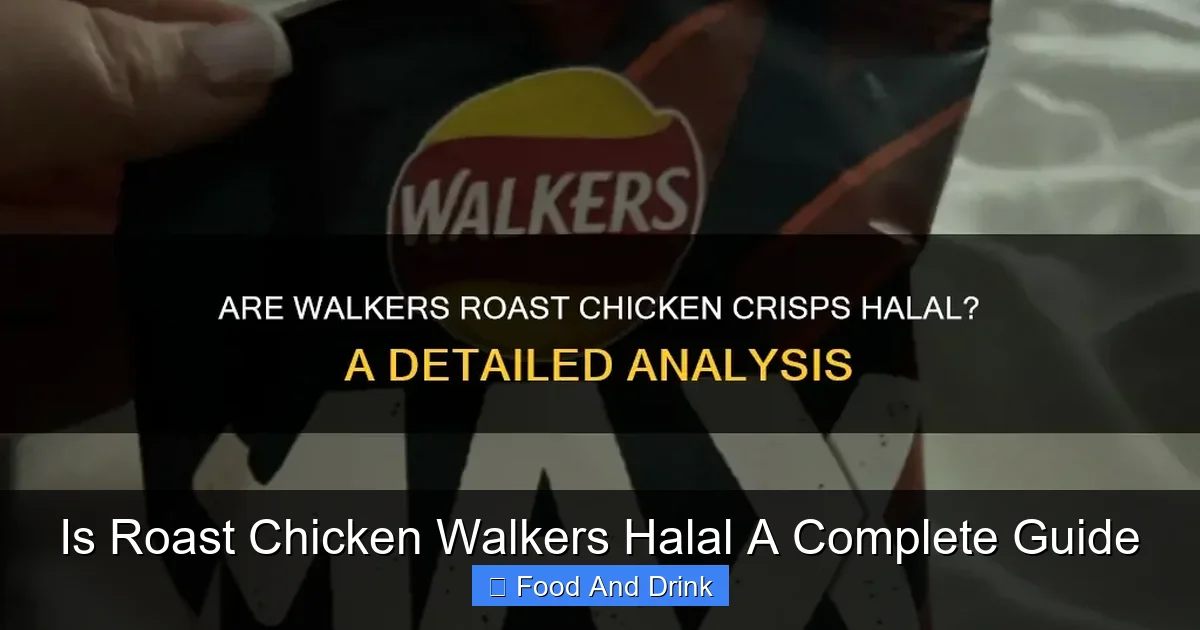
Walkers, owned by PepsiCo, has a dedicated customer service team and a comprehensive FAQ section on their website. According to their official statements, Walkers Roast Chicken crisps are **not halal-certified**. This is a clear and direct answer that many Muslim consumers have received when contacting the company.
In response to customer inquiries, Walkers explains that while the crisps are suitable for vegetarians and do not contain any meat, they cannot guarantee that all ingredients are halal. Specifically, they point to the “natural flavoring” and “roast chicken flavor” as areas of uncertainty. These components may contain traces of alcohol or be processed using non-halal methods.
Walkers also confirms that their production facilities handle a variety of products, including those that may not meet halal standards. Although they follow rigorous cleaning protocols, they do not operate dedicated halal production lines for these crisps. This means there is a potential—however minimal—for cross-contamination with non-halal substances.
It’s worth noting that Walkers does offer some halal-certified products in certain regions. For example, in the Middle East and parts of Asia, Walkers produces crisps under halal-certified manufacturing processes. These products carry official halal logos and are made in facilities that comply with Islamic dietary laws. However, these are typically sold under different branding or in specific markets and are not the same as the standard UK or European versions.
For consumers in the UK, Europe, or North America, the Roast Chicken flavor remains uncertified. Walkers encourages customers with dietary concerns to contact their customer service team for the most up-to-date information. They also recommend checking the packaging for any changes, as formulations and certifications can evolve over time.
This transparency is commendable. While it may be disappointing for halal-conscious snackers, it’s better to have a clear answer than to assume safety based on incomplete information. Walkers’ stance reinforces the importance of not relying solely on vegetarian labels or ingredient lists when determining halal status.
So, if you’re looking for a definitive “yes” or “no” from the manufacturer, the answer is: **No, Roast Chicken Walkers are not halal-certified.** But that doesn’t mean they’re automatically haram (forbidden). It simply means they haven’t been verified by a halal authority, and consumers must make an informed decision based on their personal level of strictness.
Cross-Contamination and Manufacturing Risks
Visual guide about Is Roast Chicken Walkers Halal A Complete Guide
Image source: midamarhalal.com
One of the most overlooked aspects of halal compliance is cross-contamination. Even if a product’s ingredients are halal, the way it’s made can affect its status. This is especially true for snacks like crisps, which are produced on high-speed machinery that handles multiple flavors and ingredients.
Walkers operates large-scale production facilities where different crisp flavors are manufactured on shared equipment. For example, the same production line might be used to make Roast Chicken, Prawn Cocktail, and Salt & Vinegar crisps—all in the same day. While Walkers implements cleaning procedures between batches, it’s impossible to eliminate all traces of previous products.
For Muslims who follow strict halal guidelines, even minor cross-contamination can be a concern. If a non-halal flavor—such as one containing alcohol-based flavoring or animal-derived enzymes—was processed before the Roast Chicken batch, residual particles could remain on the machinery. While the amount would be tiny, some scholars argue that any intentional exposure to non-halal substances invalidates halal status.
This risk is heightened by the use of shared oil systems. In some crisp factories, the same frying oil is used across multiple flavors. If that oil was previously used to fry non-halal products, it could transfer trace contaminants to halal-friendly items. Walkers uses sunflower oil for frying, which is plant-based, but the oil’s history matters.
Additionally, flavor powders and seasonings are often applied using shared dispensers and conveyor belts. Without dedicated halal production lines, there’s always a chance of cross-contact. Walkers does not publicly disclose whether they have separate lines for vegetarian or halal products, which adds to the uncertainty.
It’s also important to consider the supply chain. Ingredients like yeast extract, natural flavorings, and lactic acid may come from third-party suppliers. Unless Walkers requires halal certification from these suppliers, there’s no guarantee that the raw materials meet Islamic standards.
For these reasons, many halal certification bodies require not only ingredient scrutiny but also facility audits and production line assessments. Without such oversight, the risk—however small—remains.
That said, some Muslims take a more lenient view. They may argue that accidental contamination in negligible amounts is acceptable, especially if the product is otherwise halal in composition. This perspective is supported by some Islamic scholars who distinguish between intentional and unintentional exposure.
However, for those who follow stricter interpretations, even the possibility of cross-contamination is enough to avoid the product. The lack of halal certification means there’s no third-party assurance that these risks have been mitigated.
Halal Alternatives to Roast Chicken Walkers
If you’re craving that savory, roasted chicken flavor but want to stay within halal guidelines, don’t worry—there are plenty of alternatives. Many brands now offer halal-certified crisps and snacks that deliver the same satisfying crunch without the uncertainty.
One popular option is **Tyrrells**, a UK-based crisp brand that offers a range of halal-certified products. Their Sweet Chilli & Red Pepper flavor, for example, is certified by the Halal Food Authority and made in dedicated facilities. While they don’t have a direct roast chicken equivalent, their savory flavors are rich and satisfying.
Another great choice is **KP Snacks’ Halal Range**, which includes brands like Hula Hoops and Skips. These products are certified halal and widely available in supermarkets across the UK. They offer a variety of meat-inspired flavors, including chicken and bacon, all made without non-halal ingredients.
For those who prefer international options, **Lay’s** (owned by PepsiCo, like Walkers) offers halal-certified crisps in several countries, including Malaysia and the UAE. These products are manufactured in halal-compliant facilities and carry official certification. While not always available in Europe, they can sometimes be found in specialty stores or online.
You can also explore **artisan and small-batch crisp makers** that prioritize transparency and halal compliance. Brands like **The Cornish Crisp Company** and **Seabrook Crisps** often provide detailed ingredient sourcing information and may offer halal-friendly options upon request.
When shopping for halal crisps, look for the halal certification logo on the packaging. This is the most reliable indicator that the product has been verified by a recognized Islamic authority. If you can’t find a logo, check the brand’s website or contact customer service.
Another tip: consider making your own flavored crisps at home. Slice potatoes or sweet potatoes thinly, toss them with halal-certified oils and spices (like paprika, garlic powder, and onion powder), and bake until crispy. It’s a fun, healthy alternative that gives you full control over the ingredients.
Ultimately, while Roast Chicken Walkers may be tempting, there are safer, certified options that let you enjoy your favorite flavors without compromise.
Global Variations and Regional Differences
It’s important to remember that food manufacturing isn’t one-size-fits-all. The halal status of Roast Chicken Walkers can vary significantly depending on where you live. What’s available in the UK may not be the same as what’s sold in Saudi Arabia or Indonesia.
In Muslim-majority countries, food manufacturers often adapt their products to meet local religious standards. Walkers, for example, produces halal-certified crisps in the Middle East under the same brand name. These products are made in dedicated facilities, use halal-certified ingredients, and carry official certification logos. The flavor profiles may even be adjusted to suit regional tastes.
In contrast, in the UK and Europe, Walkers focuses on vegetarian labeling rather than halal certification. This reflects the different consumer priorities in these markets. While there is a growing Muslim population in Europe, the demand for halal snacks hasn’t yet led to widespread certification across all product lines.
This regional variation means that a Muslim traveler might find halal Walkers crisps in Dubai but not in London. It also highlights the importance of checking local labeling and certifications when abroad.
Additionally, some countries have stricter halal regulations than others. In Malaysia and Indonesia, for example, halal certification is mandatory for all food products. This means that even if a product is vegetarian, it must still be certified to be sold. In such markets, Walkers would not be able to sell Roast Chicken crisps without halal approval.
For consumers, this underscores the need to stay informed. Just because a product is halal in one country doesn’t mean it’s halal everywhere. Always check the packaging and, when in doubt, contact the manufacturer.
Conclusion: Should You Eat Roast Chicken Walkers?
So, is Roast Chicken Walkers halal? The short answer is: **not officially**. While the crisps are vegetarian and contain no obvious non-halal ingredients, they lack halal certification, use ambiguous flavorings, and are produced in facilities with potential cross-contamination risks.
For Muslims who follow strict halal guidelines, this uncertainty is enough to avoid the product. The absence of a halal logo means there’s no guarantee that every ingredient and process meets Islamic standards. Even small risks—like alcohol-based flavorings or shared equipment—can be dealbreakers for some.
However, others may take a more flexible approach. If you’re comfortable with minimal risk and prioritize taste and convenience, you might choose to enjoy these crisps occasionally. But it’s essential to make that decision knowingly, not based on assumptions.
The best practice is to look for halal-certified alternatives or contact Walkers directly for updates. Food manufacturing evolves, and certifications can change. Staying informed is the key to snacking with confidence.
In the end, your faith and peace of mind matter most. Whether you choose to eat Roast Chicken Walkers or opt for a certified halal snack, what’s important is that you’re making a choice that aligns with your values.
Frequently Asked Questions
Is Roast Chicken Walkers halal in the UK?
No, Walkers Roast Chicken crisps sold in the UK are not halal-certified. They lack official halal certification and may contain non-halal flavorings.
Why aren’t vegetarian crisps automatically halal?
Vegetarian products may still contain alcohol-based flavorings, animal-derived enzymes, or be processed on shared equipment with non-halal items.
Does Walkers make halal crisps anywhere?
Yes, Walkers produces halal-certified crisps in some Middle Eastern and Asian markets, but these are not the same as the UK version.
What should I look for to know if a snack is halal?
Look for a recognized halal certification logo on the packaging, such as from the Halal Food Authority or IFANCA.
Can cross-contamination affect halal status?
Yes, even trace amounts of non-halal substances from shared equipment or oil can render a product non-halal for strict observers.
Are there halal chicken-flavored snacks available?
Yes, several brands offer halal-certified crisps with chicken or meat-inspired flavors, often labeled clearly for Muslim consumers.


