

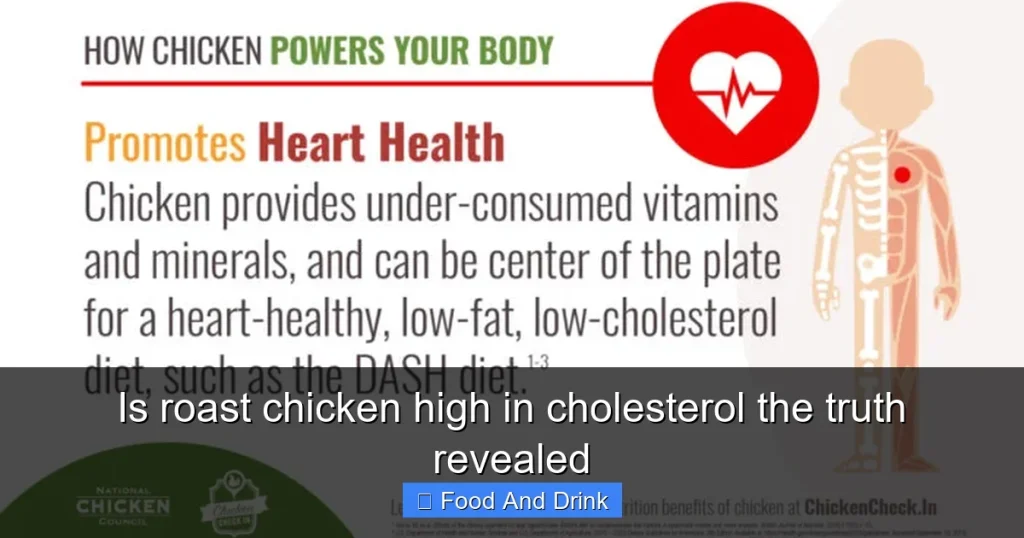

Roast chicken can be part of a balanced diet, even if you’re watching cholesterol. While it contains dietary cholesterol, its impact on blood cholesterol is less than once believed—especially when prepared with the skin removed and cooked healthily.
Key Takeaways
- Roast chicken contains cholesterol, but not excessively so: A 3-ounce serving of skinless roasted chicken breast has about 70–80 mg of cholesterol—moderate compared to other animal proteins.
- Dietary cholesterol affects blood cholesterol less than saturated fat: Current research shows saturated and trans fats have a bigger impact on LDL (“bad”) cholesterol than dietary cholesterol alone.
- Chicken skin significantly increases cholesterol and fat content: Leaving the skin on can double the cholesterol and add extra saturated fat, so removing it makes a big difference.
- How you cook roast chicken matters more than the meat itself: Roasting with minimal oil, avoiding butter basting, and using herbs instead of salty marinades supports heart health.
- Lean cuts like breast meat are lower in cholesterol than thighs or drumsticks: Opt for white meat when managing cholesterol levels.
- Pairing roast chicken with fiber-rich sides helps balance cholesterol absorption: Vegetables, whole grains, and legumes can reduce cholesterol uptake in the gut.
- Occasional roast chicken is fine for most people, even those with high cholesterol: Moderation and overall diet pattern matter more than any single food.
Quick Answers to Common Questions
Is roast chicken high in cholesterol?
Roast chicken contains moderate amounts of cholesterol—about 75 mg per 3-ounce serving of skinless breast. It’s not considered high, especially compared to foods like shrimp or liver.
Does eating roast chicken raise blood cholesterol?
For most people, no. Dietary cholesterol has a limited effect on blood cholesterol. Saturated fat is a bigger concern, and skinless roast chicken is low in saturated fat.
Should I remove the skin from roast chicken?
Yes, if you’re watching cholesterol. The skin adds significant fat and cholesterol. Removing it cuts both by nearly half.
Is chicken breast better than thighs for cholesterol?
Yes. Chicken breast is leaner and lower in cholesterol than dark meat cuts like thighs or drumsticks.
Can people with high cholesterol eat roast chicken?
Yes, in moderation. Focus on skinless, lean cuts and pair with vegetables and whole grains for a heart-healthy meal.
📑 Table of Contents
- Is Roast Chicken High in Cholesterol? The Truth Revealed
- Understanding Cholesterol: What You Need to Know
- Nutritional Breakdown of Roast Chicken
- Does Roast Chicken Raise Blood Cholesterol?
- Healthier Ways to Prepare Roast Chicken
- Roast Chicken in a Heart-Healthy Diet
- Myths and Misconceptions About Chicken and Cholesterol
- Conclusion: Enjoy Roast Chicken the Smart Way
Is Roast Chicken High in Cholesterol? The Truth Revealed
If you’ve ever sat down to a golden, crispy-skinned roast chicken only to hesitate because of cholesterol concerns, you’re not alone. Chicken is one of the most beloved proteins worldwide—versatile, flavorful, and relatively affordable. But when it comes to heart health and cholesterol, opinions are often divided. Some say chicken is a safe, lean option. Others warn that even poultry can spike cholesterol levels.
So, what’s the real story? Is roast chicken high in cholesterol? Or is it a misunderstood staple that can actually fit into a heart-healthy lifestyle?
Let’s cut through the confusion. The answer isn’t a simple “yes” or “no.” It depends on several factors: the cut of chicken, whether the skin is on or off, how it’s cooked, and how it fits into your overall diet. In this article, we’ll explore the science behind cholesterol, break down the nutritional profile of roast chicken, and give you practical tips to enjoy this classic dish without guilt.
By the end, you’ll know exactly how roast chicken affects your cholesterol levels—and how to prepare it in a way that supports your health goals.
Understanding Cholesterol: What You Need to Know

Visual guide about Is roast chicken high in cholesterol the truth revealed
Image source: img-s-msn-com.akamaized.net
Before we dive into roast chicken, let’s clarify what cholesterol actually is. Cholesterol is a waxy, fat-like substance found in every cell of your body. It’s essential for producing hormones, vitamin D, and bile acids that help digest fats. Your liver makes most of the cholesterol your body needs—about 70–80%. The rest comes from food, especially animal products like meat, eggs, and dairy.
There are two main types of cholesterol to be aware of:
– LDL (low-density lipoprotein): Often called “bad” cholesterol, high levels can lead to plaque buildup in arteries, increasing the risk of heart disease and stroke.
– HDL (high-density lipoprotein): Known as “good” cholesterol, it helps remove excess cholesterol from the bloodstream and transport it back to the liver for excretion.
For decades, dietary cholesterol was seen as the main villain in heart disease. The idea was simple: eat more cholesterol, and your blood cholesterol goes up. But modern research has refined this view. While dietary cholesterol does influence blood levels in some people (called “hyper-responders”), the effect is generally modest. More importantly, saturated and trans fats have a much stronger impact on raising LDL cholesterol.
The American Heart Association and other health organizations now emphasize limiting saturated fat intake more than dietary cholesterol. For most people, eating cholesterol-rich foods like eggs or roast chicken in moderation doesn’t significantly raise heart disease risk—especially when the overall diet is rich in fruits, vegetables, whole grains, and healthy fats.
How Much Cholesterol Is Too Much?
Current dietary guidelines suggest limiting dietary cholesterol to 300 mg per day for healthy adults. For people with high cholesterol, diabetes, or heart disease, the recommendation drops to 200 mg per day. To put this in perspective, one large egg contains about 185 mg of cholesterol—mostly in the yolk. A 3-ounce serving of skinless roasted chicken breast has around 75 mg.
So, while roast chicken does contain cholesterol, it’s not extremely high—especially compared to foods like shrimp (150–200 mg per 3 oz) or liver (over 300 mg per 3 oz). The key is balance and preparation.
Nutritional Breakdown of Roast Chicken

Visual guide about Is roast chicken high in cholesterol the truth revealed
Image source: img.wbmdstatic.com
Let’s get specific. What’s actually in a serving of roast chicken? The nutritional content varies depending on the cut and whether the skin is included. Here’s a closer look at two common scenarios:
Skinless Roasted Chicken Breast
A 3-ounce (about 85 grams) serving of skinless roasted chicken breast contains approximately:
– Calories: 140
– Protein: 26 grams
– Total fat: 3 grams
– Saturated fat: 1 gram
– Cholesterol: 75 mg
This is considered a lean, high-protein option. The low saturated fat content means it has minimal impact on raising LDL cholesterol. In fact, chicken breast is often recommended in heart-healthy diets like the DASH or Mediterranean eating patterns.
Roasted Chicken with Skin
Now, let’s add the skin. The same 3-ounce serving of roasted chicken breast with skin contains:
– Calories: 190
– Protein: 26 grams
– Total fat: 8 grams
– Saturated fat: 2.5 grams
– Cholesterol: 100 mg
As you can see, the skin nearly doubles the fat and cholesterol content. While it adds flavor and moisture, it also increases saturated fat—the bigger concern for heart health.
Dark Meat vs. White Meat
Not all chicken is created equal when it comes to cholesterol. Dark meat cuts like thighs and drumsticks have more fat and cholesterol than white meat (breast). For example:
– 3 oz roasted chicken thigh (skinless): ~85 mg cholesterol, 4 g fat
– 3 oz roasted chicken drumstick (skinless): ~80 mg cholesterol, 3.5 g fat
While still moderate, these cuts are higher in both fat and cholesterol than breast meat. If you’re managing cholesterol, white meat is the better choice—but dark meat can still fit into a balanced diet in moderation.
Does Roast Chicken Raise Blood Cholesterol?

Visual guide about Is roast chicken high in cholesterol the truth revealed
Image source: eatthis.com
This is the million-dollar question: Does eating roast chicken actually raise your blood cholesterol levels?
The short answer: It can, but usually not as much as you might think—and not for everyone.
The Science Behind Dietary Cholesterol and Blood Levels
For years, scientists believed that dietary cholesterol directly translated to higher blood cholesterol. But studies over the past two decades have shown that most people’s bodies regulate cholesterol production based on intake. When you eat more cholesterol, your liver produces less. When you eat less, it makes more.
This feedback mechanism means that for about 70% of people (“hypo-responders”), dietary cholesterol has little to no effect on blood cholesterol. Only about 30% of the population (“hyper-responders”) see a noticeable increase in blood cholesterol when they consume cholesterol-rich foods.
Even in hyper-responders, the increase is often small and may be offset by a rise in HDL (good) cholesterol, which can improve the overall cholesterol ratio—a better predictor of heart disease risk than LDL alone.
The Bigger Culprit: Saturated Fat
While dietary cholesterol gets a lot of attention, saturated fat is the real driver of elevated LDL cholesterol. Foods high in saturated fat—like fatty cuts of beef, full-fat dairy, and processed meats—can raise LDL levels more significantly than cholesterol-rich foods like eggs or chicken.
Roast chicken, especially skinless breast meat, is relatively low in saturated fat. That’s why it’s generally considered a heart-healthy protein choice—when prepared properly.
Roasting Method Matters
How you roast your chicken can influence its cholesterol-raising potential. Basting with butter, using heavy oil, or adding high-sodium seasonings can turn a healthy dish into a less healthy one. For example:
– Basting with olive oil (a healthy fat) in moderation is fine.
– Basting with butter or lard adds saturated fat and calories.
– Using store-bought marinades high in sodium can contribute to high blood pressure, a risk factor for heart disease.
The best approach? Roast chicken with minimal added fat, using herbs, garlic, lemon, and spices for flavor. This keeps the dish low in saturated fat and free of unnecessary additives.
Healthier Ways to Prepare Roast Chicken
You don’t have to give up roast chicken to protect your heart. With a few smart tweaks, you can enjoy this comfort food while keeping cholesterol in check.
Remove the Skin
This is the single most effective step you can take. The skin is where most of the fat and cholesterol are concentrated. Removing it before or after roasting reduces both significantly. If you love crispy skin, consider enjoying it as an occasional treat—not with every meal.
Choose Lean Cuts
Opt for chicken breast over thighs or drumsticks when possible. Breast meat is lower in fat and cholesterol, making it ideal for heart-healthy eating. If you prefer dark meat for its flavor and tenderness, balance it with extra vegetables and whole grains to offset the higher fat content.
Use Healthy Cooking Fats
Instead of butter or lard, use small amounts of heart-healthy oils like olive oil or avocado oil. These contain monounsaturated fats, which can help lower LDL cholesterol when used in place of saturated fats. A light brush of oil is enough to keep the chicken moist without adding excess calories.
Season with Herbs and Spices
Skip the salt-heavy rubs and try flavorful alternatives like rosemary, thyme, garlic, paprika, or lemon zest. These add depth without contributing to high blood pressure or inflammation. Plus, many herbs have antioxidant properties that support overall health.
Roast on a Rack
Place your chicken on a roasting rack inside the pan. This allows fat to drip away during cooking, reducing the total fat content of the final dish. It also promotes even browning and crispier skin—if you choose to leave it on.
Pair with Fiber-Rich Sides
Fiber, especially soluble fiber, can help lower cholesterol by binding to it in the digestive system and removing it from the body. Serve your roast chicken with:
– Steamed broccoli or Brussels sprouts
– Quinoa or brown rice
– Lentil salad or roasted sweet potatoes
– A side of mixed greens with olive oil and vinegar
These foods not only balance the meal but also enhance its cholesterol-lowering potential.
Roast Chicken in a Heart-Healthy Diet
So, where does roast chicken fit in a heart-healthy eating pattern? The answer is: quite well—when consumed mindfully.
The Mediterranean Diet Example
The Mediterranean diet is consistently ranked as one of the best diets for heart health. It emphasizes:
– Plenty of fruits, vegetables, whole grains, and legumes
– Healthy fats like olive oil and nuts
– Moderate amounts of fish, poultry, and dairy
– Limited red meat and processed foods
Roast chicken fits perfectly into this framework. In fact, poultry is encouraged as a lean protein source, especially when prepared without skin and with minimal added fats.
Frequency and Portion Control
You don’t need to eat roast chicken every day to enjoy its benefits. For most people, 2–3 servings of poultry per week is a reasonable amount. A serving is about 3 ounces—roughly the size of a deck of cards.
If you have high cholesterol or a family history of heart disease, talk to your doctor or a registered dietitian about personalized recommendations. They may suggest limiting high-cholesterol foods or focusing on plant-based proteins more often.
Balancing the Plate
The key to making roast chicken heart-healthy isn’t just about the chicken itself—it’s about what comes with it. A balanced plate should include:
– ½ vegetables and/or salad
– ¼ lean protein (like roast chicken)
– ¼ whole grains or starchy vegetables
This approach ensures you’re getting a mix of nutrients that support cardiovascular health, including fiber, antioxidants, and healthy fats.
Myths and Misconceptions About Chicken and Cholesterol
Despite growing evidence, several myths about chicken and cholesterol persist. Let’s clear them up.
Myth 1: All Chicken Is High in Cholesterol
False. While chicken contains cholesterol, it’s not among the highest sources. Compared to foods like liver, shrimp, or egg yolks, chicken is relatively moderate. And when prepared without skin, it’s even lower.
Myth 2: Eating Chicken Will Automatically Raise Your Blood Cholesterol
Not necessarily. As discussed, most people’s bodies compensate for dietary cholesterol by producing less. Only a minority see a significant rise in blood levels—and even then, the effect is often small.
Myth 3: You Should Avoid Chicken If You Have High Cholesterol
Not true. Unless your doctor advises otherwise, you can still enjoy chicken as part of a balanced diet. The focus should be on overall eating patterns, not single foods. Removing the skin, choosing lean cuts, and pairing with healthy sides makes roast chicken a smart choice.
Myth 4: Organic or Free-Range Chicken Is Lower in Cholesterol
Not necessarily. While organic or free-range chickens may have better welfare and slightly different fat profiles, the cholesterol content is similar to conventional chicken. The biggest factors are still the cut and preparation method.
Myth 5: Chicken Is Healthier Than Red Meat
Generally, yes—but it depends. Skinless chicken breast is lower in saturated fat and cholesterol than most red meats. However, processed chicken products (like sausages or nuggets) can be high in sodium, unhealthy fats, and additives, making them less healthy than a lean cut of beef.
Conclusion: Enjoy Roast Chicken the Smart Way
So, is roast chicken high in cholesterol? The truth is, it contains cholesterol—but not an excessive amount, especially when prepared wisely. The real concern isn’t the cholesterol in the meat itself, but how it’s cooked and what it’s served with.
By removing the skin, choosing lean cuts, using healthy cooking methods, and balancing your plate with fiber-rich foods, you can enjoy roast chicken as part of a heart-healthy lifestyle. For most people, occasional roast chicken won’t spike cholesterol levels or increase heart disease risk.
Remember, no single food determines your health. It’s the overall pattern of your diet that matters most. So go ahead—savor that perfectly roasted chicken. Just do it mindfully, and your heart will thank you.
Frequently Asked Questions
How much cholesterol is in a whole roast chicken?
A whole roast chicken contains varying amounts depending on size and cuts, but a 3-ounce serving of skinless breast has about 75 mg of cholesterol. The total for the whole bird would be higher, but portion control is key.
Is roasted chicken with skin bad for cholesterol?
It’s not “bad,” but the skin adds saturated fat and cholesterol. Removing it makes the dish much healthier, especially for those managing cholesterol levels.
What’s the healthiest way to cook chicken to lower cholesterol?
Roasting, grilling, or baking without added butter or oil is best. Use herbs and spices for flavor, and remove the skin to reduce fat and cholesterol.
Can I eat roast chicken every day if I have high cholesterol?
It’s better to vary your protein sources. While occasional roast chicken is fine, include fish, legumes, and plant-based proteins to support heart health.
Does marinating chicken reduce cholesterol?
Marinating doesn’t reduce cholesterol in the meat, but using healthy marinades (like lemon, garlic, and olive oil) can improve flavor without adding unhealthy fats.
Is store-bought rotisserie chicken high in cholesterol?
It can be, especially if the skin is left on and it’s seasoned with salt or butter. Check labels and remove the skin to make it a healthier choice.


