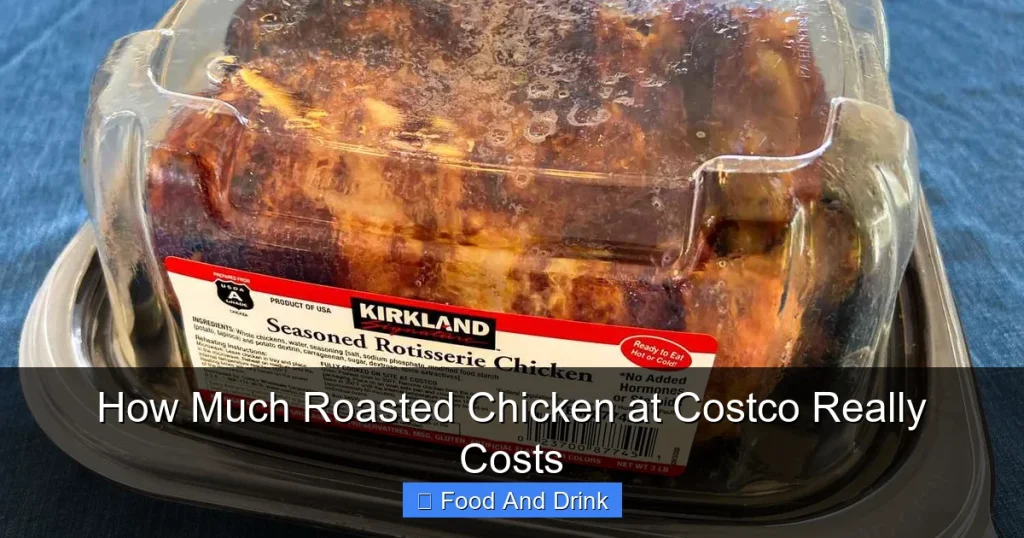

Costco’s roasted chicken has become a cult favorite for its unbeatable price, juicy flavor, and convenience. At just $4.99 (as of 2024), it’s one of the most affordable and high-quality rotisserie chickens you can buy—offering incredible value for families, meal preppers, and budget-conscious shoppers.
If you’ve ever walked into a Costco warehouse, you’ve likely been greeted by the rich, savory aroma of roasting chicken wafting through the air. It’s no accident—this scent is part of a carefully crafted customer experience designed to draw you in, and once you’re there, it’s hard to resist grabbing one of those golden-brown, perfectly seasoned rotisserie chickens. But here’s the real question on everyone’s mind: How much roasted chicken at Costco really costs—not just in dollars, but in value, quality, and long-term savings?
For years, Costco’s $4.99 roasted chicken has been a staple for busy families, college students, meal preppers, and even professional chefs. It’s more than just a convenience item—it’s a symbol of Costco’s commitment to offering high-quality products at unbeatable prices. But behind that low price tag lies a fascinating story of supply chain efficiency, strategic pricing, and customer loyalty. In this article, we’ll dive deep into the true cost of Costco’s roasted chicken, exploring everything from its price history and production process to nutritional value, meal ideas, and tips for maximizing your savings.
Whether you’re a longtime fan or a curious newcomer, understanding the real value of this iconic product can change the way you shop—and eat. So let’s break it down, piece by piece, and uncover what makes Costco’s roasted chicken such a standout in the world of affordable, ready-to-eat meals.
Key Takeaways
- Costco’s roasted chicken costs $4.99 in most U.S. locations, making it one of the cheapest rotisserie chickens available from major retailers.
- The price has remained stable for over a decade, despite inflation, thanks to Costco’s vertical integration and bulk purchasing power.
- Each chicken weighs 3–4 pounds and is fully cooked, seasoned, and ready to eat—ideal for quick meals, salads, soups, or sandwiches.
- Costco uses a proprietary brining and roasting process that ensures juicy, flavorful meat with a crispy skin, setting it apart from competitors.
- The chicken is hormone-free and antibiotic-free, aligning with growing consumer demand for cleaner, more ethical food options.
- Buying in bulk and planning meals around the chicken can save households hundreds of dollars annually on protein costs.
- Availability may vary by location and time of day, so early shopping or checking with your local warehouse can help ensure you get one.
Quick Answers to Common Questions
How much does a roasted chicken cost at Costco?
As of 2024, most Costco locations sell roasted chicken for $4.99. Some high-cost areas may charge up to $5.99.
Is Costco’s roasted chicken hormone-free?
Yes, Costco’s roasted chicken is raised without added hormones or antibiotics, in line with U.S. regulations and consumer demand.
How big is a Costco roasted chicken?
Each chicken weighs between 3 and 4 pounds, making it significantly larger than most store-bought rotisserie chickens.
Can I freeze Costco’s roasted chicken?
Yes, you can freeze the meat for up to three months. Shred it and store in airtight bags for best results.
What time does Costco roast chickens?
Most warehouses start roasting early in the morning and continue throughout the day, with peak freshness in the morning.
📑 Table of Contents
- The $4.99 Phenomenon: A Price That Defies Inflation
- What You’re Really Getting: Quality, Size, and Ingredients
- The Hidden Costs: Environmental and Ethical Considerations
- Meal Ideas and Tips to Maximize Value
- Comparing Costco to the Competition
- The Psychology Behind the Price
- Conclusion: More Than Just a Chicken
The $4.99 Phenomenon: A Price That Defies Inflation
When Costco first introduced its rotisserie chicken in the early 2000s, it was priced at $4.99—and remarkably, that price has barely budged in over two decades. In an era where grocery prices have soared due to inflation, supply chain disruptions, and rising labor costs, Costco’s ability to maintain this price point is nothing short of impressive. As of 2024, the vast majority of Costco locations across the United States still sell their roasted chicken for $4.99, with only a few high-cost areas like New York City or San Francisco charging slightly more—typically $5.49 to $5.99.
So how does Costco pull this off? The answer lies in a combination of vertical integration, economies of scale, and a unique business model that prioritizes customer value over short-term profits. Unlike most retailers who source pre-cooked chickens from third-party suppliers, Costco owns and operates its own poultry processing facilities. This means they control every step of the process—from raising the chickens to seasoning, roasting, and packaging them. By cutting out the middlemen, Costco reduces costs and maintains consistency in quality and pricing.
Additionally, Costco sells an estimated 80 million rotisserie chickens each year, making it one of the largest buyers of whole chickens in the world. This massive volume allows them to negotiate better prices with feed suppliers, reduce waste, and streamline production. The company also uses the chicken as a “loss leader”—a product sold at or near cost to drive foot traffic into the store. Once customers are inside, they’re likely to buy other high-margin items like electronics, furniture, or bulk groceries, which helps offset the low price of the chicken.
But the $4.99 price isn’t just about strategy—it’s also about trust. Costco knows that customers return not just for the chicken, but for the reliability of the brand. By keeping the price stable, they reinforce the perception that Costco is a place where you can always get a great deal. This consistency builds loyalty, and loyal customers are more likely to renew their memberships and spend more over time.
What You’re Really Getting: Quality, Size, and Ingredients
So, what exactly are you getting for your $4.99? Let’s start with the basics: each roasted chicken weighs between 3 and 4 pounds, which is significantly larger than the average rotisserie chicken sold at supermarkets like Walmart or Kroger. This means more meat per dollar—often double the size of a typical store-bought chicken for the same or lower price.
But size isn’t the only thing that sets Costco’s chicken apart. The quality is consistently high, thanks to a carefully controlled production process. The chickens are raised without antibiotics or added hormones, and they’re brined in a proprietary solution that includes salt, sugar, and natural seasonings. This brining process not only enhances flavor but also helps retain moisture during roasting, resulting in juicy, tender meat that doesn’t dry out—even after sitting under heat lamps for a few hours.
The seasoning blend is simple but effective: a mix of salt, garlic, onion, and herbs that gives the chicken a savory, slightly smoky flavor without being overpowering. The skin is crispy and golden, thanks to high-heat roasting in industrial ovens that ensure even cooking. Unlike some competitors that use artificial flavorings or excessive sodium, Costco’s recipe focuses on clean, recognizable ingredients.
Another key factor is freshness. Costco roasts chickens in-house at each warehouse, typically starting early in the morning and continuing throughout the day. This means the chickens you buy are usually roasted within the last few hours, not days or weeks old like some pre-packaged options. The in-store roasting also contributes to that irresistible aroma that greets you as you walk in—a sensory cue that signals quality and freshness.
For health-conscious shoppers, Costco’s roasted chicken is a solid choice. A 3-ounce serving (about the size of a deck of cards) contains approximately 140 calories, 3 grams of fat, and 25 grams of protein. It’s also low in carbohydrates and free from added sugars, making it suitable for low-carb, keto, or paleo diets. While the sodium content is moderate (around 400–500 mg per serving), it’s still lower than many pre-packaged deli meats or frozen meals.
The Hidden Costs: Environmental and Ethical Considerations
While the $4.99 price tag is undeniably attractive, it’s worth considering the broader implications of such a low-cost product. Like any mass-produced food item, Costco’s roasted chicken comes with environmental and ethical trade-offs that aren’t always visible at the checkout counter.
One of the biggest concerns is the scale of production. To meet demand, Costco sources chickens from large-scale poultry farms that prioritize efficiency and speed. These operations often involve crowded living conditions, rapid growth cycles, and the use of automated systems to minimize labor costs. While Costco states that its suppliers follow animal welfare guidelines, the reality of industrial farming means that chickens may not have access to outdoor spaces or natural behaviors.
From an environmental standpoint, large-scale poultry farming has a significant footprint. It requires vast amounts of water, feed, and energy, and contributes to greenhouse gas emissions, water pollution, and deforestation (due to soy and corn cultivation for feed). Additionally, the transportation of live chickens to processing plants and finished products to warehouses adds to the carbon footprint.
That said, Costco has taken steps to address some of these concerns. The company has committed to sourcing chickens raised without antibiotics important to human medicine, and it’s working toward more sustainable packaging and waste reduction. They’ve also invested in renewable energy at some facilities and are exploring alternative feed sources to reduce environmental impact.
For consumers, the decision often comes down to balancing affordability with values. If you’re primarily focused on cost and convenience, Costco’s roasted chicken is hard to beat. But if animal welfare and sustainability are top priorities, you might consider supplementing with higher-welfare options like organic, free-range, or locally sourced chickens—even if they come at a higher price.
Meal Ideas and Tips to Maximize Value
One of the biggest advantages of Costco’s roasted chicken is its versatility. A single $4.99 chicken can feed a family of four for one meal—or be stretched into multiple meals with a little creativity. Here are some practical ways to get the most out of your purchase:
Breakfast Boost
Shred leftover chicken and add it to scrambled eggs, omelets, or breakfast burritos. The protein helps keep you full longer and adds a savory twist to your morning routine.
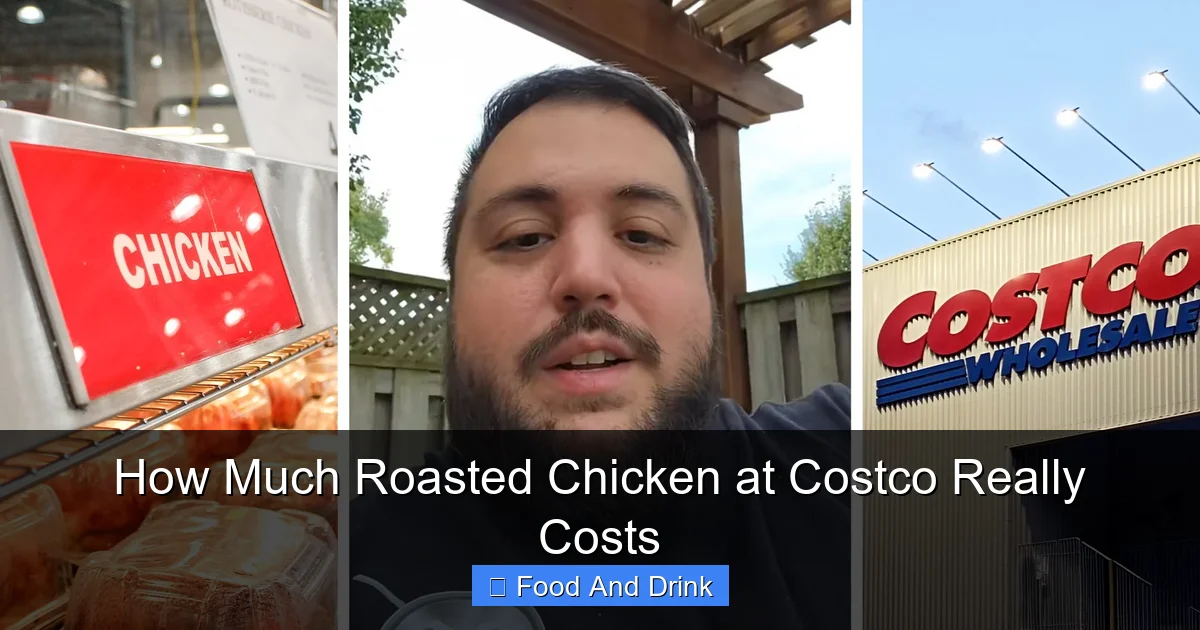
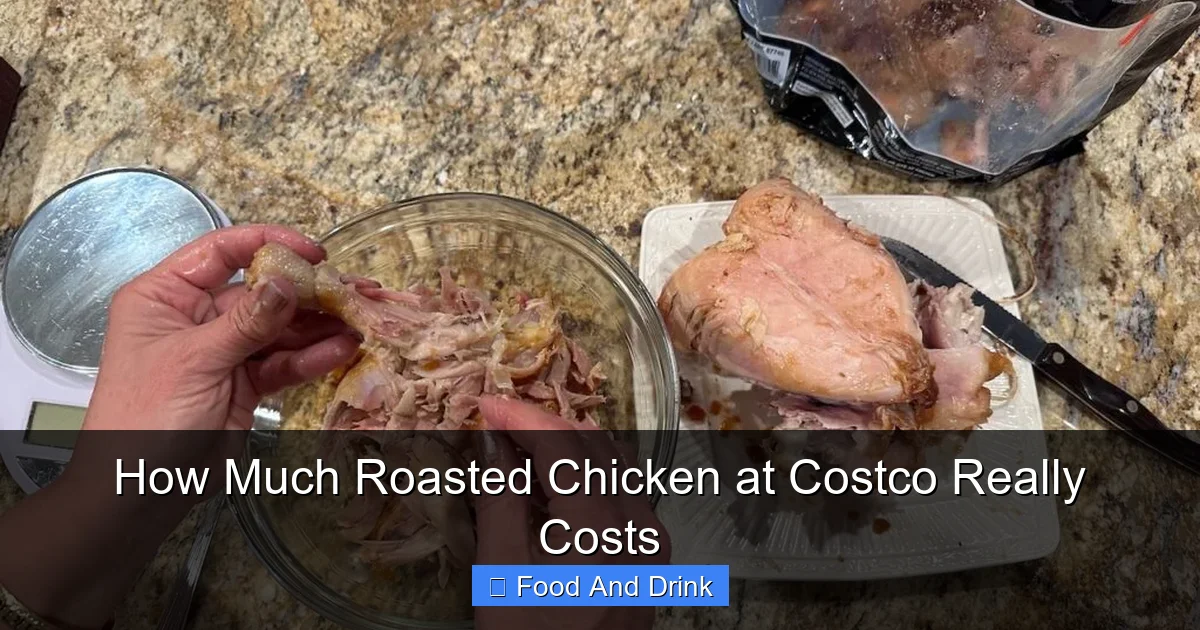
Visual guide about How Much Roasted Chicken at Costco Really Costs
Image source: uploads.dailydot.com
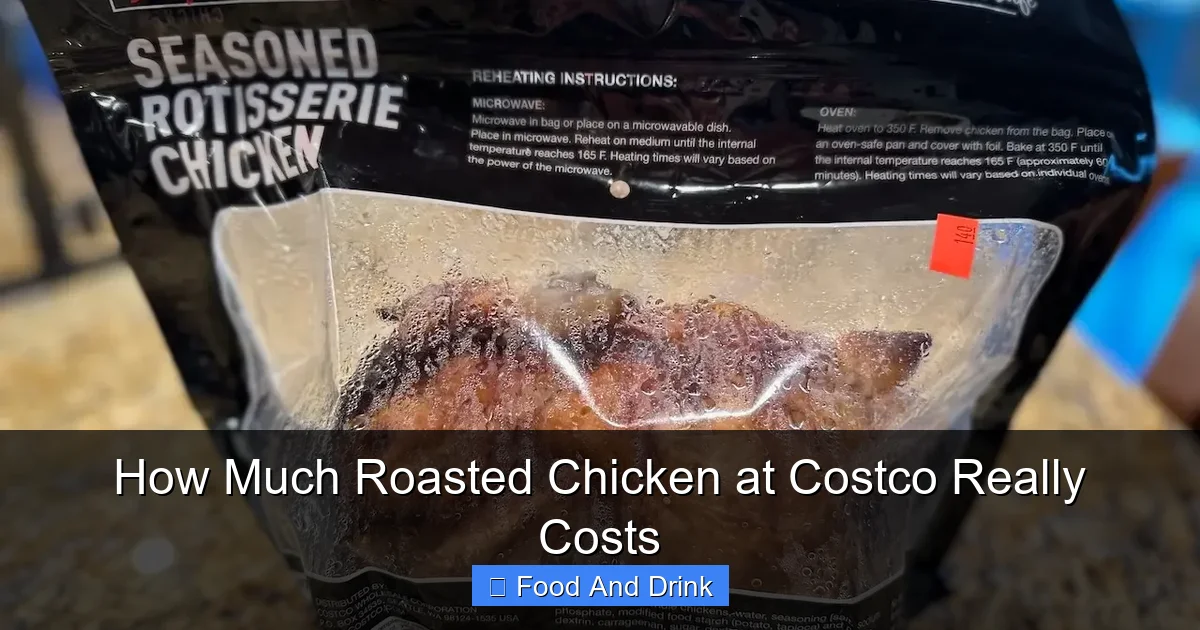
Visual guide about How Much Roasted Chicken at Costco Really Costs
Image source: bridgetskitchen.com
Visual guide about How Much Roasted Chicken at Costco Really Costs
Image source: bridgetskitchen.com
Lunchtime Staples
Use the meat to make chicken salad (mix with mayo, celery, and grapes), pack it in wraps with veggies and hummus, or toss it into a grain bowl with quinoa, roasted vegetables, and a tahini dressing.
Dinner Delights
Transform the chicken into hearty soups like chicken tortilla soup or creamy chicken and wild rice. You can also use the bones to make a rich, flavorful stock for future recipes.
Snack Time
Pull the meat off the bones and store it in the fridge for quick snacks. Pair it with crackers, cheese, or apple slices for a balanced, protein-rich bite.
Freezer-Friendly
Shred the meat and freeze it in portion-sized bags for up to three months. This is perfect for busy weeks when you need a quick protein boost for stir-fries, casseroles, or tacos.
To stretch your chicken even further, consider pairing it with bulk sides from Costco, like rotisserie potatoes, steamed vegetables, or pre-cooked rice. These items are often priced competitively and can turn a simple chicken into a complete, satisfying meal.
Another tip: buy your chicken early in the day. Warehouses typically roast fresh batches in the morning, so arriving before noon increases your chances of getting a hot, freshly roasted bird. If you miss out, don’t worry—many locations restock throughout the day, especially on weekends.
Comparing Costco to the Competition
To truly understand the value of Costco’s roasted chicken, it’s helpful to compare it to similar products from other retailers. Let’s take a look at how it stacks up:
– **Walmart**: Sells rotisserie chickens for around $5.98, but they’re often smaller (2.5–3 lbs) and less flavorful. The seasoning is milder, and the meat can be dry.
– **Kroger**: Prices vary by region, but typically range from $6.99 to $8.99. The quality is decent, but not as consistently juicy as Costco’s.
– **Whole Foods**: Offers organic, free-range rotisserie chickens for $12–$15. While higher in quality and ethical standards, the price is significantly higher.
– **Local Butchers or Farmers Markets**: These often provide the highest quality and most ethical options, but prices can exceed $20 for a single chicken.
When you factor in size, taste, and price, Costco’s $4.99 chicken offers the best overall value for the average shopper. It’s not the most premium option, but it strikes a perfect balance between affordability, quality, and convenience.
The Psychology Behind the Price
There’s a reason Costco’s roasted chicken has become such a cultural phenomenon—it taps into deep psychological triggers that drive consumer behavior. The $4.99 price is a classic example of “charm pricing,” where prices end in .99 to make them seem significantly lower than they are. Even though $5.00 and $4.99 are just one cent apart, the latter feels like a much better deal.
But the real magic lies in the perceived value. When customers see a large, golden-brown chicken for under $5, they immediately associate it with savings, quality, and generosity. This positive emotional response encourages repeat visits and word-of-mouth recommendations. In fact, many Costco shoppers cite the roasted chicken as one of the main reasons they keep their membership.
The chicken also serves as a “gateway product”—once customers are in the store, they’re likely to browse and buy other items. Studies show that the average Costco shopper spends over $100 per visit, far exceeding the cost of a single chicken. This cross-selling effect is a key part of Costco’s business model.
Conclusion: More Than Just a Chicken
So, how much roasted chicken at Costco really costs? On the surface, it’s $4.99—a price that seems almost too good to be true. But dig deeper, and you’ll find a story of innovation, efficiency, and customer-centric values. Costco’s roasted chicken isn’t just a meal; it’s a testament to what’s possible when a company prioritizes long-term relationships over short-term profits.
For families on a budget, busy professionals, and anyone looking for a quick, tasty protein source, this chicken delivers exceptional value. It’s large, flavorful, and versatile—and it’s backed by a brand that millions trust. While it may not be the most ethical or sustainable option on the market, it remains one of the best deals in the grocery world.
The next time you walk into Costco and smell that unmistakable aroma of roasting chicken, take a moment to appreciate what you’re getting. For less than the price of a fancy coffee, you’re walking out with a meal that can feed a family, fuel your week, and remind you that great value doesn’t have to come at the expense of quality.
Frequently Asked Questions
Why is Costco’s roasted chicken so cheap?
Costco keeps the price low through vertical integration, bulk purchasing, and using the chicken as a loss leader to drive store traffic. They control the entire supply chain, reducing costs.
Is Costco’s roasted chicken healthy?
Yes, it’s a good source of lean protein and low in carbs. However, it contains moderate sodium, so those on low-sodium diets should consume in moderation.
How long does Costco’s roasted chicken last?
When stored in the refrigerator, it stays fresh for 3–4 days. You can extend its life by freezing the meat for up to three months.
Can I buy more than one roasted chicken at Costco?
Yes, there’s typically no limit, though availability may vary by location and time of day. Buying multiple chickens is common for meal preppers.
Does Costco use artificial flavors in their roasted chicken?
No, Costco uses a natural seasoning blend with salt, garlic, onion, and herbs. There are no artificial flavors or preservatives.
What do I do if Costco runs out of roasted chicken?
Check back later in the day, as many locations restock. You can also call ahead to confirm availability or visit during off-peak hours.