Roasting a chicken seems simple, but nailing the perfect cook time is key to juicy meat and crispy skin. Whether you’re using a whole bird or parts, understanding weight, temperature, and resting time ensures delicious results every time.
Roasting a chicken is one of those classic kitchen rituals that brings comfort, aroma, and satisfaction to any home cook. Whether it’s Sunday dinner, a holiday feast, or just a cozy weeknight meal, a perfectly roasted chicken can feel like a culinary triumph. But here’s the thing—while it looks simple, getting it *just right* can be tricky. Undercooked? Risky and unappetizing. Overcooked? Dry, tough, and disappointing. So, how long does roast chicken take to cook perfectly every time?
The answer isn’t one-size-fits-all. It depends on several factors: the size of the bird, your oven temperature, whether it’s stuffed, and even the type of pan you use. But don’t worry—this guide will walk you through everything you need to know to roast a chicken that’s golden, juicy, and safe to eat, every single time. We’ll cover timing for whole chickens, parts, stuffed birds, and even boneless options, plus tips to elevate your roast from good to unforgettable.
By the end of this article, you’ll have a clear, reliable method for roasting chicken that works whether you’re a beginner or a seasoned home chef. No more guessing, no more dry meat—just tender, flavorful chicken that’s the star of your table.
Key Takeaways
- Cook time depends on weight: A general rule is 20 minutes per pound at 375°F (190°C), but always use a meat thermometer for accuracy.
- Internal temperature is crucial: Chicken is safe and done when the thickest part of the thigh reaches 165°F (74°C).
- Resting improves juiciness: Let the chicken rest for 15–20 minutes after roasting to lock in moisture.
- Higher heat = crispier skin: Starting at 425°F (220°C) for 30 minutes, then lowering to 350°F (175°C) enhances browning.
- Stuffing affects timing: If roasting with stuffing, add 15–20 extra minutes and ensure stuffing hits 165°F (74°C).
- Bone-in vs. boneless matters: Boneless breasts cook faster—about 20–25 minutes at 375°F (190°C)—while bone-in thighs need 35–45 minutes.
- Use a rack for even cooking: Elevating the chicken on a roasting rack promotes airflow and prevents soggy skin.
Quick Answers to Common Questions
How long does a 4-pound roast chicken take to cook?
A 4-pound roast chicken typically takes about 80 minutes at 375°F (190°C), but always check the internal temperature—165°F in the thigh—for doneness.
Can I roast chicken at 400°F?
Yes, roasting at 400°F (200°C) will cook the chicken faster—about 15–20% less time—and give you crispier skin. Just monitor it closely to avoid drying out the breast.
Should I cover roast chicken while cooking?
No, covering the chicken traps steam and prevents the skin from crisping. Only cover it loosely with foil during resting to keep it warm.
How do I know if my roast chicken is done without a thermometer?
Without a thermometer, check if the juices run clear when you pierce the thigh, and the leg moves easily in its joint. However, a thermometer is far more accurate and recommended.
Can I roast a frozen chicken?
It’s not recommended to roast a frozen chicken due to uneven cooking and food safety risks. Always thaw it in the refrigerator before roasting.
📑 Table of Contents
- Understanding Roast Chicken Basics
- How Long to Roast a Whole Chicken
- Roasting Chicken Parts: Breasts, Thighs, and Wings
- Stuffed Roast Chicken: Timing and Safety
- Using a Meat Thermometer: The Key to Perfect Chicken
- Resting Your Roast Chicken: Why It Matters
- Troubleshooting Common Roast Chicken Problems
- Conclusion
Understanding Roast Chicken Basics
Before we dive into exact cook times, it’s important to understand what makes a roast chicken successful. At its core, roasting is a dry-heat cooking method that uses hot air to cook the meat evenly while browning the skin. The goal is to render the fat under the skin, crisp the exterior, and cook the meat through without drying it out.
One of the biggest mistakes home cooks make is relying solely on time. A chicken that weighs 4 pounds might take 1 hour and 20 minutes in one oven and 1 hour and 40 minutes in another, depending on calibration, altitude, and even the type of roasting pan. That’s why using a meat thermometer is non-negotiable. It’s the only way to know for sure that your chicken is cooked safely and evenly.
Another key factor is preparation. Trussing the chicken—tying the legs together with kitchen twine—helps it cook more evenly by keeping the breast and thighs close together. This prevents the breast from drying out before the thighs are done. Brining or dry-brining the chicken ahead of time can also boost moisture and flavor, but we’ll get into that later.
Finally, let’s talk about equipment. A good roasting pan with a rack is ideal. The rack lifts the chicken off the bottom of the pan, allowing hot air to circulate underneath. This prevents the skin from steaming and ensures even browning. If you don’t have a rack, you can use chopped vegetables like carrots, onions, and celery as a bed—this not only supports the chicken but also creates delicious pan drippings for gravy.
Why Timing Isn’t Everything
You’ve probably seen recipes that say “roast for 1 hour and 30 minutes.” While that might work sometimes, it’s not a reliable method. Ovens vary, chickens vary, and even the time of day can affect cooking. For example, a cold kitchen in winter might slow down the initial heating of the chicken.
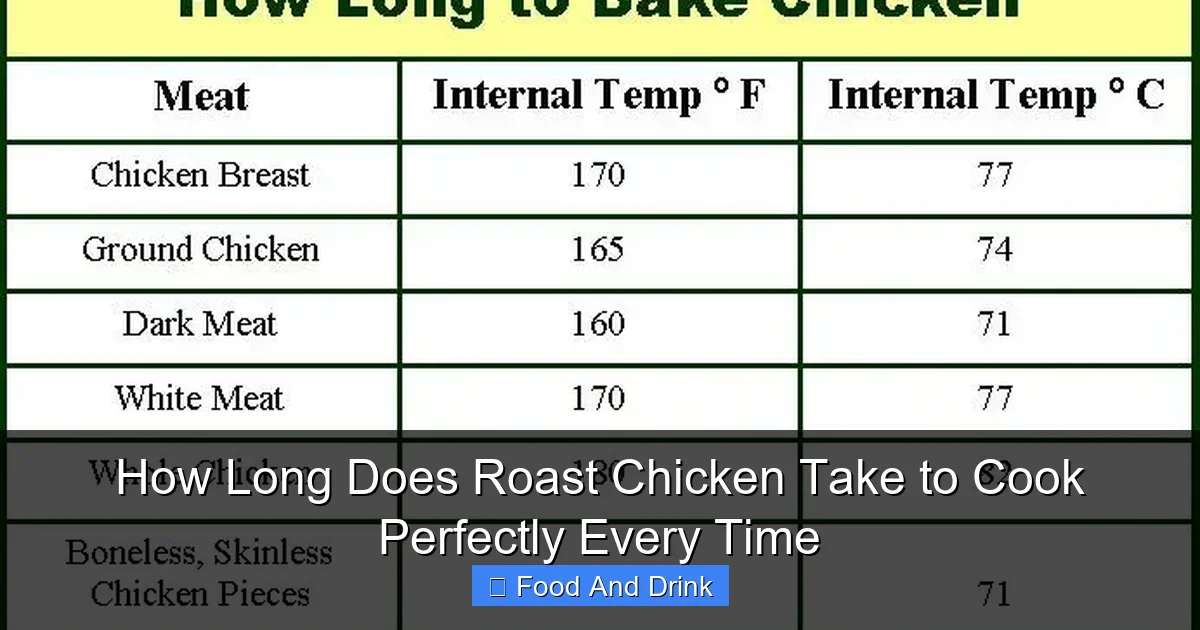
Instead of relying on a clock, focus on temperature. The USDA recommends cooking poultry to an internal temperature of 165°F (74°C) to kill harmful bacteria like salmonella. But here’s a pro tip: remove the chicken from the oven when the thickest part of the thigh reaches 160°F (71°C). The temperature will continue to rise 5–10 degrees during resting, hitting the safe 165°F mark without overcooking.
This carryover cooking is crucial. If you pull the chicken out at 165°F, it could easily hit 175°F while resting—resulting in dry meat. By pulling it early, you preserve juiciness.
The Role of Oven Temperature
Oven temperature plays a huge role in how long roast chicken takes to cook. Most recipes call for roasting between 350°F and 425°F (175°C to 220°C). Lower temperatures (350°F) cook the chicken more gently, which can be good for larger birds or if you’re stuffing the cavity. Higher temperatures (425°F) promote browning and crispy skin, which many people prefer.
A popular method is to start high and then lower the heat. For example, roast at 425°F for the first 30 minutes to get that beautiful golden skin, then reduce to 350°F for the remainder of the cook time. This gives you the best of both worlds: crisp skin and even cooking.
Another option is the “reverse sear” method: roast at a low temperature (like 275°F) until the chicken reaches 150°F internally, then crank the oven to 500°F for 10–15 minutes to crisp the skin. This takes longer but results in incredibly tender meat and crackling skin.
How Long to Roast a Whole Chicken

Visual guide about How Long Does Roast Chicken Take to Cook Perfectly Every Time
Image source: shungrill.com
Now, let’s get into the specifics. For a whole chicken, the general rule of thumb is **20 minutes per pound at 375°F (190°C)**. So a 4-pound chicken would take about 1 hour and 20 minutes. But again, this is just a starting point.
Let’s break it down by weight:
– **3-pound chicken:** ~60 minutes
– **4-pound chicken:** ~80 minutes
– **5-pound chicken:** ~100 minutes
– **6-pound chicken:** ~120 minutes
These times assume the chicken is unstuffed and roasted at 375°F. If your chicken is stuffed, add 15–20 minutes and make sure the stuffing reaches 165°F.
Always check the internal temperature in two places: the thickest part of the thigh (without touching the bone) and the breast. The thigh should read 165°F, and the breast should be around 160°F when you remove it from the oven.
Example: Roasting a 4-Pound Chicken
Let’s walk through a real example. You’ve got a 4-pound chicken, trussed, seasoned, and ready to go. Preheat your oven to 375°F. Place the chicken breast-side up on a rack in a roasting pan. Roast for about 80 minutes.
After 60 minutes, start checking the temperature. Insert the thermometer into the thigh. If it reads 155°F, you’re close. Wait another 10–15 minutes and check again. When it hits 160°F, remove the chicken from the oven.
Let it rest for 15–20 minutes before carving. During this time, the temperature will rise to 165°F, and the juices will redistribute, making the meat extra moist.
Tips for Even Cooking
Even cooking is the holy grail of roasting. To achieve it:
– **Rotate the pan halfway through** to account for hot spots in your oven.
– **Use a meat thermometer**—don’t guess.
– **Don’t overcrowd the pan.** The chicken should have space around it for air to circulate.
– **Pat the skin dry before seasoning.** Moisture prevents browning.
If you notice one side browning faster, you can tent it loosely with foil to slow it down.
Roasting Chicken Parts: Breasts, Thighs, and Wings
Visual guide about How Long Does Roast Chicken Take to Cook Perfectly Every Time
Image source: debbienet.com
Not everyone wants to roast a whole chicken. Sometimes, you just want chicken breasts for a salad or thighs for a stew. The good news? Chicken parts cook faster and more evenly than a whole bird.
Bone-In, Skin-On Chicken Breasts
These are great for roasting because the bone and skin help keep the meat moist. At 375°F, bone-in chicken breasts take about **25–30 minutes**. Check the internal temperature—it should reach 165°F in the thickest part.
For extra crispiness, you can start them skin-side down in a hot skillet to brown the skin, then transfer to the oven to finish cooking. This method gives you restaurant-quality results.
Boneless, Skinless Chicken Breasts
These cook quickly—usually **20–25 minutes at 375°F**. But they’re prone to drying out, so timing is critical. Use a thermometer and remove them at 160°F. They’ll carry over to 165°F while resting.
To keep them juicy, consider pounding them to an even thickness or brining them for 30 minutes before cooking.
Chicken Thighs and Drumsticks
Dark meat is more forgiving than white meat. Bone-in, skin-on thighs take about **35–45 minutes at 375°F**. They’re done when the internal temperature reaches 165°F and the skin is golden and crisp.
Drumsticks are similar—expect 40–50 minutes depending on size. You can also roast them at a higher temperature (400°F) for 30–35 minutes for extra browning.
Wings
Chicken wings are best roasted at a high temperature for crispy skin. At 425°F, they take about **40–45 minutes**, flipping halfway through. For extra crispiness, toss them in a little baking powder before roasting—it draws out moisture and creates a crackly exterior.
Stuffed Roast Chicken: Timing and Safety

Visual guide about How Long Does Roast Chicken Take to Cook Perfectly Every Time
Image source: shungrill.com
Stuffing a chicken adds flavor and moisture, but it also changes the cook time. The stuffing acts as insulation, slowing down the cooking process. Plus, you have to ensure the stuffing itself reaches 165°F to be safe to eat.
How Long Does Stuffed Chicken Take?
For a stuffed chicken, add **15–20 minutes** to the standard cook time. So a 4-pound stuffed chicken might take 95–100 minutes at 375°F.
Always check both the chicken and the stuffing. Insert the thermometer into the center of the stuffing—it must reach 165°F. If the chicken is done but the stuffing isn’t, you can carefully remove the stuffing and return it to the oven in a dish to finish cooking.
Safety First
Stuffing should be prepared just before roasting—don’t let it sit at room temperature. Also, avoid overstuffing the cavity, as this can prevent even cooking.
Some chefs prefer to cook stuffing separately to avoid any risk. It’s a safer option, especially if you’re feeding children, elderly guests, or anyone with a compromised immune system.
Using a Meat Thermometer: The Key to Perfect Chicken
We’ve mentioned it a few times, but it’s worth repeating: a meat thermometer is your best friend when roasting chicken. It takes the guesswork out of cooking and ensures your chicken is both safe and delicious.
Where to Insert the Thermometer
– **Thigh:** Insert the probe into the thickest part, avoiding the bone. This is the last part to cook, so it’s the best indicator.
– **Breast:** Check the center, about halfway down. It should read 160°F when you remove the chicken.
– **Stuffing:** If applicable, check the center of the stuffing.
Types of Thermometers
– **Instant-read thermometers:** Give a reading in 5–10 seconds. Great for spot-checking.
– **Leave-in thermometers:** Stay in the chicken while it cooks. Some have alarms that go off when the target temperature is reached.
– **Wireless probes:** Allow you to monitor the temperature from another room—perfect for busy cooks.
Invest in a good-quality thermometer. It’s one of the most useful tools in your kitchen.
Resting Your Roast Chicken: Why It Matters
Pulling your chicken out of the oven is only half the battle. The next step—resting—is just as important.
When you remove the chicken from the oven, the juices are still moving. If you carve it immediately, those juices will spill out, leaving the meat dry. Resting allows the juices to redistribute throughout the meat.
How Long to Rest
Let your chicken rest for **15–20 minutes** before carving. Cover it loosely with foil to keep it warm, but don’t wrap it tightly—this can steam the skin and make it soggy.
During this time, the internal temperature will rise 5–10 degrees, ensuring it hits the safe 165°F mark. The meat will also become more tender and easier to carve.
Carving Tips
After resting, place the chicken on a cutting board. Remove the legs and wings first, then slice the breast meat against the grain. Serve with pan juices or gravy for extra flavor.
Troubleshooting Common Roast Chicken Problems
Even with the best intentions, things can go wrong. Here’s how to fix common issues:
Dry Breast Meat
This usually happens when the breast cooks faster than the thighs. Solutions:
– Truss the chicken to keep parts close together.
– Use a lower oven temperature.
– Baste the breast with butter or pan juices during cooking.
– Remove the chicken when the breast hits 160°F.
Soggy Skin
Caused by trapped moisture. Fix it by:
– Patting the skin dry before seasoning.
– Using a rack so air can circulate.
– Starting at a high temperature to crisp the skin.
– Not covering the chicken while it rests.
Uneven Cooking
Hot spots in the oven can cause one side to cook faster. Rotate the pan halfway through and consider using an oven thermometer to check accuracy.
Undercooked Chicken
If your chicken isn’t done, return it to the oven and check every 5 minutes. Always use a thermometer—don’t rely on color or texture alone.
Conclusion
Roasting a chicken doesn’t have to be intimidating. With the right knowledge, tools, and techniques, you can achieve juicy, flavorful results every time. Remember: cook time depends on weight, but internal temperature is the real measure of doneness. Use a meat thermometer, rest your chicken, and don’t be afraid to experiment with temperatures and methods.
Whether you’re roasting a whole bird for a family dinner or just some thighs for a quick meal, these tips will help you master the art of roast chicken. So preheat that oven, season that bird, and get ready to enjoy one of the most satisfying meals in the kitchen.
🎥 Related Video: 3 Tips for a Perfect Whole Roasted Chicken
📺 Salima’s Kitchen
Learn how to make the perfect whole roasted chicken with 3 simple steps! Get the recipe: …
Frequently Asked Questions
What is the best temperature to roast a whole chicken?
The ideal temperature is 375°F (190°C) for even cooking. Starting at 425°F (220°C) for 30 minutes can help crisp the skin before lowering the heat.
How long should I let roast chicken rest?
Let roast chicken rest for 15–20 minutes after cooking. This allows the juices to redistribute, resulting in moister, more flavorful meat.
Can I stuff my chicken before roasting?
Yes, but add 15–20 minutes to the cook time and ensure the stuffing reaches 165°F (74°C) internally for safety.
Why is my roast chicken dry?
Dry chicken is usually caused by overcooking. Use a meat thermometer and remove the chicken at 160°F (71°C) in the breast to prevent this.
Should I brine my chicken before roasting?
Brining (wet or dry) helps keep the meat juicy and adds flavor. A 4–12 hour brine is ideal, but even 30 minutes can make a difference.
Can I roast chicken in a convection oven?
Yes, convection ovens cook faster and more evenly. Reduce the temperature by 25°F (about 15°C) and check the chicken 10–15 minutes earlier than usual.