

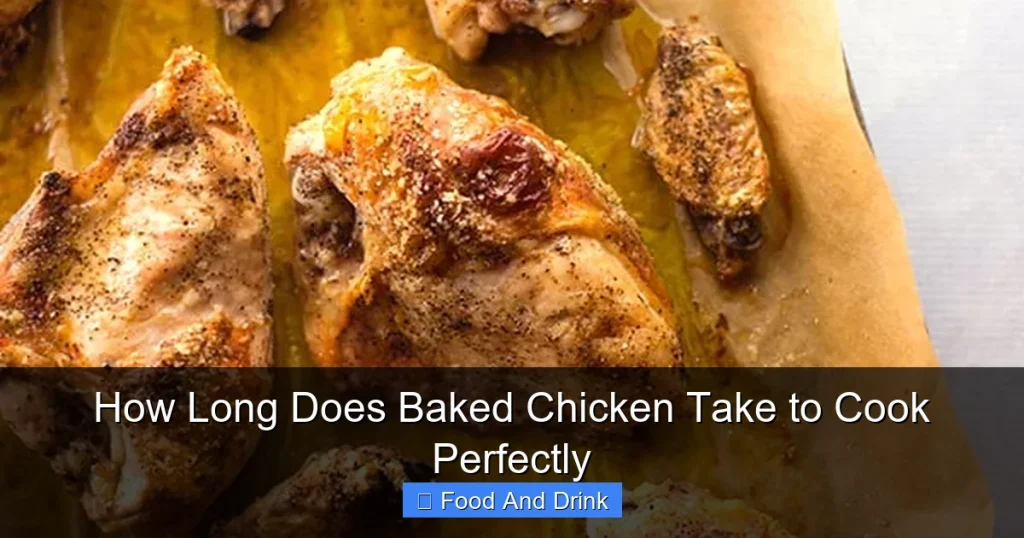

Wondering how long does baked chicken take to cook perfectly? The answer depends on cut, size, and oven temperature—but with the right guidance, you’ll get tender, juicy chicken every time. From boneless breasts to whole roasts, this guide covers everything you need to know.
Key Takeaways
- Boneless chicken breasts take 20–30 minutes at 375°F (190°C): They cook quickly but can dry out if overdone—use a meat thermometer to check for 165°F (74°C).
- Bone-in chicken pieces need 35–45 minutes at 375°F: Thighs and drumsticks stay juicier due to the bone and fat, so they take a bit longer.
- Whole chickens require 20 minutes per pound at 350°F (175°C): A 4-pound bird will take about 80 minutes—always check the thickest part of the thigh.
- Temperature matters more than time: Use a digital meat thermometer to ensure safe, perfect doneness without guesswork.
- Resting is crucial: Let chicken rest 5–10 minutes after baking to lock in juices and improve texture.
- Marinating adds flavor and moisture: Even 30 minutes in a simple marinade can make a big difference in taste and tenderness.
- Oven rack position affects cooking: Place chicken in the center for even heat distribution and consistent results.
Quick Answers to Common Questions
How long does it take to bake boneless chicken breasts?
Boneless chicken breasts typically take 20 to 30 minutes to bake at 375°F (190°C), depending on thickness. Always check for an internal temperature of 165°F (74°C).
Can I bake chicken at 350°F instead of 375°F?
Yes, baking at 350°F (175°C) works well, especially for whole chickens or when you want slower, more even cooking. Just add 5–10 minutes to the total time.
How do I keep baked chicken from drying out?
Use a meat thermometer, brine or marinate the chicken, and let it rest after baking. Avoid overcooking—remove it from the oven when it reaches 160–162°F.
Is it safe to eat chicken at 160°F?
Chicken is safe at 165°F, but if it reaches 160°F and rests for a few minutes, carryover cooking will bring it to 165°F. Use a thermometer to confirm.
Can I bake frozen chicken?
Yes, but it will take 50% longer and may cook unevenly. It’s safer to thaw chicken in the fridge overnight before baking.
📑 Table of Contents
How Long Does Baked Chicken Take to Cook Perfectly?
There’s nothing quite like the smell of baked chicken wafting through your kitchen. It’s comforting, familiar, and—when done right—absolutely delicious. But if you’ve ever pulled chicken out of the oven only to find it dry, undercooked, or unevenly done, you’re not alone. The secret to perfect baked chicken isn’t just about flavor or seasoning—it’s about timing and temperature.
So, how long does baked chicken take to cook perfectly? The short answer: it depends. Chicken comes in many forms—boneless breasts, bone-in thighs, drumsticks, whole birds—and each requires a slightly different approach. But with a few key guidelines, you can master the art of baking chicken that’s juicy on the inside and golden on the outside, every single time.
In this guide, we’ll break down everything you need to know about baking chicken, from cooking times and temperatures to pro tips for maximum flavor and tenderness. Whether you’re a weeknight cook or a weekend chef, you’ll walk away with the confidence to bake chicken like a pro.
Understanding Chicken Cuts and Cooking Times

Visual guide about How Long Does Baked Chicken Take to Cook Perfectly
Image source: 149852206.v2.pressablecdn.com
Not all chicken is created equal—especially when it comes to baking. Different cuts have different fat content, bone structure, and muscle density, all of which affect how they cook. Understanding these differences is the first step to nailing your bake time.
Boneless, Skinless Chicken Breasts
These are the most popular cut for quick meals, but they’re also the most prone to drying out. Because they lack skin and bone, they lose moisture faster during cooking. On average, boneless chicken breasts take **20 to 30 minutes** to bake at 375°F (190°C). However, thickness plays a big role—a thin breast might be done in 18 minutes, while a thick one could need 35.
To avoid overcooking, use a meat thermometer. Insert it into the thickest part of the breast, avoiding the bone (though there isn’t one here). The internal temperature should reach **165°F (74°C)**. If you don’t have a thermometer, you can check by cutting into the center—juices should run clear, and the meat should be white with no pink.
Pro tip: Pound thicker breasts to an even thickness (about ¾ inch) before baking. This ensures they cook evenly and prevents the ends from drying out while the center catches up.
Bone-In, Skin-On Chicken Pieces
Thighs, drumsticks, and wings with the bone and skin intact are more forgiving. The bone conducts heat slowly, and the skin helps retain moisture, making these cuts juicier and more flavorful. Bone-in chicken pieces typically take **35 to 45 minutes** at 375°F (190°C).
Dark meat like thighs and drumsticks can even handle a little extra time—some people prefer to bake them at 400°F (200°C) for 30–40 minutes for extra crispy skin. Again, use a thermometer: the internal temperature should still reach 165°F, but because of the fat and connective tissue, the meat will feel tender and pull away easily from the bone.
Whole Roasting Chicken
Roasting a whole chicken is a classic Sunday dinner move. A whole bird usually weighs between 3 and 5 pounds and takes about **20 minutes per pound** at 350°F (175°C). So, a 4-pound chicken will need roughly 80 minutes in the oven.
But here’s the catch: the breast and thigh cook at different rates. The breast is lean and can dry out, while the thigh is darker and more forgiving. To solve this, many chefs use a technique called “spatchcocking”—removing the backbone and flattening the bird—which allows it to cook more evenly.
Alternatively, you can roast the chicken breast-side down for the first half of cooking, then flip it breast-side up for the last 20–30 minutes to crisp the skin. Always check the temperature in the thickest part of the thigh, near the breast, to ensure it hits 165°F.
The Role of Oven Temperature
Visual guide about How Long Does Baked Chicken Take to Cook Perfectly
Image source: i.pinimg.com
Temperature is just as important as time when baking chicken. Too high, and the outside burns before the inside cooks. Too low, and the chicken dries out or fails to develop that golden, crispy skin we all love.
Standard Baking Temperature: 375°F (190°C)
This is the sweet spot for most chicken dishes. At 375°F, chicken cooks evenly, develops a nice color, and stays moist. It’s ideal for boneless breasts, bone-in pieces, and casseroles. This temperature also allows enough time for flavors to meld if you’re using marinades or rubs.
Higher Heat for Crispier Skin: 400–425°F (200–220°C)
If you’re aiming for extra-crispy skin—especially on bone-in thighs or wings—bump the heat up to 400°F or even 425°F. The higher temperature renders fat faster and crisps the skin without overcooking the meat underneath. Just keep an eye on it, as cooking times will be shorter.
For example, bone-in chicken thighs at 400°F may take only 30–35 minutes. Use a thermometer to avoid undercooking.
Lower Heat for Gentle Cooking: 325–350°F (160–175°C)
Lower temperatures are great for whole chickens or when you want to cook chicken slowly to retain maximum moisture. At 350°F, a whole chicken roasts gently, allowing the meat to stay juicy while the skin crisps gradually. This method takes longer but yields incredibly tender results.
Some people even use the “low and slow” method—baking chicken at 300°F (150°C) for 2–3 hours—especially for large cuts or when using a brine. This approach minimizes the risk of drying out and is perfect for meal prep.
How to Ensure Juicy, Flavorful Baked Chicken

Visual guide about How Long Does Baked Chicken Take to Cook Perfectly
Image source: insanelygoodrecipes.com
Perfect timing and temperature are important, but they’re not the whole story. Juicy, flavorful chicken also depends on prep, seasoning, and technique.
Brining for Moisture
Brining—soaking chicken in a saltwater solution—is one of the best ways to guarantee juicy meat. The salt helps the proteins retain moisture during cooking, so even if you slightly overcook the chicken, it won’t dry out.
A basic brine is ¼ cup salt dissolved in 4 cups of water. Add sugar, herbs, or spices if you like. Submerge the chicken for 30 minutes to 2 hours (don’t go longer for boneless breasts, as they can become too salty). Rinse and pat dry before baking.
Marinating for Flavor
Marinating adds flavor and can also tenderize the meat. Acidic ingredients like lemon juice, vinegar, or yogurt break down proteins, while oils and herbs infuse taste. Even a quick 30-minute marinade can make a difference.
Try a simple mix of olive oil, garlic, lemon juice, salt, and pepper. For extra flavor, add herbs like rosemary, thyme, or oregano. Always marinate in the fridge, and discard any leftover marinade that touched raw chicken.
Seasoning Tips
Don’t skimp on seasoning! Salt and pepper are essential, but don’t stop there. Paprika, garlic powder, onion powder, and dried herbs add depth. Rub the seasoning under the skin if you’re cooking bone-in chicken—this helps flavor the meat directly.
For a golden crust, try a dry brine: sprinkle salt on the chicken and let it sit uncovered in the fridge for 1–2 hours before baking. This draws out moisture, which then reabsorbs, seasoning the meat deeply and helping the skin crisp up.
Using a Rack
Place chicken on a wire rack set inside a baking dish. This allows hot air to circulate underneath, cooking the chicken evenly and preventing the bottom from steaming in its own juices. It’s especially helpful for bone-in pieces and whole chickens.
Checking for Doneness: The Thermometer Method
Guessing when chicken is done is a recipe for disaster. The only reliable way to know is with a meat thermometer. The USDA recommends cooking all poultry to an internal temperature of **165°F (74°C)** to kill harmful bacteria like salmonella.
Where to Insert the Thermometer
Insert the probe into the thickest part of the meat, avoiding bone, fat, or gristle. For boneless breasts, go straight into the center. For thighs, angle the probe toward the joint. For whole chickens, check the thigh near the breast—this is the last part to cook.
What If It’s Done Early?
If your chicken hits 165°F before the expected time, remove it from the oven immediately. Carryover cooking will continue to raise the temperature slightly, so pulling it at 160–162°F is fine—it will reach 165°F as it rests.
Resting the Chicken
Never skip this step! Letting chicken rest for 5–10 minutes after baking allows the juices to redistribute throughout the meat. If you cut into it right away, those juices spill out, leaving the chicken dry.
Cover loosely with foil to keep it warm while it rests. This short pause makes a huge difference in texture and flavor.
Common Mistakes and How to Avoid Them
Even experienced cooks make mistakes when baking chicken. Here are the most common pitfalls—and how to fix them.
Overcooking
This is the #1 cause of dry chicken. Boneless breasts are especially vulnerable. Solution: Use a thermometer, and don’t rely solely on time. Also, avoid opening the oven door too often—it drops the temperature and extends cooking time.
Underseasoning
Plain chicken is boring. Season generously, and don’t forget to salt the skin. A flavorful crust makes all the difference.
Not Preheating the Oven
Always preheat your oven for at least 10–15 minutes before baking. A cold oven means uneven cooking and longer times.
Using the Wrong Pan
Dark, nonstick, or glass pans absorb more heat and can cause the bottom to overcook. Use a light-colored metal baking dish or sheet pan for even results.
Ignoring Carryover Cooking
Chicken continues to cook after it’s removed from the oven. Pull it out when it’s 2–3 degrees below the target temperature, especially for larger cuts.
Recipe Ideas and Variations
Once you’ve mastered the basics, try these delicious variations.
Honey Garlic Baked Chicken
Marinate chicken thighs in a mix of honey, soy sauce, garlic, and ginger for 1 hour. Bake at 375°F for 35–40 minutes. Brush with extra glaze during the last 10 minutes for a sticky, caramelized finish.
Lemon Herb Whole Roast Chicken
Stuff a whole chicken with lemon halves, garlic, and fresh rosemary. Rub with olive oil, salt, and pepper. Roast at 350°F for 20 minutes per pound. Baste with pan juices halfway through.
Spicy Baked Chicken Wings
Toss wings in olive oil, salt, pepper, and cayenne. Bake at 400°F for 40–45 minutes, flipping halfway. Toss in buffalo sauce after baking.
Sheet Pan Chicken and Vegetables
Arrange chicken breasts and chopped veggies (like broccoli, carrots, and potatoes) on a sheet pan. Drizzle with olive oil, garlic, and herbs. Bake at 375°F for 25–30 minutes. One pan, minimal cleanup!
Conclusion
So, how long does baked chicken take to cook perfectly? The answer isn’t one-size-fits-all—but with the right knowledge, you can adapt to any cut, size, or recipe. Whether you’re baking boneless breasts for a quick dinner or roasting a whole chicken for a family feast, the keys are temperature, timing, and technique.
Use a meat thermometer, don’t skip the resting period, and season well. Experiment with brines, marinades, and flavors to keep things exciting. And remember: practice makes perfect. The more you bake chicken, the more intuitive it becomes.
With these tips, you’ll never have to worry about dry, undercooked, or bland chicken again. So preheat that oven, grab your favorite cut, and get baking—your perfect plate of chicken is just minutes away.
Frequently Asked Questions
How long does baked chicken take at 400°F?
Baking chicken at 400°F (200°C) reduces cooking time by about 5–10 minutes compared to 375°F. Boneless breasts take 15–25 minutes, while bone-in pieces take 30–40 minutes. Watch closely to avoid drying out.
What’s the best way to check if chicken is done?
The most accurate method is using a digital meat thermometer. Insert it into the thickest part of the meat, avoiding bone, and check that it reads 165°F (74°C).
Can I bake chicken without a thermometer?
While possible, it’s risky. You can cut into the thickest part to check for clear juices and no pink, but this releases juices and can dry out the meat. A thermometer is strongly recommended.
Should I cover chicken while baking?
Covering chicken with foil traps steam and keeps it moist, but it prevents browning. For crispy skin, bake uncovered. For extra moisture, cover for the first half, then uncover to crisp.
How long can I store baked chicken?
Cooked chicken can be stored in the fridge for 3–4 days in an airtight container. Reheat gently to avoid drying out. You can also freeze it for up to 3 months.
Why is my baked chicken rubbery?
Rubbery chicken is usually overcooked. This happens when proteins tighten too much, squeezing out moisture. Use a thermometer and remove the chicken as soon as it hits 165°F.


