

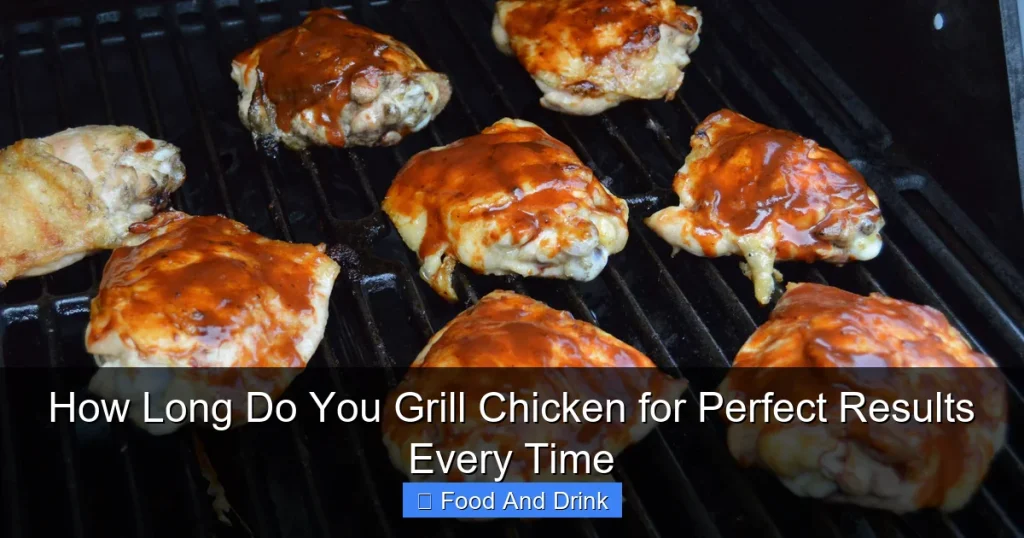

Grilling chicken to perfection isn’t just about throwing it on the heat—it’s about timing, temperature, and technique. Whether you’re cooking boneless breasts, drumsticks, or a whole bird, knowing exactly how long to grill chicken ensures it’s safe to eat, tender, and bursting with flavor.
Grilling chicken is one of the most satisfying ways to cook—crispy skin, smoky flavor, and that perfect char that makes your mouth water. But let’s be honest: it’s also one of the easiest things to mess up. Overcook it, and you’re left with dry, rubbery meat. Undercook it, and you’re playing a dangerous game with food safety. So, how long do you grill chicken to get it just right?
The answer isn’t one-size-fits-all. It depends on the cut, the size, the grill temperature, and even the weather outside. But with the right guidance, you can grill chicken that’s juicy, flavorful, and safe to eat—every single time. Whether you’re a weekend warrior firing up the gas grill or a charcoal purist tending to glowing coals, this guide will walk you through everything you need to know to master grilled chicken.
We’ll cover the ideal grilling times for every popular cut—from boneless breasts to bone-in thighs, drumsticks, wings, and even whole chickens. You’ll learn how to use a meat thermometer like a pro, why resting your chicken matters, and how to avoid common grilling mistakes. Plus, we’ll share pro tips for marinating, seasoning, and using direct versus indirect heat like a pitmaster. By the end, you’ll be grilling chicken with confidence, knowing exactly how long to cook it for perfect results every time.
Key Takeaways
- Use a meat thermometer: The safest way to know when chicken is done is by checking its internal temperature—165°F (74°C) is the magic number.
- Preheat your grill: Always start with a hot grill (350°F to 450°F) to get good sear marks and even cooking.
- Adjust time by cut: Boneless breasts cook faster (6–8 minutes per side), while bone-in pieces take longer (10–15 minutes per side).
- Don’t flip too early: Let chicken sear for 2–3 minutes before flipping to develop flavor and prevent sticking.
- Rest before serving: Let grilled chicken rest for 5 minutes after cooking to lock in juices.
- Marinate for moisture: A 30-minute to 4-hour marinade adds flavor and helps prevent dryness, especially for lean cuts like breasts.
- Use indirect heat for larger cuts: For whole chickens or thick thighs, finish cooking over indirect heat to avoid charring.
Quick Answers to Common Questions
How long do you grill boneless chicken breasts?
Boneless, skinless chicken breasts take about 6 to 8 minutes per side on a preheated grill at medium-high heat (375°F–400°F), for a total of 12 to 16 minutes. Always check the internal temperature—165°F (74°C) is safe to eat.
Can you grill chicken from frozen?
It’s not recommended. Frozen chicken cooks unevenly and can lead to undercooked centers. Always thaw chicken in the fridge overnight before grilling.
How do you prevent grilled chicken from drying out?
Use a meat thermometer to avoid overcooking, marinate or brine the chicken, and let it rest for 5 minutes after grilling. Bone-in cuts and thighs are naturally juicier than boneless breasts.
What’s the best way to check if grilled chicken is done?
The safest way is to use a digital instant-read thermometer. Insert it into the thickest part of the meat, avoiding bone. Chicken is done at 165°F (74°C).
Should you flip grilled chicken more than once?
No. Flip chicken only once, after 2–3 minutes of searing. Flipping too often prevents a good crust from forming and can dry out the meat.
📑 Table of Contents
Why Timing Matters When Grilling Chicken
Chicken is a lean protein, which means it doesn’t have a lot of fat to keep it moist during high-heat cooking. That’s why timing is everything. Cook it too long, and the proteins tighten up, squeezing out all the natural juices. The result? Dry, tough, and frankly, unappetizing meat. Cook it too little, and you risk foodborne illness from bacteria like salmonella.
The USDA recommends cooking all poultry to an internal temperature of 165°F (74°C) to ensure it’s safe to eat. But that doesn’t mean you should aim for 165°F and stop—timing helps you hit that target without overshooting. For example, chicken continues to cook slightly after it’s removed from the heat (a process called carryover cooking), so pulling it off at 160°F can be enough, as it will rise to 165°F while resting.
Timing also affects texture. Boneless chicken breasts cook quickly—often in under 15 minutes total—while bone-in thighs or a whole chicken can take 45 minutes or more. If you don’t adjust your timing based on the cut, you’ll end up with uneven results: burnt skin on the outside and raw meat on the inside.
Another reason timing matters? Flavor development. The Maillard reaction—the chemical process that creates that golden-brown crust—happens best when the surface of the chicken gets hot enough to sear, but not so hot that it burns. This usually takes 2–3 minutes per side on a well-preheated grill. Rushing the process by flipping too soon or cranking the heat too high can lead to charred exteriors and undercooked centers.
So, while it’s tempting to guess based on color or time alone, the best way to ensure perfect grilled chicken is to combine accurate timing with temperature monitoring. Think of timing as your roadmap and the thermometer as your GPS—both are essential for a smooth journey to deliciousness.
Essential Tools for Perfect Grilled Chicken

Visual guide about How Long Do You Grill Chicken for Perfect Results Every Time
Image source: creatingmyhappiness.com
Before we dive into grilling times, let’s talk about the tools that make all the difference. You don’t need a fancy setup, but a few key items will help you grill chicken like a pro.
Meat Thermometer: Your Best Friend
This is non-negotiable. A digital instant-read thermometer is the most reliable way to check if your chicken is done. Stick it into the thickest part of the meat, avoiding bone, and wait for the reading. Aim for 165°F (74°C). Instant-read thermometers are affordable, easy to use, and take the guesswork out of grilling.
Grill with Adjustable Heat Zones
Whether you’re using gas or charcoal, the ability to control heat is crucial. Gas grills let you adjust burners for direct and indirect zones. Charcoal grills can be set up with a two-zone fire—piling coals on one side for direct heat and leaving the other side empty for indirect cooking. This gives you flexibility, especially for larger or bone-in cuts.
Tongs and Spatula
Use long-handled tongs to flip chicken—this keeps your hands safe and gives you better control. A spatula is handy for flipping larger pieces like chicken halves or breasts. Avoid using forks, which pierce the meat and let juices escape.
Meat Mallet or Tenderizer (Optional)
If you’re working with uneven chicken breasts, a mallet can help flatten them to an even thickness. This ensures they cook evenly and prevents thin edges from drying out while the center catches up.
Marinating Containers or Bags
A good marinade adds flavor and moisture. Use a resealable plastic bag or a shallow dish to marinate your chicken. Always marinate in the fridge, never at room temperature.
Grill Brush
Clean your grill grates before and after cooking. A hot grill with clean grates prevents sticking and gives you those beautiful sear marks.
Aluminum Foil or Drip Pan
For indirect grilling or catching drippings, a drip pan under the chicken helps prevent flare-ups and makes cleanup easier.
With these tools in your arsenal, you’re ready to tackle any chicken cut with confidence.
Grilling Times by Chicken Cut

Visual guide about How Long Do You Grill Chicken for Perfect Results Every Time
Image source: i.pinimg.com
Now for the main event: how long to grill chicken based on the cut. These times assume a preheated grill at medium-high heat (around 375°F to 400°F). Always use a thermometer to confirm doneness.
Boneless, Skinless Chicken Breasts
These are the most popular and quickest to cook. They typically take 6 to 8 minutes per side, for a total of 12 to 16 minutes. However, thickness matters. If your breasts are uneven, pound them to about ¾ inch thick for even cooking.
– Preheat grill to medium-high (375°F–400°F).
– Oil the grates to prevent sticking.
– Season or marinate chicken (30 minutes to 4 hours).
– Place on grill, smooth side down.
– Grill for 6–8 minutes without moving to get a good sear.
– Flip and cook another 6–8 minutes.
– Check internal temperature: 165°F (74°C).
– Let rest for 5 minutes before slicing.
Tip: To prevent dryness, brine the breasts in saltwater for 30 minutes before grilling, or marinate in olive oil, lemon juice, and herbs.
Bone-In, Skin-On Chicken Breasts
These take longer because of the bone and skin. Expect 10 to 12 minutes per side, for a total of 20 to 24 minutes.
– Preheat grill to medium (350°F–375°F).
– Place skin-side down first.
– Grill for 10–12 minutes until skin is crispy and golden.
– Flip and cook another 10–12 minutes.
– Check temperature in the thickest part, near the bone: 165°F.
– Rest for 5 minutes.
Tip: If the skin is browning too fast, move the chicken to indirect heat for the last few minutes.
Chicken Thighs (Bone-In, Skin-On)
Thighs are more forgiving than breasts because they have more fat. They take 12 to 15 minutes per side, for a total of 24 to 30 minutes.
– Preheat grill to medium (350°F–375°F).
– Place skin-side down first.
– Grill for 12–15 minutes until skin is crisp.
– Flip and cook another 12–15 minutes.
– Check internal temperature: 165°F.
– Rest for 5 minutes.
Tip: Thighs can handle higher heat, so don’t be afraid to sear them well for extra flavor.
Chicken Drumsticks
Drumsticks are similar to thighs in cooking time—about 12 to 15 minutes per side, totaling 24 to 30 minutes.
– Preheat grill to medium.
– Place skin-side down first.
– Grill for 12–15 minutes.
– Flip and cook another 12–15 minutes.
– Check temperature: 165°F.
– Rest before serving.
Tip: Drumsticks are great for marinating. Try a mix of soy sauce, garlic, honey, and smoked paprika.
Chicken Wings
Wings cook faster—about 10 to 12 minutes total, flipping every 3–4 minutes.
– Preheat grill to medium-high.
– Grill wings, turning often to prevent burning.
– Cook until skin is crisp and internal temp reaches 165°F.
– Toss in sauce after grilling, or grill with sauce in the last 2 minutes.
Tip: For extra crispy wings, par-cook them in the oven at 375°F for 20 minutes before grilling.
Whole Chicken (Spatchcocked or Rotisserie)
Grilling a whole chicken requires indirect heat to cook evenly without burning the skin.
– Spatchcocking (butterflying) cuts cooking time in half. Remove the backbone and flatten the bird.
– Preheat grill with indirect heat (coals on sides, none in center).
– Season chicken and place skin-side up over the cooler zone.
– Grill for 45 to 60 minutes, or until internal temp reaches 165°F in the thigh.
– Let rest for 10–15 minutes before carving.
Tip: Use a meat thermometer with a probe that stays in the chicken while it cooks, so you can monitor temp without opening the lid.
Direct vs. Indirect Heat: When to Use Each

Visual guide about How Long Do You Grill Chicken for Perfect Results Every Time
Image source: shungrill.com
Understanding heat zones is key to grilling chicken perfectly. There are two main types of heat: direct and indirect.
Direct Heat
This means placing the chicken directly over the flame or coals. It’s ideal for quick-cooking, thin cuts like boneless breasts, wings, and drumsticks. Direct heat gives you that beautiful sear and smoky flavor.
– Best for: Boneless breasts, wings, drumsticks, thighs (if skin is on).
– Grill temp: 375°F–450°F.
– Cooking method: Place chicken directly over heat, flip once.
Indirect Heat
This means cooking the chicken next to, not over, the heat source. It’s perfect for larger, thicker cuts like whole chickens or bone-in breasts that need longer cooking without burning.
– Best for: Whole chickens, spatchcocked birds, large bone-in breasts.
– Grill temp: 350°F–375°F.
– Cooking method: Place chicken in the center of the grill, away from coals or burners.
Two-Zone Setup
The best grills use a two-zone fire: one side hot (direct), one side cooler (indirect). This gives you control.
– Start chicken over direct heat to sear and develop flavor.
– Move to indirect heat to finish cooking through.
– This method prevents flare-ups and ensures even doneness.
Example: Grill bone-in thighs over direct heat for 5 minutes per side to crisp the skin, then move to indirect heat for the remaining 10–15 minutes.
Marinating and Seasoning for Maximum Flavor
Grilled chicken doesn’t have to be plain. A good marinade or dry rub can transform it from basic to bold.
Marinades
A marinade typically includes an acid (like lemon juice or vinegar), oil, and seasonings. The acid tenderizes, the oil adds moisture, and the seasonings infuse flavor.
– Marinate for at least 30 minutes, up to 4 hours (don’t go longer—acid can break down the meat too much).
– Always marinate in the fridge.
– Pat chicken dry before grilling to help it sear.
Try this simple marinade:
– ¼ cup olive oil
– 2 tbsp lemon juice
– 2 cloves garlic, minced
– 1 tsp dried oregano
– Salt and pepper to taste
Dry Rubs
Dry rubs are a mix of spices applied directly to the chicken. They create a flavorful crust and don’t require marinating time.
Try this rub:
– 1 tbsp paprika
– 1 tsp garlic powder
– 1 tsp onion powder
– 1 tsp brown sugar
– ½ tsp cayenne (optional)
– Salt and pepper
Apply the rub 15–30 minutes before grilling to let flavors meld.
Brining
For extra juiciness, especially with boneless breasts, try a quick brine.
– Dissolve ¼ cup salt in 4 cups water.
– Submerge chicken for 30 minutes to 1 hour.
– Rinse and pat dry before grilling.
Brining helps the meat retain moisture during cooking.
Common Grilling Mistakes and How to Avoid Them
Even experienced grillers make mistakes. Here are the most common ones and how to fix them.
Flipping Too Early
Let chicken sear for 2–3 minutes before flipping. This builds flavor and prevents sticking. If it tears when you lift it, it’s not ready.
Not Preheating the Grill
A cold grill won’t sear properly. Always preheat for 10–15 minutes with the lid closed.
Using High Heat for Everything
High heat burns skin before the inside cooks. Use medium heat for most cuts, and adjust as needed.
Not Using a Thermometer
Color is not a reliable indicator. Always check temperature.
Overcrowding the Grill
Leave space between pieces for even airflow and heat distribution.
Skipping the Rest
Let chicken rest for 5 minutes after grilling. This lets juices redistribute, keeping the meat moist.
Conclusion
Grilling chicken doesn’t have to be stressful. With the right timing, tools, and techniques, you can achieve juicy, flavorful results every time. Remember: the key to perfect grilled chicken is knowing how long to cook it based on the cut, using a meat thermometer to confirm doneness, and mastering the balance between direct and indirect heat.
Whether you’re grilling boneless breasts for a weeknight dinner or a whole chicken for a weekend feast, these tips will help you avoid dryness, undercooking, and flare-ups. Marinate for moisture, season for flavor, and always let your chicken rest before serving.
So fire up that grill, grab your tongs and thermometer, and get ready to impress. Once you master the art of grilling chicken, you’ll wonder how you ever cooked it any other way.
🎥 Related Video: Common Mistakes You're Making When Grilling Chicken
📺 Tom’s Kitchen
In this video, I’ll go over some common mistakes beginners make when grilling chicken on their gas BBQ propane grill and I’ll …
Frequently Asked Questions
How long do you grill chicken thighs?
Bone-in, skin-on chicken thighs take about 12 to 15 minutes per side on a medium grill (350°F–375°F), for a total of 24 to 30 minutes. Always check the internal temperature—165°F (74°C) in the thickest part.
Can you grill chicken wings?
Yes! Grill wings over medium-high heat for 10 to 12 minutes, turning every 3–4 minutes until the skin is crisp and the internal temperature reaches 165°F. Toss in sauce after grilling for best results.
Is it safe to grill chicken at high heat?
High heat can burn the outside before the inside cooks through. Use medium heat for most cuts, and reserve high heat for quick searing. Always use a thermometer to ensure safety.
How do you grill a whole chicken?
Spatchcock the chicken (remove the backbone and flatten), then grill over indirect heat at 350°F–375°F for 45 to 60 minutes. Check the thigh temperature—165°F means it’s done.
Should you marinate chicken before grilling?
Marinating adds flavor and moisture, especially for lean cuts like breasts. Marinate for 30 minutes to 4 hours in the fridge, then pat dry before grilling.
How long should grilled chicken rest?
Let grilled chicken rest for 5 minutes after cooking. This allows juices to redistribute, keeping the meat moist and tender when sliced or served.


