Knowing if grilled chicken is done safely is crucial to avoid foodborne illness. The most reliable method is using a meat thermometer, but visual and tactile cues also help. Follow these expert tips to grill juicy, safe chicken every time.
Grilling chicken is one of life’s simple pleasures—crispy skin, smoky flavor, and that satisfying sizzle as it hits the hot grates. But behind the delicious aroma lies a critical food safety concern: how do you know if grilled chicken is done safely? Undercooked chicken can harbor harmful bacteria like Salmonella and Campylobacter, which can lead to serious illness. That’s why knowing when your chicken is fully cooked isn’t just about taste—it’s about health.
Many home grillers rely on guesswork: poking the meat, checking the color, or timing it based on past experience. While these methods offer clues, they’re not foolproof. A piece of chicken might look done on the outside but still be dangerously undercooked in the center. That’s why understanding the science and best practices behind safe grilling is essential. Whether you’re cooking boneless breasts, bone-in thighs, or drumsticks, the goal is the same: juicy, flavorful meat that’s safe to eat.
In this guide, we’ll walk you through every method to determine if your grilled chicken is done—from the most accurate (a meat thermometer) to helpful visual and tactile cues. We’ll also cover common mistakes, grilling techniques, and tips for different cuts. By the end, you’ll grill with confidence, knowing your chicken is both delicious and safe.
Key Takeaways
- Use a meat thermometer: The only surefire way to know grilled chicken is done is by checking its internal temperature—165°F (74°C) for all parts.
- Check color and texture: Fully cooked chicken should be white throughout with no pink, and juices should run clear when pierced.
- Rest the chicken after grilling: Letting it rest for 5–10 minutes helps retain moisture and ensures even doneness.
- Adjust cooking time based on thickness: Thicker cuts like breasts need longer cooking than wings or tenders.
- Avoid common mistakes: Don’t rely solely on grill time or char marks—these don’t guarantee safety.
- Prevent cross-contamination: Use separate utensils and plates for raw and cooked chicken to avoid spreading bacteria.
- Know your grill’s heat zones: Use indirect heat for thick cuts to cook through without burning the outside.
Quick Answers to Common Questions
What temperature should grilled chicken reach?
Grilled chicken should reach an internal temperature of 165°F (74°C) to be safe to eat, as recommended by the USDA.
Can you tell if chicken is done by color?
Color can be a clue—cooked chicken should be white with no pink—but it’s not reliable on its own, especially for dark meat.
How long should you let grilled chicken rest?
Let grilled chicken rest for 5–10 minutes after cooking to allow juices to redistribute and improve moisture.
Is it safe to eat slightly pink chicken?
Slight pink in dark meat can be safe if the internal temperature is 165°F, but pink in white meat usually means it’s undercooked.
Can you reuse marinade from raw chicken?
No, never reuse marinade that touched raw chicken unless you boil it first to kill bacteria.
📑 Table of Contents
Why Safe Grilling Matters
Chicken is a staple in many diets because it’s lean, versatile, and packed with protein. But it’s also one of the most common sources of foodborne illness. According to the Centers for Disease Control and Prevention (CDC), poultry is responsible for more foodborne outbreaks than any other food. That’s because raw chicken often carries bacteria that are only eliminated through proper cooking.
When chicken isn’t cooked to the right temperature, these bacteria survive and can multiply in your digestive system, leading to symptoms like nausea, vomiting, diarrhea, and fever. In severe cases, especially for young children, older adults, or people with weakened immune systems, it can lead to hospitalization.
Grilling adds another layer of complexity. Unlike an oven, where heat is consistent and enclosed, grills can have hot spots, flare-ups, and uneven temperatures. This means one part of your chicken might be charred while another remains raw. That’s why relying on time alone—like “cook for 6 minutes per side”—is risky. The only way to guarantee safety is to measure the internal temperature.
The Role of Internal Temperature
The U.S. Department of Agriculture (USDA) sets the standard for safe poultry cooking: an internal temperature of 165°F (74°C). This temperature is scientifically proven to destroy harmful bacteria instantly. It’s not a suggestion—it’s a safety threshold.
But here’s the catch: 165°F is the minimum safe temperature, not necessarily the ideal doneness for taste and texture. Chicken cooked to exactly 165°F can still be juicy and tender, especially if you use proper techniques like brining, marinating, or resting. The key is to hit that temperature without overcooking, which leads to dry, rubbery meat.
Using a meat thermometer removes all guesswork. It gives you a precise reading of the chicken’s internal temperature, so you know exactly when it’s safe to eat. And contrary to popular belief, you don’t need a fancy or expensive thermometer—many reliable options are available for under $20.
Using a Meat Thermometer: The Gold Standard

Visual guide about How Do You Know If Grilled Chicken Is Done Safely
Image source: grillcuisines.com
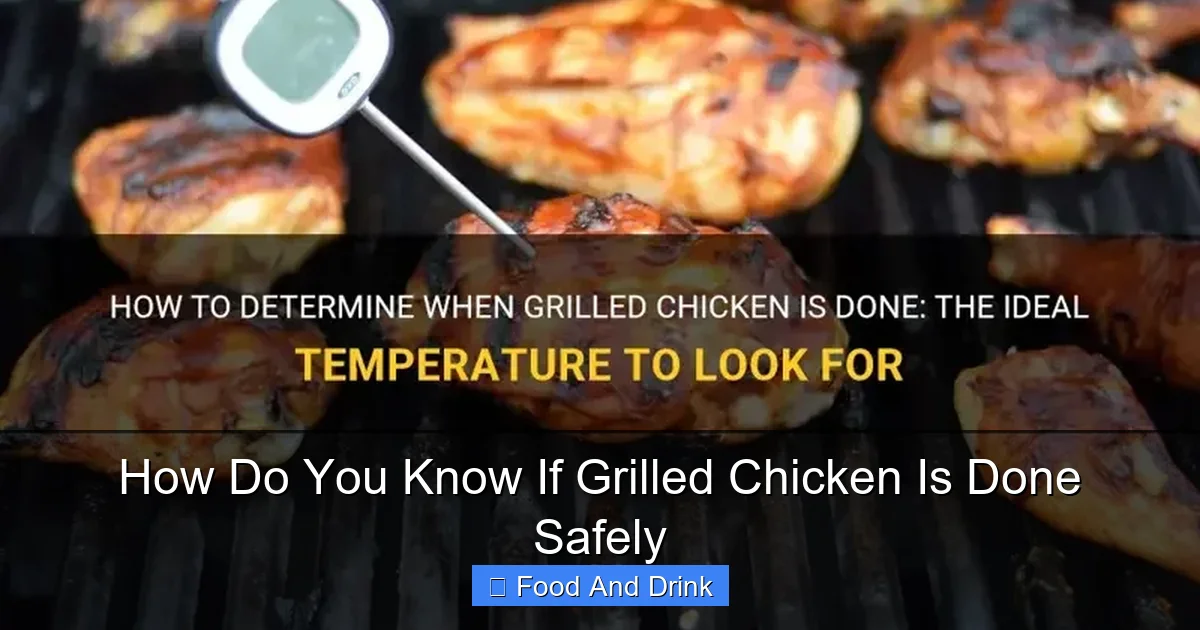
If you’re serious about safe grilling, a meat thermometer is your best friend. It’s the only tool that gives you an accurate, real-time reading of your chicken’s internal temperature. Here’s how to use it correctly.
Choosing the Right Thermometer
There are several types of meat thermometers, but for grilling, instant-read digital thermometers are the most practical. They provide a reading in 2–5 seconds and are easy to use. Look for one with a thin probe so it doesn’t tear the meat, and make sure it’s calibrated (you can test it in ice water—it should read 32°F or 0°C).
Leave-in thermometers are another option, especially for larger cuts like whole chickens or bone-in thighs. These stay in the meat while it cooks and connect to a receiver you can monitor from a distance. They’re great for hands-off grilling but can be more expensive.
Avoid analog dial thermometers—they’re slower and less accurate. And never use a candy or oven thermometer for meat; they’re not designed for this purpose.
Where to Insert the Thermometer
The location of your temperature reading matters. You want to measure the thickest part of the chicken, avoiding bone, fat, or gristle. For boneless breasts, insert the probe sideways into the center. For bone-in pieces like thighs or drumsticks, aim for the meaty part near the joint, but not touching the bone.
Bone conducts heat differently than meat, so a reading near the bone might be misleading. Similarly, fat can insulate the meat, making it seem cooler than it is. Always go for the center of the thickest section.
When to Check the Temperature
Don’t wait until the chicken looks done to check the temperature. Start checking a few minutes before you think it’s ready. For example, if you estimate a chicken breast will take 12 minutes, start checking at 10 minutes. This prevents overcooking.
Insert the thermometer gently and wait for the reading to stabilize. Most digital thermometers beep when they’re done. Once you hit 165°F, remove the chicken from the grill immediately.
What If It’s Undercooked?
If your chicken hasn’t reached 165°F, return it to the grill and continue cooking. Check the temperature every 1–2 minutes. Don’t panic—undercooked chicken just needs more time, not higher heat. In fact, lowering the heat slightly can help cook it through without burning the outside.
Visual and Tactile Cues: What to Look and Feel For

Visual guide about How Do You Know If Grilled Chicken Is Done Safely
Image source: shungrill.com
While a thermometer is the most reliable method, visual and tactile cues can help you estimate doneness—especially if you don’t have a thermometer handy. These aren’t foolproof, but they’re useful indicators when used alongside other methods.
Color and Appearance
Raw chicken is typically pink or grayish, with a slightly translucent appearance. As it cooks, the proteins denature and the meat turns white or opaque. Fully cooked chicken should be uniformly white or light beige throughout, with no pink or red spots.
Be cautious, though. Some chicken, especially thighs, can retain a slight pink hue even when fully cooked due to myoglobin (a protein in muscle). This is more common in dark meat and doesn’t necessarily mean it’s undercooked. That’s why color alone isn’t enough.
Juices and Clear Liquid
Another common test is piercing the chicken with a fork or knife and checking the juices. If they run clear—not pink or bloody—the chicken is likely done. Cloudy or pink-tinged juices suggest it needs more time.
However, this method has limitations. Juices can run clear even in slightly undercooked meat, especially if the cut is thin. And piercing the meat can cause moisture loss, leading to dry chicken. Use this as a secondary check, not your primary method.
Texture and Firmness
Cooked chicken should feel firm when pressed with tongs or a fork. If it feels soft or spongy, it’s probably undercooked. Overcooked chicken, on the other hand, becomes dry and tough.
You can also use the “poke test”: gently press the meat with your finger. If it springs back quickly, it’s done. If it leaves an indentation, it needs more time. This works best for boneless cuts and requires some experience to master.
Shrinkage and Curling
As chicken cooks, it shrinks and may curl at the edges, especially boneless breasts. While this is a sign of cooking, it doesn’t guarantee doneness. Thin parts can curl quickly even if the center is still raw. Use this as a visual cue, but don’t rely on it alone.
Timing and Heat: Grilling Different Cuts Safely
Visual guide about How Do You Know If Grilled Chicken Is Done Safely
Image source: shungrill.com
Not all chicken cuts cook the same way. Thickness, bone content, and fat distribution affect how long it takes to reach 165°F. Here’s a breakdown of common cuts and how to grill them safely.
Boneless, Skinless Chicken Breasts
These are popular but tricky. They’re lean and dry out easily if overcooked. A typical 6-ounce breast takes 6–8 minutes per side over medium-high heat (around 375–400°F). Start checking the temperature at 10 minutes total.
To prevent drying, brine the breasts for 30 minutes before grilling, or marinate them in oil and acid (like lemon juice or vinegar). You can also use a two-zone fire: sear over direct heat, then move to indirect heat to finish cooking.
Bone-In Chicken Thighs and Drumsticks
These dark meat cuts are more forgiving. They have more fat and connective tissue, which keeps them moist even if slightly overcooked. Thighs take about 10–12 minutes per side; drumsticks take 12–15 minutes.
Because they’re thicker, use indirect heat to cook them through without burning. Place them on the cooler side of the grill and close the lid to trap heat. Check the temperature in the thickest part, near the bone.
Chicken Wings
Wings cook quickly—usually 12–15 minutes total, turning every few minutes. They’re done when the skin is crispy and the internal temperature reaches 165°F. Because they’re small, they can go from undercooked to overcooked fast, so keep a close eye.
Whole Chicken (Spatchcocked or Rotisserie)
Cooking a whole chicken on the grill requires patience. Spatchcocking (butterflying) the bird helps it cook evenly. It typically takes 45–60 minutes over indirect heat. Use a leave-in thermometer to monitor the internal temperature in the breast and thigh. Both should reach 165°F.
Common Mistakes and How to Avoid Them
Even experienced grillers make mistakes that can lead to undercooked or unsafe chicken. Here are the most common pitfalls and how to fix them.
Relying on Time Alone
Grill times vary based on heat, thickness, and ambient temperature. A recipe that says “cook for 8 minutes per side” might work one day and fail the next. Always use a thermometer to verify doneness.
Flare-Ups and High Heat
Fat dripping onto hot coals causes flare-ups, which can char the outside of your chicken while leaving the inside raw. To prevent this, trim excess fat, use a drip pan, or move the chicken to a cooler part of the grill during flare-ups.
Not Letting Chicken Rest
Resting allows juices to redistribute, resulting in moister meat. Let grilled chicken rest for 5–10 minutes before cutting or serving. Cover loosely with foil to keep it warm.
Cross-Contamination
Never place cooked chicken on the same plate that held raw chicken. Use separate tongs, cutting boards, and utensils. Wash your hands thoroughly after handling raw poultry.
Ignoring the Carryover Cooking
Chicken continues to cook slightly after it’s removed from the grill due to residual heat. This is called carryover cooking. To account for it, some chefs remove chicken at 160°F, knowing it will rise to 165°F while resting. This works for experienced cooks but isn’t recommended for beginners.
Tips for Juicy, Safe Grilled Chicken
Safety doesn’t have to mean dry chicken. With the right techniques, you can grill chicken that’s both safe and succulent.
Brining and Marinating
Brining (soaking in saltwater) or marinating adds moisture and flavor. A simple brine of 1/4 cup salt and 1/4 cup sugar per quart of water works wonders. Soak for 30 minutes to 2 hours, then pat dry before grilling.
Using a Two-Zone Fire
Set up your grill with one side hot (direct heat) and one side cooler (indirect heat). Sear the chicken over direct heat to develop a crust, then move it to indirect heat to finish cooking. This prevents burning and ensures even doneness.
Monitoring Grill Temperature
Use a grill thermometer to monitor the heat. Ideal grilling temperature for chicken is 375–400°F. If it’s too hot, lower the flame or move coals to one side. If it’s too cool, add more fuel.
Choosing Quality Chicken
Start with fresh, high-quality chicken. Organic or free-range options often have better texture and flavor. Avoid pre-marinated chicken with added water or phosphates, which can affect cooking.
Storing and Reheating Leftovers
Store leftover grilled chicken in an airtight container in the fridge for up to 4 days. Reheat to 165°F to ensure safety. Use a microwave, oven, or skillet—avoid slow cookers for reheating.
Conclusion
Knowing how to tell if grilled chicken is done safely is a skill every home cook should master. It’s not just about avoiding illness—it’s about enjoying delicious, juicy chicken every time you fire up the grill. While visual cues and timing offer helpful hints, the only way to be certain is by using a meat thermometer to check that the internal temperature reaches 165°F.
By combining accurate temperature readings with smart grilling techniques—like using a two-zone fire, brining, and resting—you can achieve perfectly cooked chicken that’s safe and satisfying. Avoid common mistakes like cross-contamination and over-reliance on time, and always prioritize food safety.
Grilling should be fun, not stressful. With these tips, you’ll grill with confidence, knowing your chicken is not only safe to eat but also bursting with flavor. So next time you’re at the grill, grab that thermometer, trust the process, and enjoy every bite.
🎥 Related Video: No thermometer? No problem – here is how to tell your chicken is cooked through #chickenhack #short
📺 ShiftPixy Labs
No thermometer? No problem – here is how to tell your chicken is cooked through Chef JP shares an easy tip for when you are …
Frequently Asked Questions
How do I know if my chicken is undercooked?
Undercooked chicken may have pink or grayish meat, especially near the bone, and feel soft or spongy when pressed. Always check the internal temperature with a thermometer.
Can I grill frozen chicken?
It’s not recommended to grill frozen chicken, as it cooks unevenly and increases the risk of undercooked spots. Thaw it in the fridge first.
Why does my grilled chicken dry out?
Overcooking, high heat, or lack of moisture (like not brining or marinating) can dry out chicken. Use a thermometer and rest the meat to retain juiciness.
Is it safe to partially cook chicken and finish later?
No, partially cooking chicken and finishing later can allow bacteria to survive. Cook it to 165°F in one session.
What’s the best way to clean a meat thermometer?
Wash the probe with hot, soapy water after each use. Some thermometers are dishwasher-safe—check the manufacturer’s instructions.
Can I use a food thermometer for other meats?
Yes, a meat thermometer works for all meats. Just make sure to clean it between uses to avoid cross-contamination.