

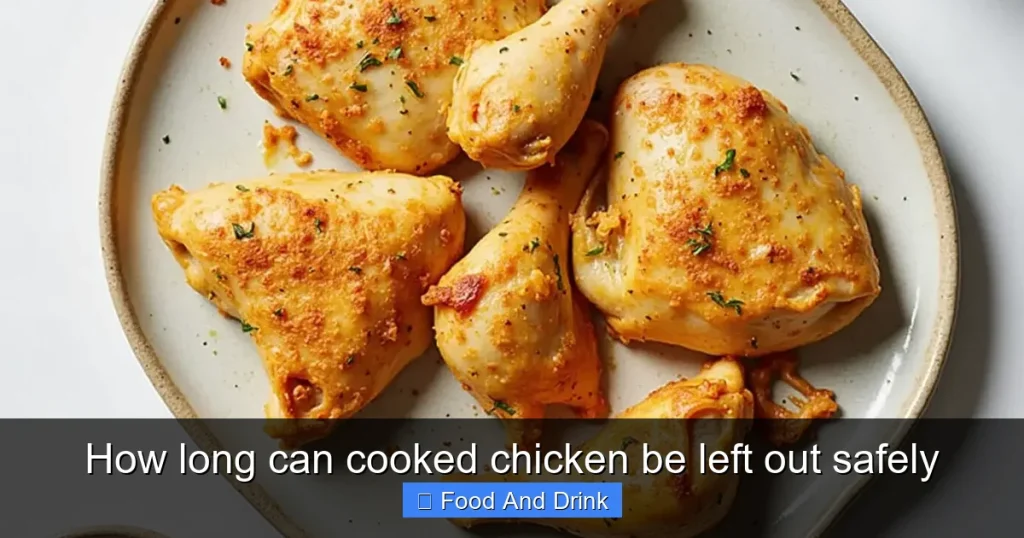

Cooked chicken should never be left out at room temperature for more than 2 hours—or just 1 hour if the ambient temperature is above 90°F (32°C). Bacteria like Salmonella and E. coli multiply rapidly in the “danger zone” between 40°F and 140°F, making timely refrigeration essential for food safety.
Key Takeaways
- 2-Hour Rule: Cooked chicken must be refrigerated within 2 hours of cooking to prevent bacterial growth.
- 1-Hour Rule in Heat: If the room temperature is 90°F or higher (like in summer or near a stove), discard chicken left out for more than 1 hour.
- Danger Zone Awareness: Bacteria thrive between 40°F and 140°F—this is why prompt cooling and storage matter.
- Signs of Spoilage: Watch for sour smell, slimy texture, or grayish-green discoloration—these indicate spoilage.
- Safe Reheating: Reheat leftover chicken to an internal temperature of 165°F to kill any potential bacteria.
- Proper Storage Tips: Store in shallow, airtight containers and place on the top shelf of the fridge to cool quickly and evenly.
- When in Doubt, Throw It Out: If you’re unsure how long the chicken was left out, it’s safer to discard it than risk food poisoning.
Quick Answers to Common Questions
Can I eat cooked chicken that was left out for 3 hours?
No, it’s not safe. Cooked chicken left out for more than 2 hours (or 1 hour in hot weather) should be discarded due to the risk of bacterial growth.
How can I tell if cooked chicken is spoiled?
Look for a sour smell, slimy texture, discoloration, or mold. If any of these are present, do not eat the chicken.
Is it safe to refrigerate hot chicken right away?
Yes, it’s safe and recommended. Use shallow containers to help it cool quickly and prevent bacterial growth.
Can I reheat chicken more than once?
It’s best to reheat only once. Repeated heating and cooling increases the risk of foodborne illness.
How long does cooked chicken last in the fridge?
Cooked chicken can be safely stored in the refrigerator for 3 to 4 days if properly sealed and cooled.
📑 Table of Contents
- How Long Can Cooked Chicken Be Left Out Safely?
- Understanding the “Danger Zone” and Bacterial Growth
- The 2-Hour Rule: When to Refrigerate Cooked Chicken
- Signs That Cooked Chicken Has Gone Bad
- Safe Storage and Reheating Practices
- Common Mistakes People Make with Cooked Chicken
- Food Safety Tips for Different Situations
- Conclusion: Prioritize Safety Over Convenience
How Long Can Cooked Chicken Be Left Out Safely?
Imagine this: You’ve just finished a delicious family dinner. The grilled chicken was a hit, and now you’re clearing the table. You toss the leftovers into a container, but you get distracted—maybe by a phone call, helping with homework, or just relaxing on the couch. Before you know it, two hours have passed. Is that chicken still safe to eat?
This is a common scenario, and one that raises an important food safety question: How long can cooked chicken be left out safely? The short answer is: no more than two hours at room temperature. But there’s more to the story. Understanding the science behind food spoilage, the risks of bacterial growth, and proper storage techniques can help you keep your meals safe and your family healthy.
Chicken is one of the most popular proteins in kitchens around the world. It’s versatile, affordable, and packed with protein. But it’s also highly perishable—especially after cooking. Unlike raw chicken, which is handled with care to avoid cross-contamination, cooked chicken becomes a breeding ground for bacteria if not stored properly. The key is knowing when to refrigerate it and how to recognize when it’s no longer safe to eat.
In this guide, we’ll explore the science of food safety, break down the “danger zone,” and give you practical tips to handle cooked chicken safely. Whether you’re meal prepping for the week, hosting a backyard barbecue, or simply saving leftovers, this information will help you make smart, safe choices.
Understanding the “Danger Zone” and Bacterial Growth
Visual guide about How long can cooked chicken be left out safely
Image source: jonasrecipes.com
To understand why timing matters so much with cooked chicken, you need to know about the “danger zone.” This term refers to the temperature range between 40°F and 140°F (4°C to 60°C)—the sweet spot where bacteria grow most rapidly.
Most harmful bacteria, including Salmonella, E. coli, and Campylobacter, thrive in this range. When cooked chicken sits at room temperature, it quickly falls into this danger zone. Even though the chicken was safely cooked to 165°F (the temperature that kills most bacteria), it doesn’t stay sterile. Bacteria from the air, utensils, or hands can recontaminate it.
Once bacteria land on the warm chicken, they begin multiplying—fast. Under ideal conditions, some bacteria can double every 20 minutes. That means a single bacterium can become over 1 million in just a few hours. This exponential growth is why leaving chicken out too long can turn a safe meal into a health hazard.
Why Chicken Is Especially Risky
Chicken is particularly vulnerable because it’s a nutrient-rich food with high moisture content—perfect for bacterial growth. Even if the chicken was handled safely during cooking, improper storage afterward can undo all that effort.
For example, imagine you grilled chicken breasts for dinner. You let them rest for 10 minutes (which is fine), but then you leave them on the counter while you clean up. If your kitchen is around 75°F, the chicken will cool to the danger zone within 30 minutes. After two hours, it’s likely teeming with bacteria—even if it still looks and smells fine.
The Role of Time and Temperature
Time and temperature work together. The longer chicken stays in the danger zone, the greater the risk. That’s why food safety experts emphasize the “2-hour rule”: refrigerate cooked chicken within two hours of cooking.
But temperature matters too. In hot environments—like a summer kitchen or a picnic on a 95°F day—bacteria multiply even faster. In these cases, the safe window shrinks to just one hour. This is known as the “1-hour rule” for high-heat conditions.
Think of it like this: leaving chicken out on a hot day is like leaving ice cream in the sun. It doesn’t take long to go bad. The same principle applies to perishable foods.
The 2-Hour Rule: When to Refrigerate Cooked Chicken

Visual guide about How long can cooked chicken be left out safely
Image source: simplychickenrecipe.com
The 2-hour rule is a cornerstone of food safety. It means that cooked chicken should be refrigerated within two hours of being removed from the heat source. This rule applies whether the chicken was roasted, grilled, fried, or boiled.
Why two hours? Because that’s the maximum time most bacteria need to reach dangerous levels. After two hours at room temperature, the risk of foodborne illness increases significantly.
Let’s say you cook a whole roasted chicken for Sunday dinner. You carve it up and serve it, but the leftovers sit on the counter while you chat with family. If you don’t refrigerate them within two hours, you’re taking a risk. Even if the chicken still looks fresh, it may already be contaminated.
Exceptions to the Rule
There are a few exceptions. If the ambient temperature is above 90°F (32°C)—common in summer kitchens, outdoor events, or poorly ventilated spaces—the safe window drops to one hour. This is because heat accelerates bacterial growth.
For example, if you’re hosting a backyard BBQ and the thermometer hits 95°F, don’t leave the grilled chicken out for more than 60 minutes. The same goes for picnics, potlucks, or tailgating events. Bring a cooler with ice packs to keep food safe.
Another exception is if the chicken is still hot. If it’s just come off the grill and is still steaming, it’s technically above the danger zone. But as soon as it starts to cool, it enters the danger zone. So don’t wait for it to cool completely before refrigerating. Instead, transfer it to shallow containers to speed up cooling.
Practical Tips for Following the 2-Hour Rule
Here are some easy ways to stay on track:
– Set a timer when you finish cooking. When it goes off, put the chicken in the fridge.
– Divide large portions into smaller containers. This helps them cool faster.
– Don’t leave chicken in the cooking pot. Transfer it to shallow, airtight containers.
– If you’re at a party, keep perishable foods in a cooler with ice, not on the buffet table.
Remember: when in doubt, throw it out. It’s better to lose a little food than risk food poisoning.
Signs That Cooked Chicken Has Gone Bad
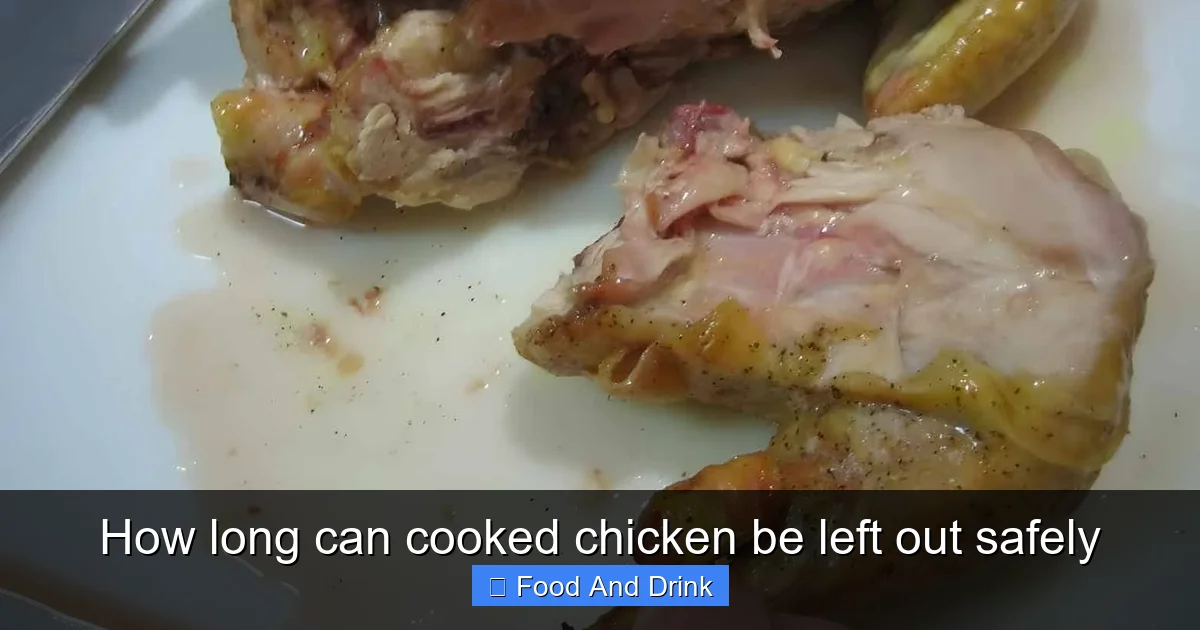
Visual guide about How long can cooked chicken be left out safely
Image source: simplychickenrecipe.com
Even if you follow the 2-hour rule, it’s important to know how to spot spoiled chicken. Sometimes, food can go bad faster than expected—due to high temperatures, cross-contamination, or improper storage.
Here are the most common signs that cooked chicken is no longer safe to eat:
1. Unpleasant Smell
Fresh cooked chicken should have a mild, neutral odor. If it smells sour, sulfur-like, or just “off,” it’s likely spoiled. Trust your nose—it’s one of the best tools for detecting food spoilage.
For example, if your leftover chicken curry starts to smell like rotten eggs, don’t eat it. That’s a clear sign of bacterial growth.
2. Slimy or Sticky Texture
When you touch cooked chicken, it should feel firm and slightly moist. If it feels slimy, sticky, or tacky, that’s a red flag. This slime is caused by bacterial colonies forming on the surface.
Don’t rinse it off—that won’t help. Once the texture changes, the chicken is unsafe.
3. Discoloration
Cooked chicken should be white or light brown, depending on the cut and cooking method. If you notice gray, green, or blue spots, it’s spoiled. These colors indicate mold or bacterial growth.
For instance, if your grilled chicken breast turns gray around the edges, it’s time to toss it.
4. Mold Growth
Mold is a clear sign of spoilage. It can appear as fuzzy spots in white, green, black, or blue. Even if the mold is only on one part, don’t cut it off and eat the rest. Mold can produce invisible toxins that spread throughout the food.
5. Sour or Bitter Taste
If you take a small bite and it tastes sour, bitter, or metallic, spit it out immediately. These flavors indicate chemical changes from spoilage.
Never taste food to check if it’s safe—this can expose you to harmful bacteria.
Safe Storage and Reheating Practices
Proper storage and reheating are just as important as following the 2-hour rule. Here’s how to keep your cooked chicken safe from fridge to plate.
Storing Cooked Chicken in the Refrigerator
Once you’ve refrigerated the chicken, store it in the coldest part of the fridge—usually the back of the bottom shelf. Use airtight containers or resealable bags to prevent contamination and odors.
Shallow containers are best because they allow the chicken to cool quickly and evenly. Avoid stacking large portions, as this traps heat and slows cooling.
Cooked chicken can be safely stored in the refrigerator for 3 to 4 days. Label the container with the date so you know when to use it.
Freezing for Long-Term Storage
If you won’t eat the chicken within 4 days, freeze it. Cooked chicken freezes well for up to 4 months. Wrap it tightly in freezer-safe bags or containers to prevent freezer burn.
When you’re ready to eat it, thaw it in the refrigerator—not on the counter. This prevents bacterial growth during thawing.
Reheating Leftover Chicken Safely
When reheating, always bring the chicken to an internal temperature of 165°F. This ensures any bacteria that may have grown during storage are killed.
Use a food thermometer to check the temperature. Don’t rely on color or texture—those aren’t reliable indicators.
You can reheat chicken in the oven, microwave, or on the stovetop. If using a microwave, cover the chicken and stir it halfway through to ensure even heating.
Avoid reheating chicken more than once. Each time it goes through the danger zone, the risk increases.
Common Mistakes People Make with Cooked Chicken
Even experienced cooks make mistakes. Here are some common errors that can lead to foodborne illness:
1. Letting Chicken Cool Completely Before Refrigerating
Some people think they should wait for chicken to cool to room temperature before putting it in the fridge. But this can take hours—and that’s time the chicken spends in the danger zone.
Instead, transfer hot chicken to shallow containers and refrigerate it right away. The fridge will cool it safely.
2. Storing Chicken in Large Portions
Putting a whole roasted chicken in one big container traps heat and slows cooling. Divide it into smaller portions so it cools faster.
3. Leaving Chicken Out During Parties
Buffet tables are risky. Perishable foods should not sit out for more than 2 hours. Use chafing dishes with heat sources or ice trays to keep food at safe temperatures.
4. Reheating Without Checking Temperature
Just because chicken looks hot doesn’t mean it’s safe. Always use a thermometer to ensure it reaches 165°F.
5. Ignoring Expiration Dates
Even refrigerated chicken doesn’t last forever. Stick to the 3- to 4-day rule, and don’t eat it past that window—even if it looks fine.
Food Safety Tips for Different Situations
Different scenarios require different approaches. Here’s how to handle cooked chicken safely in various settings.
At Home
– Refrigerate leftovers within 2 hours.
– Use airtight containers.
– Label with dates.
– Reheat to 165°F.
At a Picnic or Outdoor Event
– Keep chicken in a cooler with ice packs.
– Don’t leave it out for more than 1 hour if it’s above 90°F.
– Use insulated containers to maintain temperature.
When Meal Prepping
– Cook and cool chicken quickly.
– Portion into individual servings.
– Freeze what you won’t eat in 4 days.
– Thaw in the fridge, not on the counter.
When Traveling
– Use a portable cooler.
– Pack ice packs or frozen gel packs.
– Keep the cooler in the air-conditioned part of the car, not the hot trunk.
Conclusion: Prioritize Safety Over Convenience
Cooked chicken is delicious, nutritious, and convenient—but only if handled safely. The question “How long can cooked chicken be left out safely?” has a clear answer: no more than 2 hours at room temperature, or 1 hour if it’s hot outside.
Bacteria grow fast, and foodborne illness is no joke. Symptoms like nausea, vomiting, diarrhea, and fever can last for days and, in severe cases, require hospitalization. By following the 2-hour rule, storing chicken properly, and reheating it to 165°F, you can enjoy your meals without worry.
Remember: when in doubt, throw it out. It’s better to lose a little food than risk your health. With a few simple habits, you can keep your family safe and your meals delicious.
🎥 Related Video: Can I leave cooked chicken out overnight?
📺 Health·WHYS
Can I Leave Cooked Chicken Out Overnight? ———- James Webb (2022, August 3.) Can I leave cooked chicken out overnight?
Frequently Asked Questions
Can I leave cooked chicken out overnight?
No, never leave cooked chicken out overnight. Bacteria can multiply to dangerous levels after just a few hours at room temperature.
What temperature should cooked chicken be stored at?
Cooked chicken should be stored in the refrigerator at or below 40°F (4°C) to slow bacterial growth.
Can I freeze cooked chicken?
Yes, cooked chicken can be frozen for up to 4 months. Use airtight, freezer-safe containers or bags to prevent freezer burn.
Is it safe to eat cold cooked chicken?
Yes, as long as it was properly stored in the refrigerator and hasn’t been left out too long. Cold chicken is safe to eat if it smells and looks fresh.
Can I reheat chicken in the microwave?
Yes, you can reheat chicken in the microwave. Cover it, stir halfway through, and use a food thermometer to ensure it reaches 165°F.
What should I do if I accidentally ate spoiled chicken?
Monitor for symptoms like nausea, vomiting, or diarrhea. If symptoms are severe or last more than a day, seek medical attention.


