

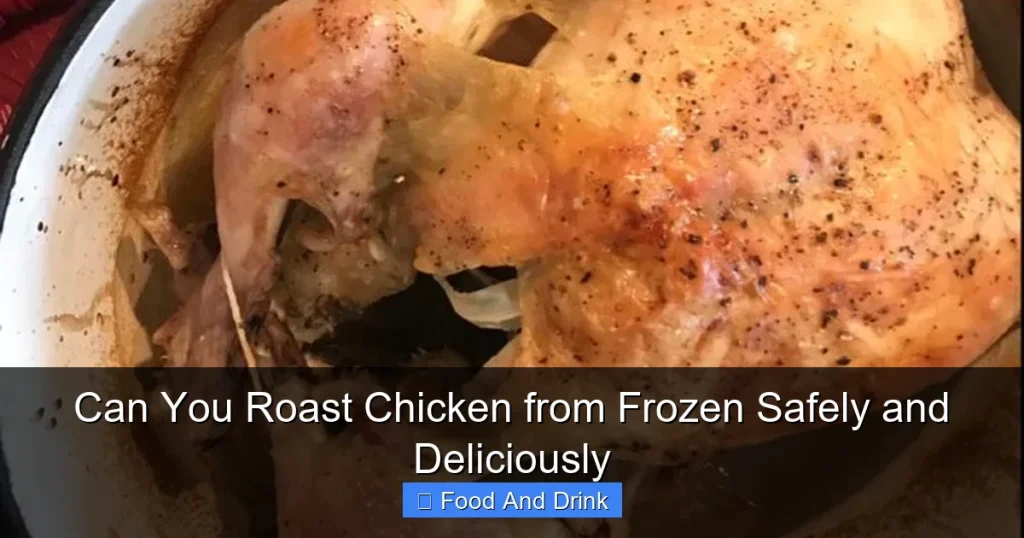

Yes, you can roast chicken from frozen—safely and deliciously—with the right techniques. While it takes longer than thawing first, roasting from frozen reduces prep time and locks in moisture when done correctly. With proper temperature control and timing, you’ll get juicy, golden-brown chicken every time.
Key Takeaways
- You can roast chicken from frozen safely: As long as you follow food safety guidelines and use a meat thermometer, frozen chicken can be roasted without thawing.
- Cooking time increases significantly: Expect to add 50% more time—about 1.5 times longer—than cooking thawed chicken.
- Use lower oven temperatures: Roast at 325°F (163°C) instead of 375°F (191°C) to prevent the outside from burning before the inside cooks through.
- Always check internal temperature: The safest way to ensure doneness is by using a meat thermometer; chicken is safe at 165°F (74°C).
- Season after partial cooking: For better flavor absorption, add herbs, spices, and oil after the first 30–45 minutes of roasting.
- Rest the chicken before carving: Letting it rest for 10–15 minutes helps redistribute juices for a more tender bite.
- Thawing is still preferred for even cooking: While possible from frozen, thawing first yields more consistent results and crispier skin.
Quick Answers to Common Questions
Can you roast a whole chicken from frozen?
Yes, you can safely roast a whole chicken from frozen by cooking it at a lower temperature (325°F) for about 1.5 times longer than a thawed chicken, and always checking that the internal temperature reaches 165°F.
How long does it take to roast a 4-pound frozen chicken?
A 4-pound frozen chicken typically takes 2 to 2.5 hours to roast at 325°F. Always use a meat thermometer to confirm doneness.
Do you need to thaw chicken before roasting?
No, thawing is not required. You can roast chicken from frozen safely, though thawing first allows for more even cooking and crispier skin.
Can you season frozen chicken before roasting?
It’s best to wait until the chicken has partially thawed (after 30–45 minutes in the oven) before seasoning, so the flavors can penetrate the meat.
Is it safe to eat chicken roasted from frozen?
Yes, as long as it reaches an internal temperature of 165°F (74°C) in the thickest part of the breast, it is safe to eat.
📑 Table of Contents
- Can You Roast Chicken from Frozen Safely and Deliciously?
- Why Roasting from Frozen Is Possible (and Sometimes Practical)
- Food Safety First: The Rules for Cooking Frozen Chicken
- How to Roast Chicken from Frozen: Step-by-Step Guide
- Timing and Temperature: The Key to Perfect Results
- Seasoning and Flavor Tips for Frozen Roast Chicken
- Thawing vs. Roasting from Frozen: Which Is Better?
- Common Mistakes to Avoid When Roasting Frozen Chicken
- Conclusion: Yes, You Can—and It’s Worth It
Can You Roast Chicken from Frozen Safely and Deliciously?
So, you’ve got a whole chicken in the freezer, dinner plans are on the horizon, and you’re wondering: can you roast chicken from frozen? The short answer is yes—you absolutely can. But like most things in cooking, there’s a right way and a not-so-right way to do it.
Roasting a chicken straight from the freezer might sound like a shortcut dream come true. No waiting hours (or overnight) for it to thaw. No last-minute panic when you realize dinner isn’t ready. But it’s not quite as simple as tossing it in the oven and walking away. The key is understanding how frozen meat behaves in the heat and adjusting your method accordingly.
When you roast chicken from frozen, the outer layers begin to cook while the center is still icy. This creates a challenge: how do you get the inside fully cooked without drying out or burning the outside? The good news is, with a few smart tweaks—like lowering the oven temperature, increasing cook time, and using a meat thermometer—you can achieve a juicy, flavorful roast chicken that’s safe to eat and tastes fantastic.
In this guide, we’ll walk you through everything you need to know about roasting chicken from frozen. From food safety basics to seasoning tips and timing tricks, you’ll learn how to turn that icy bird into a golden, aromatic centerpiece for your next meal. Whether you’re short on time or just curious about the process, this method might just become your new go-to.
Why Roasting from Frozen Is Possible (and Sometimes Practical)

Visual guide about Can You Roast Chicken from Frozen Safely and Deliciously
Image source: wikihow.com
At first glance, cooking meat straight from the freezer seems counterintuitive. After all, most recipes call for thawing poultry before cooking. But the USDA and food safety experts agree: you can safely cook chicken from frozen, as long as you follow proper guidelines.
The main reason this works is that bacteria grow most rapidly between 40°F and 140°F (the “danger zone”). When you cook chicken from frozen, it spends less time in that danger zone compared to thawing at room temperature. In fact, cooking from frozen can actually be safer than improper thawing methods like leaving the chicken on the counter.
Another practical benefit? Time. While it sounds contradictory—after all, frozen chicken takes longer to cook—roasting from frozen eliminates the need for thawing, which can take 12–24 hours in the fridge. If you forgot to plan ahead, this method saves you from scrambling for a last-minute dinner solution.
That said, roasting from frozen isn’t always the best choice. It’s ideal for whole chickens or large cuts like bone-in thighs or breasts. Smaller pieces, like boneless chicken breasts, can become overcooked on the outside before the center thaws. But for a whole bird, the method shines.
One real-world example: imagine it’s Sunday afternoon, and you’re craving a classic roast chicken with crispy skin and tender meat. You check the fridge—nothing. But then you remember that whole chicken tucked away in the freezer. Instead of waiting until tomorrow, you decide to roast it from frozen. With the right approach, you can have dinner on the table in under two hours, no thawing required.
Food Safety First: The Rules for Cooking Frozen Chicken

Visual guide about Can You Roast Chicken from Frozen Safely and Deliciously
Image source: wikihow.com
When it comes to cooking frozen chicken, safety is non-negotiable. While the idea of skipping thawing is tempting, you must follow strict food safety practices to avoid the risk of foodborne illness.
The most important rule? Always use a meat thermometer. Visual cues like color or texture aren’t reliable when cooking from frozen. The chicken may look done on the outside while the inside is still undercooked. The only way to know for sure is to check the internal temperature.
According to the USDA, all poultry—including chicken—must reach a minimum internal temperature of 165°F (74°C) to be safe to eat. This applies whether the chicken is fresh, thawed, or frozen. When roasting from frozen, insert the thermometer into the thickest part of the breast, avoiding the bone. If it reads 165°F, it’s safe.
Another key point: don’t rely on oven temperature alone. Even if your oven is set correctly, frozen chicken heats unevenly. The outer layers may reach 165°F while the center is still below 140°F. That’s why extended cooking time and lower heat are essential.
Also, avoid partially cooking frozen chicken and then finishing it later. This can leave the meat in the danger zone for too long, increasing the risk of bacterial growth. Cook it all the way through in one go.
One common mistake? Thinking that because the chicken is frozen, it’s “sterile.” Freezing doesn’t kill bacteria—it just slows their growth. Once the chicken begins to thaw during cooking, those bacteria can multiply rapidly if the temperature isn’t controlled.
To stay safe, always:
– Use a calibrated meat thermometer.
– Cook the chicken to 165°F internally.
– Avoid cross-contamination by washing hands, utensils, and surfaces after handling raw chicken.
– Never refreeze cooked chicken that was roasted from frozen unless it’s been cooled and stored properly.
By following these rules, you can roast chicken from frozen with confidence, knowing your meal is both safe and delicious.
How to Roast Chicken from Frozen: Step-by-Step Guide
Visual guide about Can You Roast Chicken from Frozen Safely and Deliciously
Image source: wikihow.com
Ready to try roasting your chicken from frozen? Here’s a simple, foolproof method that delivers juicy meat and crispy skin—even when starting with an icy bird.
Step 1: Preheat the Oven
Set your oven to 325°F (163°C). This lower temperature is crucial. Higher heat will cause the outside to burn before the inside thaws and cooks through. A slow, steady roast ensures even cooking.
Step 2: Prepare the Chicken
Remove the chicken from its packaging and place it breast-side up in a roasting pan or oven-safe dish. You don’t need to rinse it—rinsing can spread bacteria. If there’s a bag of giblets inside, remove it once the chicken has partially thawed (usually after 30–45 minutes).
Step 3: Season Strategically
Wait to season! Adding salt, herbs, or oil too early can draw moisture out of the frozen surface, leading to dryness. After the first 30–45 minutes of roasting, when the chicken has started to thaw, brush it with olive oil or melted butter and sprinkle with salt, pepper, garlic powder, rosemary, or your favorite seasoning blend.
Step 4: Roast and Monitor
Place the chicken in the oven and roast for about 1.5 times longer than you would for a thawed bird. For a 4-pound (1.8 kg) chicken, expect 2 to 2.5 hours total. Rotate the pan halfway through for even browning.
Step 5: Check the Temperature
About 30 minutes before the estimated finish time, start checking the internal temperature. Insert the thermometer into the thickest part of the breast, avoiding the bone. When it reaches 165°F (74°C), the chicken is safe to eat.
Step 6: Rest Before Serving
Remove the chicken from the oven and let it rest for 10–15 minutes. This allows the juices to redistribute, resulting in more tender and flavorful meat. Cover loosely with foil to keep it warm.
Optional: Crisp the Skin
If the skin isn’t as crispy as you’d like, increase the oven temperature to 425°F (220°C) for the last 10–15 minutes of cooking. Keep a close eye to prevent burning.
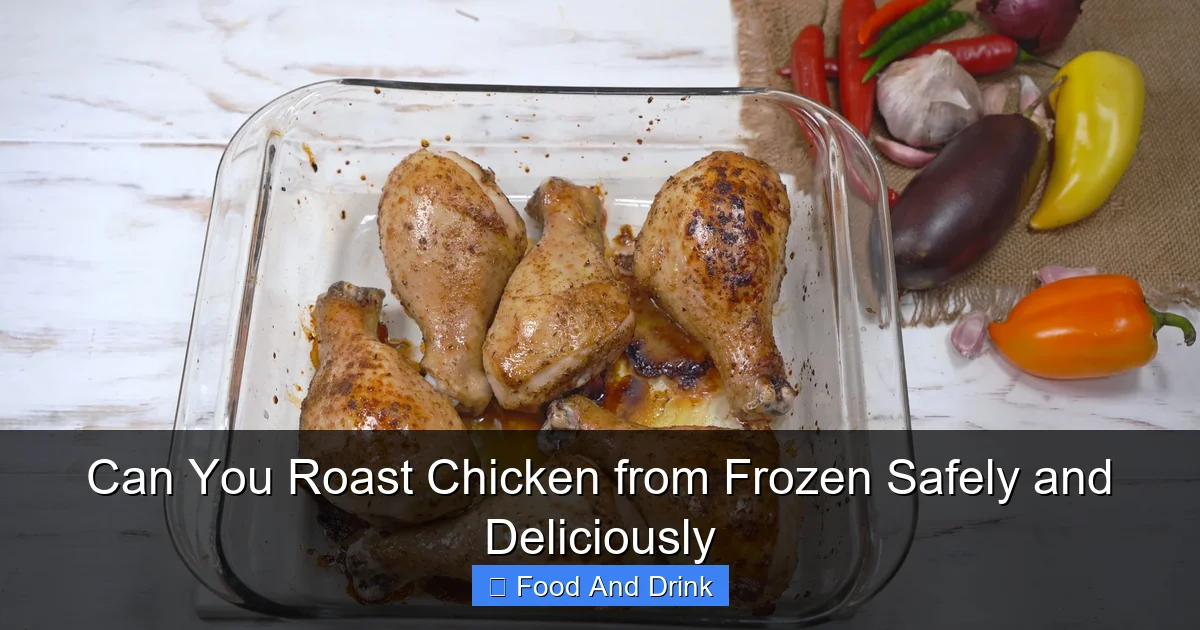
This method works beautifully for whole chickens. For bone-in, skin-on thighs or breasts, adjust the time—usually 60–75 minutes for a 4-pound bird. Always rely on temperature, not time alone.
Timing and Temperature: The Key to Perfect Results
One of the biggest challenges when roasting chicken from frozen is getting the timing right. Since frozen meat takes longer to heat through, you can’t rely on standard cooking times. Here’s how to nail it every time.
As a general rule, add 50% more time than you would for a thawed chicken. For example, if a thawed 4-pound chicken takes about 1 hour and 20 minutes at 375°F, a frozen one will need roughly 2 hours at 325°F. But this is just a starting point.
The real secret? Use a meat thermometer and check early. Start testing the temperature about 30 minutes before your estimated finish time. Insert the probe into the thickest part of the breast, making sure it doesn’t touch the bone. When it reads 165°F, you’re done.
Why lower the temperature? High heat causes the outside to cook too quickly, leading to dry, tough skin and undercooked meat inside. By roasting at 325°F, you give the heat time to penetrate the frozen center without overcooking the exterior.
Another tip: use a roasting rack. Placing the chicken on a rack elevates it above the pan, allowing hot air to circulate underneath. This promotes even cooking and helps crisp the skin.
If you’re short on time and want to speed things up slightly, you can partially thaw the chicken in the microwave using the “defrost” setting. But be careful—don’t let it enter the danger zone. Cook immediately after partial thawing.
Here’s a quick reference for timing:
– 3-pound (1.4 kg) frozen chicken: 1 hour 45 minutes to 2 hours
– 4-pound (1.8 kg) frozen chicken: 2 to 2.5 hours
– 5-pound (2.3 kg) frozen chicken: 2.5 to 3 hours
Remember, these are estimates. Oven performance varies, so always verify with a thermometer.
Seasoning and Flavor Tips for Frozen Roast Chicken
Just because you’re starting with frozen chicken doesn’t mean you have to sacrifice flavor. With a few smart seasoning techniques, you can create a roast that’s aromatic, juicy, and full of depth.
The biggest mistake? Seasoning too early. When you apply salt or oil to a frozen surface, it can’t penetrate the meat. Instead, it sits on top and may draw out moisture as the chicken thaws, leading to dryness.
The solution? Wait until the chicken has started to thaw—usually after 30–45 minutes in the oven. At that point, the surface is damp enough to absorb flavors. Brush the chicken with olive oil, melted butter, or herb-infused oil, then sprinkle with salt, pepper, and your favorite seasonings.
Try these flavor-boosting ideas:
– **Classic Herb Blend:** Rosemary, thyme, garlic powder, salt, and black pepper.
– **Citrus Zest:** Add lemon or orange zest for brightness.
– **Spice Rub:** Smoked paprika, cumin, onion powder, and a touch of cayenne for warmth.
– **Butter and Herbs:** Mix softened butter with minced garlic, parsley, and sage, then spread under the skin for extra juiciness.
For even more flavor, stuff the cavity with aromatics like halved onions, garlic cloves, lemon wedges, or fresh herbs. These won’t directly season the meat, but they’ll infuse the roasting environment with wonderful scents and enhance the overall taste.
Another pro tip: baste the chicken during the last 30 minutes of cooking. Use pan juices or a mix of broth and butter to keep the skin moist and promote browning.
If you’re aiming for extra-crispy skin, pat the chicken dry with paper towels after it thaws slightly. Moisture is the enemy of crispiness, so removing it helps the skin brown and crisp up.
Thawing vs. Roasting from Frozen: Which Is Better?
Now that you know you can roast chicken from frozen, the next question is: should you? While the frozen method is convenient, thawing first still has advantages.
Thawing allows for more even cooking. When chicken is fully thawed, heat penetrates uniformly, reducing the risk of overcooked edges and undercooked centers. It also gives you more control over seasoning—you can brine the chicken, rub it with spices, or marinate it for deeper flavor.
Additionally, thawed chicken roasts faster and at a higher temperature (375°F), which helps achieve that coveted crispy skin. Frozen chicken, roasted at lower heat, often has softer skin unless you finish it at a higher temperature.
That said, roasting from frozen wins on convenience. No planning ahead. No waiting. Just grab, season (after partial thaw), and roast. It’s perfect for busy weeknights or last-minute dinners.
So which is better? It depends on your priorities:
– **Choose thawing** if you want maximum flavor, crispier skin, and more even cooking.
– **Choose frozen roasting** if you’re short on time and want a safe, no-thaw option.
Many home cooks use both methods depending on the situation. And honestly? Once you master roasting from frozen, you might find yourself reaching for that freezer stash more often.
Common Mistakes to Avoid When Roasting Frozen Chicken
Even with the best intentions, it’s easy to make mistakes when roasting chicken from frozen. Here are the most common pitfalls—and how to avoid them.
1. Using Too High Heat
Cranking the oven to 400°F or higher might seem like a shortcut, but it leads to burnt skin and raw meat inside. Stick to 325°F for the majority of the cook time.
2. Not Using a Thermometer
Guessing doneness is risky. Always use a meat thermometer to ensure the chicken reaches 165°F.
3. Seasoning Too Early
Adding salt or oil to a frozen surface won’t enhance flavor and can dry out the meat. Wait until the chicken has thawed slightly.
4. Skipping the Rest Period
Cutting into the chicken immediately after roasting lets all the juices escape. Let it rest for 10–15 minutes before carving.
5. Overcrowding the Pan
If you’re roasting vegetables alongside the chicken, don’t pile them too high. They should surround the chicken, not cover it, to allow proper air circulation.
6. Ignoring the Giblets
Don’t forget to check the cavity! Most whole chickens come with a bag of giblets. Remove it once the chicken has thawed enough to access it.
By avoiding these mistakes, you’ll set yourself up for success every time.
Conclusion: Yes, You Can—and It’s Worth It
Roasting chicken from frozen isn’t just possible—it’s a practical, safe, and delicious option when done right. While it requires a bit more time and attention than cooking thawed poultry, the convenience factor is hard to beat. No thawing. No waiting. Just a golden, juicy roast chicken ready when you are.
By following food safety guidelines, using a meat thermometer, and adjusting your cooking method, you can achieve fantastic results. Lower the oven temperature, increase the cook time, season after partial thawing, and always let the chicken rest. These simple steps make all the difference.
Whether you’re a busy parent, a forgetful planner, or just someone who loves a good roast chicken, this method deserves a spot in your cooking repertoire. So next time you spot that frozen bird in the freezer, don’t hesitate. Toss it in the oven, follow these tips, and enjoy a meal that’s both safe and satisfying.
After all, great food doesn’t always require perfect planning—sometimes, it just requires a little know-how.
Frequently Asked Questions
Can I roast chicken from frozen without a meat thermometer?
It’s not recommended. A meat thermometer is the only reliable way to ensure the chicken has reached a safe internal temperature of 165°F, especially when cooking from frozen.
Will the skin get crispy when roasting from frozen?
The skin may not crisp as well at lower temperatures. For crispier skin, increase the oven to 425°F for the last 10–15 minutes of cooking.
Can I use this method for chicken parts like thighs or breasts?
Yes, but smaller pieces may dry out. Bone-in, skin-on cuts work best. Adjust cooking time to 60–75 minutes and monitor temperature closely.
Should I cover the chicken while roasting from frozen?
No, covering traps steam and prevents browning. Roast uncovered for better color and texture.
Can I add vegetables to the pan when roasting frozen chicken?
Yes, but add them after the first 30–45 minutes, once the chicken has thawed slightly. This prevents the vegetables from overcooking.
What if the chicken is still partially frozen in the center after cooking?
If the internal temperature hasn’t reached 165°F, return it to the oven and continue cooking, checking every 10–15 minutes until done.


