



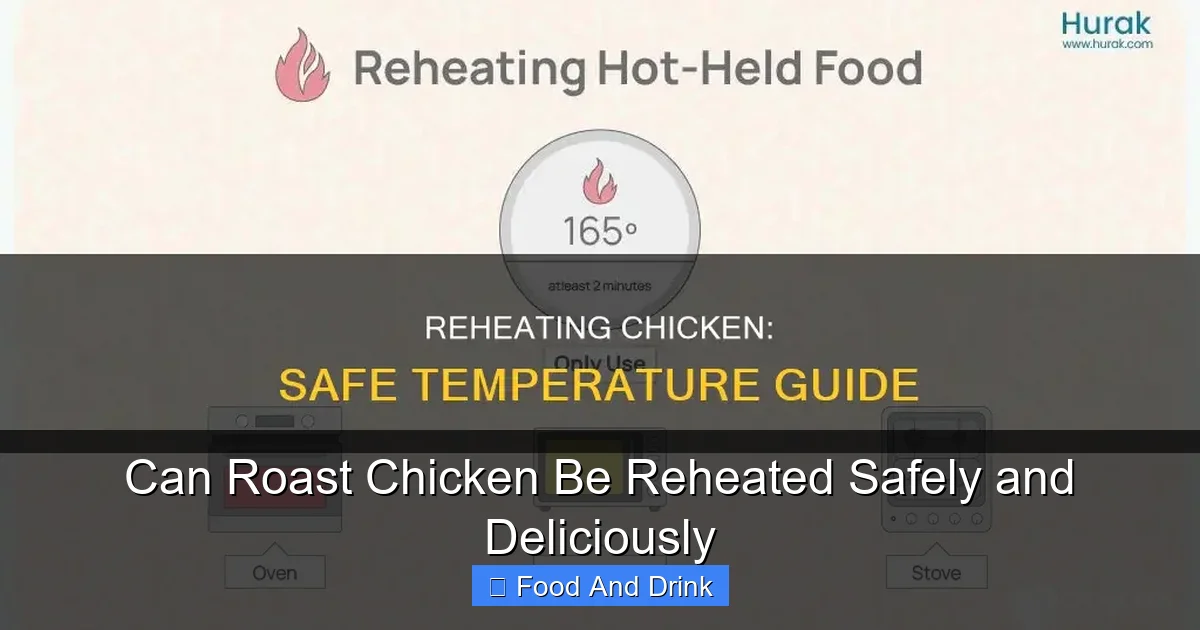
Yes, roast chicken can be reheated safely and deliciously when done correctly. Using the right method—like oven reheating, stovetop, or air fryer—helps preserve moisture and flavor. Always ensure it reaches 165°F internally to avoid foodborne illness.
Key Takeaways
- Yes, roast chicken can be reheated: It’s safe and tasty when done properly using methods like oven, stovetop, or air fryer.
- Reheat to 165°F internal temperature: This ensures food safety and kills harmful bacteria.
- Use moisture to prevent dryness: Add broth, water, or cover with foil to keep the meat juicy.
- Avoid the microwave for whole pieces: It can make meat rubbery; use it only for shredded or sliced chicken.
- Store properly before reheating: Refrigerate within 2 hours and consume within 3–4 days for best quality.
- Air fryer gives crispy skin: A great option for restoring texture without drying out the meat.
- Never reheat more than once: Repeated heating increases the risk of bacterial growth and texture loss.
Quick Answers to Common Questions
Can I reheat roast chicken in the microwave?
Yes, but it’s best for small portions like shredded or sliced chicken. Add moisture and cover with a damp paper towel to prevent drying.
How long can I store roast chicken before reheating?
Store in the refrigerator for up to 3–4 days. For longer storage, freeze for up to 4 months.
What temperature should reheated chicken reach?
Reheated chicken should reach an internal temperature of 165°F (74°C) to ensure it’s safe to eat.
Can I reheat a whole roast chicken?
Yes, use the oven method: 325°F with broth and foil, then crisp the skin at the end.
Is it safe to reheat chicken more than once?
No, reheating more than once increases the risk of bacterial growth and texture loss. Only reheat once.
📑 Table of Contents
Can Roast Chicken Be Reheated Safely and Deliciously?
So, you’ve made a big, juicy roast chicken—maybe for Sunday dinner or a holiday feast. It smelled amazing, tasted even better, and now you’ve got leftovers. The big question: Can roast chicken be reheated without turning into dry, rubbery disappointment? The short answer is yes—absolutely. But like anything in the kitchen, it’s all about how you do it.
Reheating roast chicken isn’t just about warming it up. It’s about bringing back that golden, crispy skin, tender meat, and rich flavor you enjoyed the first time. And more importantly, it’s about doing it safely. Nobody wants food poisoning from improperly handled leftovers. The good news? With a few smart techniques, you can enjoy your roast chicken again—almost as good as the first time.
Whether you’re reheating a whole chicken, a few drumsticks, or a sliced breast, the key is moisture and temperature control. Dry heat can zap the juices, while too much steam can make the skin soggy. But when you strike the right balance, reheated roast chicken can be just as satisfying as the original. In this guide, we’ll walk you through the safest and most delicious ways to reheat roast chicken, so you can enjoy every last bite—without the risk.
Why Reheating Roast Chicken Can Be Tricky

Visual guide about Can Roast Chicken Be Reheated Safely and Deliciously
Image source: i.pinimg.com
At first glance, reheating roast chicken seems simple: just warm it up and eat. But anyone who’s tried it knows it’s not that easy. The biggest challenge? Keeping the meat moist and flavorful while ensuring it’s safe to eat. Roast chicken, especially the breast meat, has a tendency to dry out when reheated. The skin, once crispy and golden, can turn limp or rubbery. And if you’re not careful, you might end up with a meal that’s either undercooked in the middle or overcooked on the edges.
Another issue is texture. When chicken cools, the proteins tighten and moisture escapes. Reheating can push out even more liquid, leaving you with dry, stringy meat. And if you use the wrong method—like nuking it in the microwave—you might end up with a rubbery, unappetizing mess. That’s why it’s crucial to choose the right reheating technique based on the type of chicken you’re working with.
But it’s not just about taste and texture. Safety is a major concern too. Chicken is a high-risk food when it comes to bacteria like Salmonella and Campylobacter. If it’s not stored or reheated properly, these bacteria can multiply and cause foodborne illness. That’s why understanding the science behind safe reheating is just as important as mastering the art of flavor preservation.
The Science of Reheating Cooked Chicken
When chicken is cooked, its proteins denature and coagulate, trapping moisture inside. As it cools, some of that moisture evaporates, and the proteins begin to tighten again. Reheating reverses this process—but only if done gently. High heat or rapid reheating can cause proteins to squeeze out even more moisture, leading to dryness.
The ideal reheating temperature is 165°F (74°C), which is the safe internal temperature recommended by the USDA. This ensures any harmful bacteria are killed. But reaching that temperature evenly without overcooking the edges is the real challenge. That’s why methods that use indirect or moist heat—like oven reheating with broth or stovetop steaming—are often more effective than dry, high-heat options.
Another factor is fat content. Dark meat (like thighs and drumsticks) has more fat and collagen, which helps it stay juicy during reheating. White meat (like breast) is leaner and more prone to drying out. So, if you’re reheating a mix of cuts, you might need to adjust your method to protect the breast meat.
Common Mistakes to Avoid
One of the most common mistakes people make is reheating chicken straight from the fridge without letting it come to room temperature first. Cold chicken reheats unevenly—the outside might get hot while the inside stays cold. This not only affects texture but can also create cold spots where bacteria might survive.
Another mistake is using high heat too quickly. Whether it’s the microwave, oven, or stovetop, blasting the chicken with heat can cause it to dry out or cook unevenly. Instead, slow and steady wins the race. Gentle reheating preserves moisture and ensures even temperature distribution.
And then there’s the issue of over-reheating. Some people think that if a little heat is good, more is better. But reheating chicken more than once increases the risk of bacterial growth and texture breakdown. Always aim to reheat only the portion you plan to eat, and never reheat the same piece twice.
Best Methods to Reheat Roast Chicken
Visual guide about Can Roast Chicken Be Reheated Safely and Deliciously
Image source: cychicken.com
Now that we know the challenges, let’s talk solutions. There are several effective ways to reheat roast chicken, each with its own advantages depending on your time, tools, and desired outcome. The best method for you will depend on whether you’re reheating a whole chicken, individual pieces, or shredded meat.
The goal is always the same: bring the chicken to 165°F internally while preserving moisture, flavor, and texture. Below are the top methods, ranked by effectiveness and ease of use.
1. Oven Reheating (Best for Whole or Large Pieces)
The oven is often considered the gold standard for reheating roast chicken. It provides even, gentle heat that warms the meat without drying it out. It’s especially great for whole chickens or large cuts like breasts and thighs.
To reheat in the oven:
– Preheat your oven to 325°F (163°C). This lower temperature prevents overcooking.
– Place the chicken in a baking dish. If you’re reheating a whole bird, arrange it breast-side up.
– Add moisture: Pour a few tablespoons of chicken broth, water, or white wine into the dish. This creates steam and helps keep the meat juicy.
– Cover the dish tightly with aluminum foil. This traps steam and prevents the surface from drying out.
– Reheat for 20–30 minutes, depending on size. Use a meat thermometer to check that the internal temperature reaches 165°F.
– For crispy skin, remove the foil during the last 5–10 minutes and increase the heat to 375°F (190°C).
Tip: If you’re reheating sliced or shredded chicken, mix it with a little broth or gravy before covering. This adds flavor and moisture.
2. Stovetop (Great for Shredded or Sliced Chicken)
The stovetop is perfect for smaller portions or when you want to add extra flavor. It’s especially useful for shredded chicken that you plan to use in tacos, sandwiches, or casseroles.
To reheat on the stovetop:
– Heat a skillet or frying pan over medium-low heat.
– Add a small amount of oil, butter, or broth to prevent sticking.
– Add the chicken and stir occasionally. If it’s dry, splash in a bit more liquid.
– Cover the pan with a lid to trap steam and help reheat evenly.
– Cook for 5–10 minutes, or until the chicken reaches 165°F internally.
This method works well because it allows you to control the heat and add moisture as needed. Plus, you can deglaze the pan with broth or wine to create a quick sauce.
3. Air Fryer (Best for Crispy Skin)
If you love crispy skin, the air fryer is your best friend. It reheats chicken quickly while restoring that satisfying crunch. It’s ideal for individual pieces like drumsticks, wings, or sliced breast.
To reheat in an air fryer:
– Preheat the air fryer to 350°F (177°C).
– Place the chicken in the basket in a single layer. Don’t overcrowd.
– Lightly spray or brush the chicken with oil to help crisp the skin.
– Reheat for 3–5 minutes, flipping halfway through.
– Check the internal temperature with a meat thermometer.
The air fryer’s circulating hot air crisps the skin without drying out the meat, especially if you don’t overcook it. Just keep an eye on it—air fryers work fast.
4. Microwave (Quick but Risky)
The microwave is the fastest option, but it’s also the most likely to produce dry, rubbery chicken. However, with a few tricks, you can make it work—especially for small portions.
To microwave safely:
– Place the chicken on a microwave-safe plate.
– Add a tablespoon of broth, water, or gravy to the dish.
– Cover with a damp paper towel or microwave-safe lid to trap steam.
– Heat in 30-second intervals, checking the temperature each time.
– Stop when the internal temperature reaches 165°F.
Avoid reheating large pieces or whole chickens in the microwave. It heats unevenly and can leave cold spots. This method is best for shredded or diced chicken.
5. Sous Vide (For Precision Reheating)
If you have a sous vide machine, you can reheat chicken with restaurant-level precision. This method ensures even heating without overcooking.
To reheat sous vide:
– Set the water bath to 140°F (60°C) for moist reheating or 150°F (66°C) for firmer texture.
– Vacuum-seal the chicken in a bag with a splash of broth or butter.
– Submerge and reheat for 30–45 minutes.
– Finish under a broiler or in a hot skillet for crispy skin.
Sous vide is overkill for most home cooks, but it’s perfect if you want perfectly juicy reheated chicken every time.
How to Store Roast Chicken Before Reheating

Visual guide about Can Roast Chicken Be Reheated Safely and Deliciously
Image source: thedailymeal.com
Proper storage is just as important as reheating when it comes to food safety and quality. If you don’t store your roast chicken correctly, no reheating method will save it.
Cooling and Refrigerating
After cooking, let the chicken cool for no more than 2 hours at room temperature. Bacteria grow rapidly between 40°F and 140°F (the “danger zone”), so don’t leave it out longer. Once cooled, transfer it to an airtight container or wrap it tightly in plastic wrap or foil.
Store in the refrigerator at 40°F or below. Roast chicken will stay fresh for 3–4 days. Label the container with the date so you know when to eat it.
Freezing for Long-Term Storage
If you won’t eat the chicken within a few days, freeze it. Freezing stops bacterial growth and preserves quality for up to 4 months.
To freeze:
– Let the chicken cool completely.
– Remove meat from the bones if desired (easier to store and reheat).
– Place in a freezer-safe bag or container. Remove as much air as possible.
– Label with the date.
When ready to eat, thaw in the refrigerator overnight before reheating. Never thaw at room temperature.
Portioning for Easy Reheating
To make reheating easier, consider portioning the chicken before storing. Separate breasts, thighs, and drumsticks into individual servings. This way, you only reheat what you need, reducing waste and preserving quality.
You can also shred the meat and store it in small containers for quick meals like tacos, salads, or soups.
Safety Tips for Reheating Roast Chicken
Food safety should always come first. Even the best reheating method won’t help if the chicken was mishandled before or after cooking.
Check the Temperature
Always use a food thermometer to check the internal temperature of reheated chicken. It should reach 165°F (74°C) in the thickest part, such as the breast or thigh. Don’t rely on color or texture—these aren’t reliable indicators of doneness.
Don’t Reheat More Than Once
Reheating chicken multiple times increases the risk of bacterial growth and texture loss. Only reheat the portion you plan to eat. If you have leftovers after reheating, it’s safer to discard them than to reheat again.
Watch for Signs of Spoilage
Before reheating, check for signs that the chicken has gone bad:
– Slimy or sticky texture
– Sour or off smell
– Discoloration (gray or greenish hues)
If you notice any of these, throw it out—even if it’s been stored properly.
Keep Hot Foods Hot
Once reheated, keep the chicken at 140°F or above until serving. If you’re not eating it right away, use a warming tray or keep it in a low oven (200°F).
Creative Ways to Use Reheated Roast Chicken
Reheated roast chicken doesn’t have to be boring. With a little creativity, you can turn leftovers into exciting new meals.
Chicken Salad
Shred the reheated chicken and mix it with mayo, celery, grapes, and herbs. Serve on bread, crackers, or lettuce wraps.
Chicken Tacos
Warm the chicken in a skillet with taco seasoning and a splash of broth. Serve in tortillas with salsa, avocado, and cheese.
Chicken Soup or Stew
Add shredded chicken to a pot of broth with vegetables, noodles, or rice. Simmer until heated through for a comforting meal.
Chicken Pot Pie
Mix reheated chicken with gravy, peas, and carrots. Top with pie crust and bake until golden.
Chicken Quesadillas
Layer shredded chicken, cheese, and veggies between tortillas. Cook in a skillet until crispy and melted.
These ideas not only reduce food waste but also give your roast chicken a delicious second life.
Conclusion
So, can roast chicken be reheated safely and deliciously? Absolutely. With the right method—whether it’s the oven, stovetop, air fryer, or even sous vide—you can enjoy your leftover roast chicken without sacrificing flavor or safety. The key is to reheat gently, add moisture, and always check the internal temperature.
Remember to store your chicken properly, reheat only what you need, and never reheat more than once. And don’t be afraid to get creative with your leftovers. From tacos to soups, there are countless ways to enjoy reheated roast chicken.
Next time you roast a chicken, don’t think of the leftovers as a chore. Think of them as an opportunity to create something new and delicious. With these tips, you’ll never have to settle for dry, rubbery reheated chicken again.
Frequently Asked Questions
Can I reheat frozen roast chicken?
Yes, but thaw it in the refrigerator first. Reheat using the oven or stovetop method for best results.
Why does my reheated chicken taste dry?
This usually happens due to overcooking or lack of moisture. Use broth, cover with foil, and reheat gently.
Can I reheat chicken with the skin on?
Yes, and it’s recommended. The skin helps retain moisture. Use the oven or air fryer for crispy results.
How do I know if reheated chicken is safe to eat?
Check the internal temperature with a meat thermometer. It should read 165°F in the thickest part.
Can I reheat chicken in a slow cooker?
Yes, but it’s not ideal. Use low heat and add liquid to prevent drying. Monitor closely to avoid overcooking.
What’s the best way to reheat chicken for a sandwich?
Warm sliced chicken in a skillet with a little broth or butter. This keeps it moist and flavorful for sandwiches.


