


You can eat canned chicken straight from the can, but cooking it enhances flavor, texture, and safety. While it’s pre-cooked during processing, heating it up makes meals tastier and more satisfying—especially in recipes like casseroles, soups, or sandwiches.
Key Takeaways
- Canned chicken is safe to eat straight from the can: It’s fully cooked during the canning process, so no additional cooking is required for safety.
- Cooking improves taste and texture: Heating canned chicken reduces any metallic aftertaste and makes it blend better into hot dishes.
- Great for quick meals: Use it in salads, tacos, pasta, or scrambles when you’re short on time but still want protein.
- Check the label for added ingredients: Some brands include broth, salt, or preservatives—choose low-sodium or no-salt-added versions when possible.
- Store properly after opening: Refrigerate leftovers in a sealed container and use within 3–4 days.
- Not all canned meats are equal: Look for high-quality brands that use real chicken breast with minimal processing.
- Cooking reduces risk of spoilage: While rare, reheating helps kill any potential bacteria that may have entered after opening.
Quick Answers to Common Questions
Can I eat canned chicken cold?
Yes! Canned chicken is fully cooked and safe to eat straight from the can. However, many people prefer to heat it for better flavor and texture.
Does canned chicken need to be cooked?
No, it doesn’t need to be cooked for safety reasons. But cooking it improves taste, texture, and integration into hot dishes.
How long does opened canned chicken last?
Store leftovers in a sealed container in the fridge and use within 3–4 days. Do not leave it at room temperature for more than 2 hours.
Is canned chicken healthy?
It can be! Choose low-sodium, 100% real chicken options with minimal additives. It’s a great source of lean protein and convenient for quick meals.
Can I freeze canned chicken?
Yes, you can freeze cooked canned chicken in an airtight container for up to 2 months. Thaw in the fridge before reheating.
📑 Table of Contents
- Can You Eat Canned Chicken Straight from the Can?
- How Is Canned Chicken Made?
- Is It Safe to Eat Canned Chicken Without Cooking?
- Why You Might Want to Cook Canned Chicken Anyway
- Best Ways to Cook Canned Chicken
- Creative Recipes Using Canned Chicken
- Choosing the Right Canned Chicken
- Storage and Shelf Life Tips
- Conclusion
Can You Eat Canned Chicken Straight from the Can?
If you’ve ever opened a can of chicken and wondered whether it’s okay to just spoon it into a bowl and dig in, you’re not alone. The short answer? Yes—you absolutely can eat canned chicken straight from the can. It’s already fully cooked during the canning process, which involves high heat under pressure to sterilize the meat and seal it in an airtight container. This method ensures the chicken is safe to consume without further cooking.
But here’s the catch: just because you *can* doesn’t always mean you *should*. While safety isn’t an issue, the experience might be. Many people find that canned chicken straight from the can has a slightly rubbery texture or a faint metallic taste—especially if it’s been sitting in its own juices. The flavor can also be bland compared to freshly cooked chicken. So while it’s perfectly safe to eat as-is (great for emergency snacks or quick protein boosts), most people prefer to give it a little heat before serving.
Think of it like canned tuna. You wouldn’t hesitate to mix it into a salad or eat it on crackers, right? But would you throw raw tuna straight into a hot pasta sauce? Probably not—you’d want to warm it up so it blends in better. The same logic applies to canned chicken. It’s versatile, convenient, and ready to go—but a quick sauté, simmer, or microwave can transform it from “meh” to “mmm.”
How Is Canned Chicken Made?
Visual guide about Are You Supposed to Cook Canned Chicken or Eat It Straight
Image source: wikihow.com
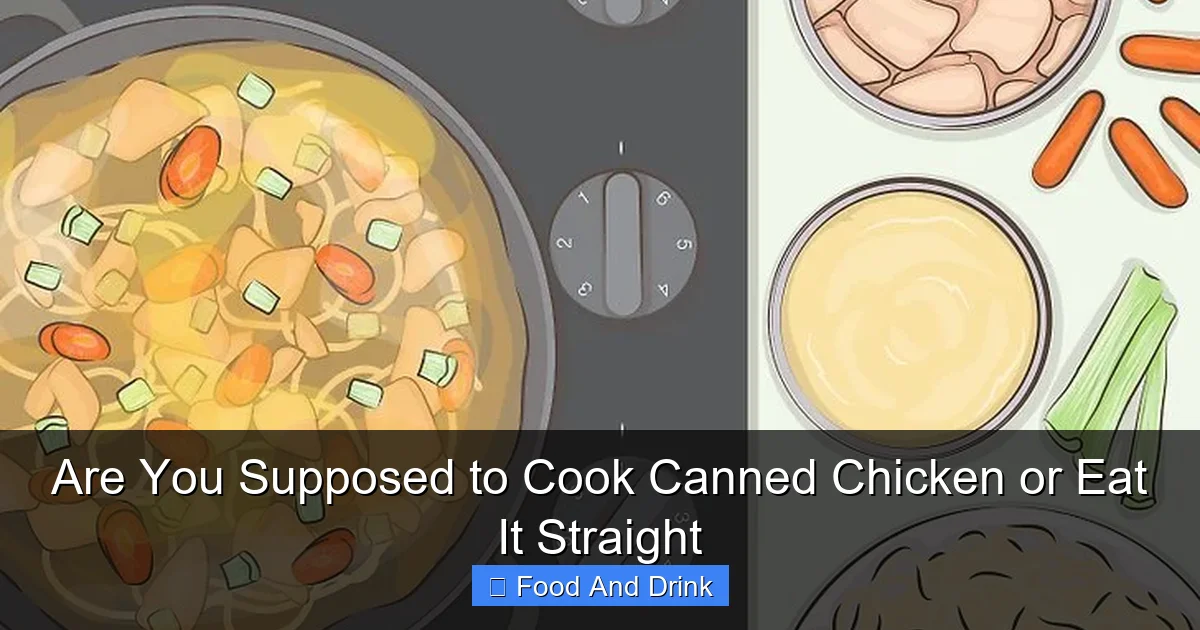
To understand why canned chicken is safe to eat without cooking, it helps to know how it’s made. The process begins with fresh chicken—usually breast meat, though some brands use a mix of white and dark meat. The meat is cleaned, trimmed, and then fully cooked using steam or boiling water. Once cooked, it’s placed into cans along with a small amount of liquid (often water, broth, or salted water) to keep it moist during storage.
Next comes the critical step: retort processing. The sealed cans are placed in large industrial pressure cookers called retorts, where they’re exposed to extremely high temperatures (typically around 240–250°F or 115–121°C) for a set period. This kills off any harmful bacteria, spores, or pathogens—including those that cause botulism—and creates a shelf-stable product that can last for years without refrigeration.
Because the chicken is thoroughly cooked during this process, it’s considered “ready-to-eat” by food safety standards. That means you don’t need to cook it again to make it safe. However, the intense heat can sometimes alter the texture, making the meat softer or more shreddable than fresh-cooked chicken. Some people describe it as “mushy” or “spongy,” though high-quality brands work hard to maintain a firmer bite.
It’s also worth noting that not all canned chicken is created equal. Cheaper brands might use mechanically separated chicken or fillers, while premium options focus on 100% real chicken breast with minimal additives. Always check the ingredient list—if you see words like “chicken broth,” “natural flavors,” or “sodium phosphate,” those are common but not necessarily bad. Just aim for simplicity when possible.
Is It Safe to Eat Canned Chicken Without Cooking?
Visual guide about Are You Supposed to Cook Canned Chicken or Eat It Straight
Image source: wikihow.com
Yes—canned chicken is safe to eat straight from the can, thanks to the rigorous sterilization process it undergoes. The U.S. Department of Agriculture (USDA) and the Food and Drug Administration (FDA) both recognize commercially canned meats as safe for direct consumption. In fact, the same rules apply to canned chicken as they do to canned tuna, salmon, or corned beef: if the can is intact (no dents, bulges, or rust), and the product smells and looks normal, it’s safe to eat cold.
That said, there are a few caveats. Once you open the can, the clock starts ticking. Exposure to air introduces the risk of bacterial growth, especially if the chicken sits at room temperature for too long. That’s why it’s important to refrigerate any unused portion immediately and consume it within 3–4 days. Also, if the can was damaged before opening—say, it was dropped and developed a small leak—there’s a slight chance of contamination. Trust your senses: if the chicken smells sour, looks slimy, or has an off-color, toss it.
Another point to consider is personal health. People with weakened immune systems—such as pregnant women, young children, elderly individuals, or those undergoing medical treatment—may want to err on the side of caution and heat canned chicken before eating. While the risk is extremely low, reheating adds an extra layer of protection against any potential spoilage organisms that could have entered after opening.
In short: for most healthy adults, eating canned chicken cold is perfectly safe. But if you’re serving it to vulnerable groups or just prefer your protein warm, go ahead and cook it. There’s no harm in doing so—and often, a lot of benefit.
Why You Might Want to Cook Canned Chicken Anyway
Visual guide about Are You Supposed to Cook Canned Chicken or Eat It Straight
Image source: wikihow.com
Even though canned chicken is safe to eat cold, there are several compelling reasons to cook it before serving—especially if you’re using it in a recipe.
First and foremost: flavor. Canned chicken often has a muted taste compared to freshly roasted or grilled chicken. Heating it with herbs, spices, sauces, or aromatics (like garlic, onion, or lemon juice) can bring it back to life. For example, tossing it into a skillet with olive oil, paprika, and a splash of chicken broth can turn bland shreds into a zesty taco filling in under five minutes.
Texture is another big factor. As mentioned earlier, the canning process can make chicken softer than ideal. A quick sauté or simmer helps firm it up slightly and absorb surrounding flavors. It also prevents the meat from tasting “wet” or “soggy” when added to dishes like casseroles or stir-fries.
Cooking also improves food safety—not because the chicken is unsafe, but because reheating reduces the risk of post-opening contamination. Bacteria like *Listeria* or *Staphylococcus* can grow on opened canned foods if left unrefrigerated or stored too long. Bringing the chicken to an internal temperature of 165°F (74°C) kills these microbes, giving you peace of mind.
Finally, cooking integrates the chicken into your dish more seamlessly. Cold canned chicken can feel disjointed in a warm meal—like adding cold tuna to hot pasta. But when warmed through, it blends in perfectly, creating a cohesive, satisfying bite.
Best Ways to Cook Canned Chicken
Ready to give your canned chicken a glow-up? Here are some of the most effective and delicious ways to cook it:
Sautéing for Tacos or Salads
Heat a tablespoon of oil in a skillet over medium heat. Add drained canned chicken and cook for 3–5 minutes, breaking it up with a spatula. Season with taco seasoning, cumin, chili powder, or your favorite spice blend. Use it in tacos, burrito bowls, or mixed into a grain salad.
Simmering in Soups or Stews
Add canned chicken directly to soups, chilis, or stews during the last 5–10 minutes of cooking. This allows it to absorb the broth’s flavors without overcooking. Try it in chicken noodle soup, tortilla soup, or creamy potato-leek stew.
Microwaving for Quick Meals
Place drained chicken in a microwave-safe dish, add a splash of broth or water, cover, and heat for 1–2 minutes. Perfect for scrambling into eggs, mixing into mac and cheese, or stuffing into wraps.
Baking in Casseroles
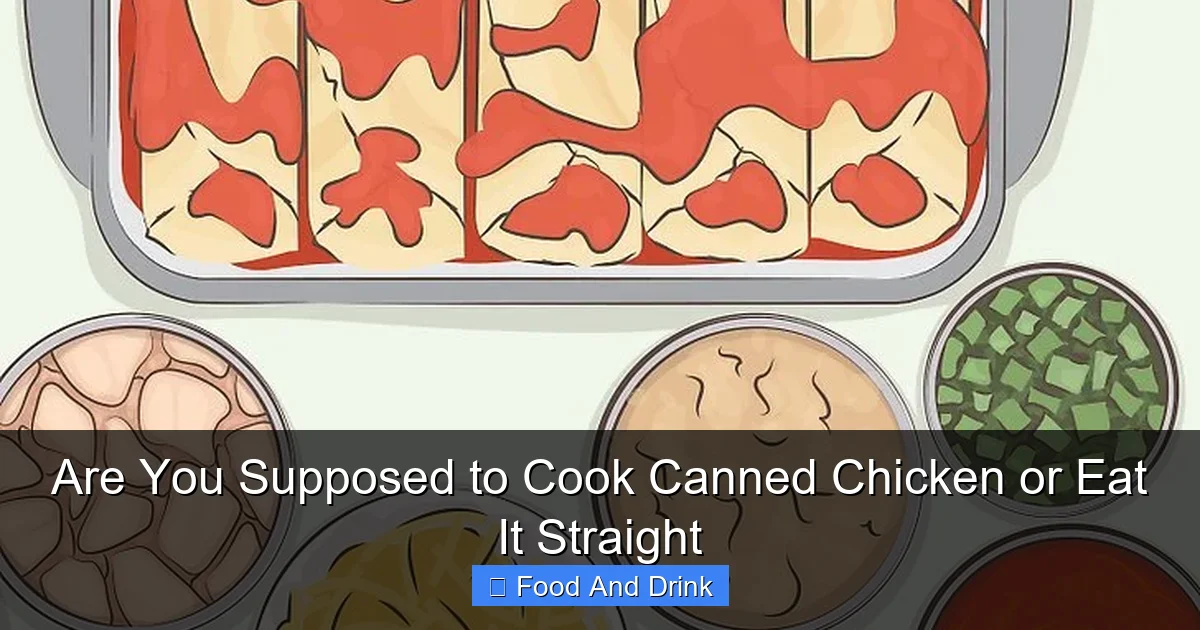
Combine canned chicken with cooked pasta, vegetables, cheese, and sauce, then bake until bubbly. The heat firms up the texture and melds all the ingredients together. Think chicken divan, creamy chicken enchiladas, or a simple chicken pot pie filling.
Grilling or Pan-Searing (Yes, Really!)
For a crispy exterior, pat the chicken dry, toss with oil and seasoning, and sear in a hot pan for 2–3 minutes per side. This works best with firmer cuts or if you press the chicken into patties first.
Pro tip: Always drain and rinse canned chicken before cooking unless the recipe calls for the liquid. Rinsing removes excess sodium and any residual metallic taste.
Creative Recipes Using Canned Chicken
Canned chicken isn’t just for emergencies—it’s a versatile ingredient that can star in everyday meals. Here are a few easy, tasty ideas:
Loaded Chicken Quesadillas
Mix canned chicken with shredded cheese, diced bell peppers, and green chilies. Spoon onto a tortilla, top with another tortilla, and cook in a skillet until golden. Serve with salsa and guacamole.
Creamy Chicken and Rice
Sauté onions and garlic, add cooked rice, canned chicken, and chicken broth. Stir in a splash of cream or coconut milk, and simmer until thick. Top with parsley and black pepper.
Protein-Packed Breakfast Scramble
Whisk eggs, pour into a hot pan, and add drained canned chicken, spinach, and shredded cheddar. Cook until eggs are set. Ready in under 10 minutes!
Asian-Inspired Chicken Lettuce Wraps
Stir-fry canned chicken with ginger, garlic, soy sauce, and hoisin. Serve in crisp lettuce cups with shredded carrots and green onions.
Hearty Chicken and White Bean Soup
Combine canned chicken, cannellini beans, diced tomatoes, carrots, celery, and broth. Simmer for 20 minutes. Finish with a squeeze of lemon.
These recipes prove that canned chicken can be anything but boring—especially when you take a minute to cook it properly.
Choosing the Right Canned Chicken
Not all canned chicken is created equal. To get the best results, look for these qualities:
– **100% real chicken**: Avoid products with “mechanically separated meat” or vague labels.
– **Minimal ingredients**: Ideally, just chicken, water, and maybe a little salt.
– **Low sodium**: Many brands pack in salt for preservation—opt for no-salt-added or low-sodium versions.
– **BPA-free cans**: Some companies now use BPA-free linings to reduce chemical exposure.
– **Reputable brands**: Trusted names like Wild Planet, American Tuna, or Trader Joe’s offer high-quality options.
Reading labels carefully can make a big difference in taste and nutrition. A good rule of thumb: if you can’t pronounce most of the ingredients, keep looking.
Storage and Shelf Life Tips
Unopened canned chicken can last 2–5 years when stored in a cool, dry place. Once opened, transfer any leftovers to an airtight container and refrigerate. Use within 3–4 days. You can also freeze cooked canned chicken for up to 2 months—just thaw in the fridge before reheating.
Never leave opened canned chicken at room temperature for more than 2 hours (1 hour if it’s above 90°F). When in doubt, throw it out.
Conclusion
So, are you supposed to cook canned chicken or eat it straight? The truth is, it depends on your preference—but cooking it almost always makes it better. While it’s safe to eat right from the can, a little heat transforms it into a flavorful, satisfying ingredient that shines in everything from soups to salads. Whether you’re meal prepping, camping, or just need a quick dinner fix, canned chicken is a pantry hero—especially when you give it the love it deserves with a quick cook. Next time you reach for that can, don’t just spoon it out. Sizzle it, simmer it, or sauté it. Your taste buds will thank you.
Frequently Asked Questions
Is canned chicken as nutritious as fresh chicken?
Canned chicken retains most of its protein and nutrients, though some water-soluble vitamins may be reduced during processing. Overall, it’s a healthy, convenient alternative to fresh chicken.
Can I use canned chicken in place of rotisserie chicken?
Yes, especially in cooked dishes like casseroles, soups, or pasta. For cold applications like salads, the texture may differ slightly, but it works well when seasoned properly.
Why does my canned chicken taste metallic?
This is common with some brands due to the canning process or storage. Rinsing the chicken before use and cooking it with flavorful ingredients can help mask the taste.
Can I eat canned chicken past its expiration date?
If the can is undamaged and stored properly, it’s often safe to eat within a year past the date. However, quality (taste, texture) may decline. Always check for signs of spoilage.
Is canned chicken safe for pregnant women?
Yes, as long as it’s from a reputable brand and consumed promptly after opening. To be extra safe, some pregnant individuals prefer to heat it before eating.
What’s the difference between canned chicken and canned tuna?
Both are pre-cooked, shelf-stable proteins, but chicken has a milder flavor and firmer texture when high-quality. Tuna is richer in omega-3s, while chicken offers more versatile cooking options.


